
全球、区域和国家自闭症谱系障碍负担 1990 年至 2019 年:来自 2019 年全球疾病负担研究的结果。
Global, regional and national burden of autism spectrum disorder from 1990 to 2019: results from the Global Burden of Disease Study 2019.
机构信息
Department of Epidemiology and Health Statistics, School of Public Health, Cheeloo College of Medicine, Shandong University, Jinan, China.
Department of Psychology, Qilu Hospital of Shandong University, Jinan, China.
出版信息
Epidemiol Psychiatr Sci. 2022 May 10;31:e33. doi: 10.1017/S2045796022000178.
AIMS
Autism spectrum disorder (ASD) is a neurodevelopmental condition, with symptoms appearing in the early developmental period. Little is known about its current burden at the global, regional and national levels. This systematic analysis aims to summarise the latest magnitudes and temporal trends of ASD burden, which is essential to facilitate more detailed development of prevention and intervention strategies.
METHODS
The data on ASD incidence, prevalence, disability-adjusted life years (DALYs) in 204 countries and territories between 1990 and 2019 came from the Global Burden of Disease Study 2019. The average annual percentage change was calculated to quantify the secular trends in age-standardised rates (ASRs) of ASD burden by region, sex and age.
RESULTS
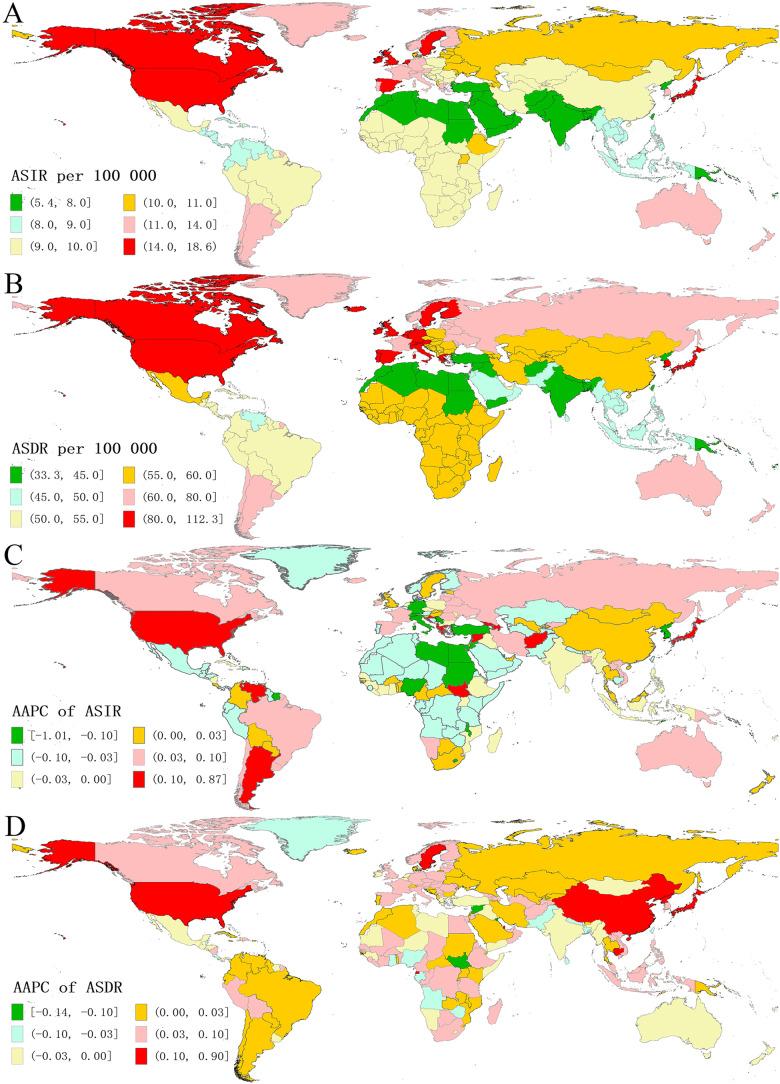
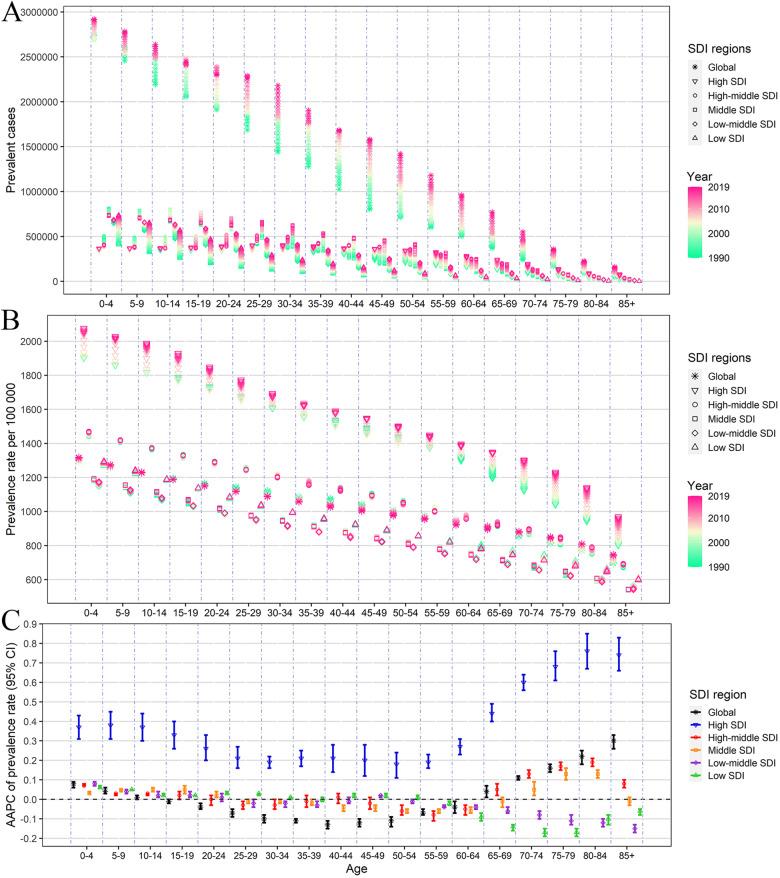
In 2019, there were an estimated 60.38 × 10⁴ [95% uncertainty interval (UI) 50.17-72.01] incident cases of ASD, 283.25 × 10⁵ (95% UI 235.01-338.11) prevalent cases and 43.07 × 10⁵ (95% UI 28.22-62.32) DALYs globally. The ASR of incidence slightly increased by around 0.06% annually over the past three decades, while the ASRs of prevalence and DALYs both remained stable over the past three decades. In 2019, the highest burden of ASD was observed in high-income regions, especially in high-income North America, high-income Asia Pacific and Western Europe, where a significant growth in ASRs was also observed. The ASR of ASD burden in males was around three times that of females, but the gender difference was shrunk with the pronounced increase among females. Of note, among the population aged over 65 years, the burden of ASD presented increasing trends globally.
CONCLUSIONS
The global burden of ASD continues to increase and remains a major mental health concern. These substantial heterogeneities in ASD burden worldwide highlight the need for making suitable mental-related policies and providing special social and health services.
目的
自闭症谱系障碍(ASD)是一种神经发育障碍,其症状出现在早期发育阶段。目前,人们对其在全球、地区和国家层面的现患负担知之甚少。本系统分析旨在总结 ASD 负担的最新规模和时间趋势,这对于制定更详细的预防和干预策略至关重要。
方法
1990 年至 2019 年,204 个国家和地区的 ASD 发病率、患病率和伤残调整生命年(DALYs)数据来自 2019 年全球疾病负担研究。计算平均年百分比变化,以量化按地区、性别和年龄划分的 ASD 负担的年龄标准化率(ASR)的长期趋势。
结果
2019 年,全球 ASD 的估计新发病例为 60.38×10⁴(95%不确定区间(UI)为 50.17-72.01),现患病例为 283.25×10⁵(95% UI 为 235.01-338.11),伤残损失生命年为 43.07×10⁵(95% UI 为 28.22-62.32)。在过去的 30 年里,ASR 每年以约 0.06%的速度略有上升,而患病率和 DALYs 的 ASR 均保持稳定。2019 年,高收入地区的 ASD 负担最高,尤其是高收入北美、高收入亚太地区和西欧,这些地区的 ASR 也呈显著增长趋势。ASR 中 ASD 负担在男性中约为女性的三倍,但随着女性的明显增加,性别差异在缩小。值得注意的是,在 65 岁以上的人群中,全球 ASD 的负担呈上升趋势。
结论
ASD 的全球负担仍在持续增加,仍是一个主要的精神健康问题。全球 ASD 负担存在如此大的差异,突出表明需要制定适当的精神相关政策,并提供特殊的社会和卫生服务。

 Zotero 插件