
二苯基芘基胺功能化多肽:二级结构、聚集诱导发光及碳纳米管分散性
Diphenylpyrenylamine-functionalized polypeptides: secondary structures, aggregation-induced emission, and carbon nanotube dispersibility.
作者信息
El-Mahdy Ahmed F M, Kuo Shiao-Wei
机构信息
Department of Materials and Optoelectronic Science, National Sun Yat-Sen University Kaohsiung 80424 Taiwan
Chemistry Department, Faculty of Science, Assiut University Assiut 71516 Egypt.
出版信息
RSC Adv. 2018 Apr 23;8(28):15266-15281. doi: 10.1039/c8ra02369g.
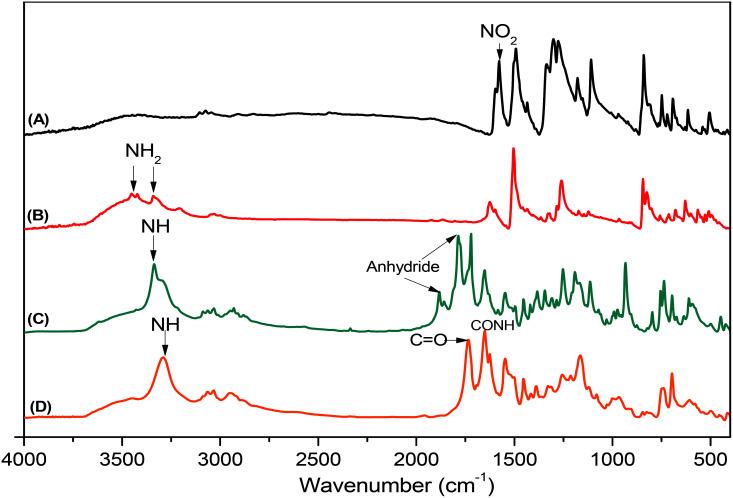
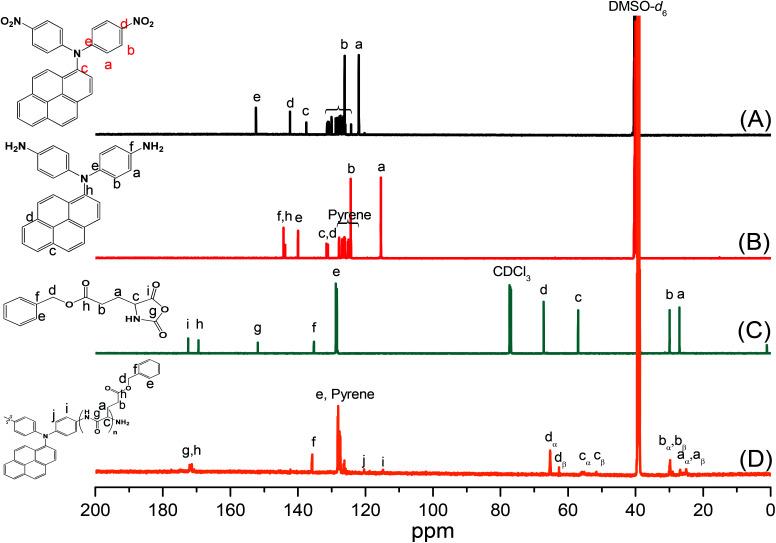
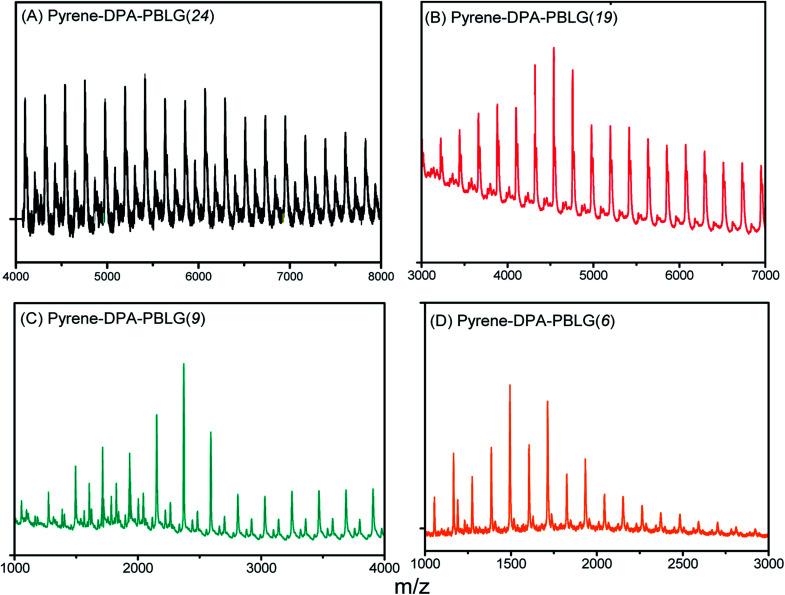
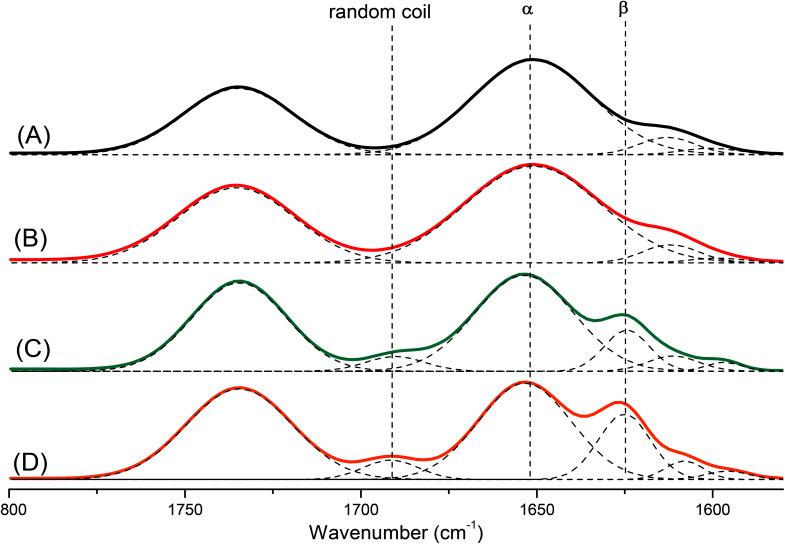
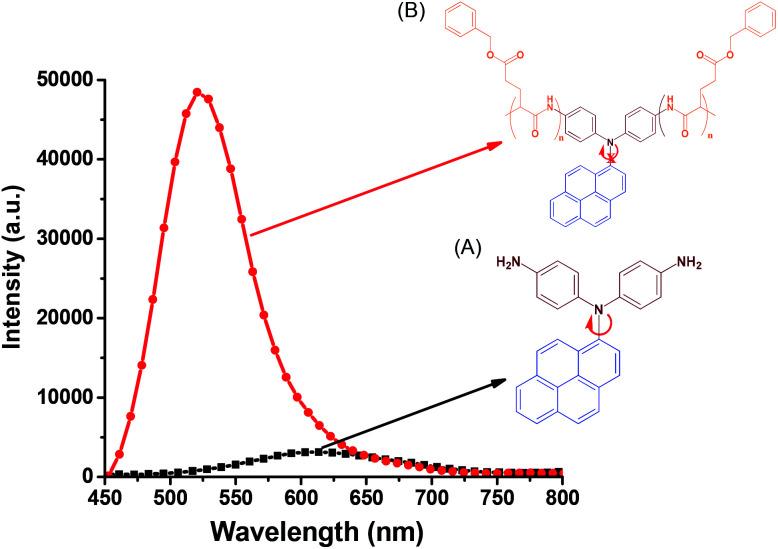
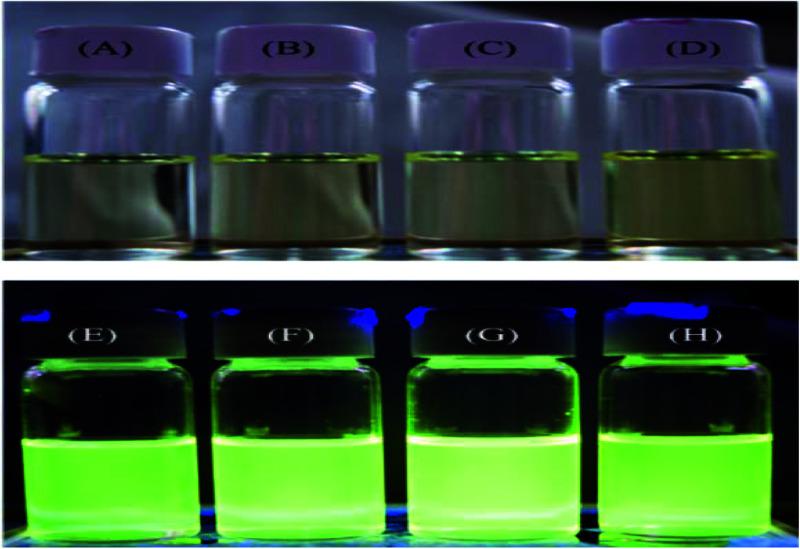
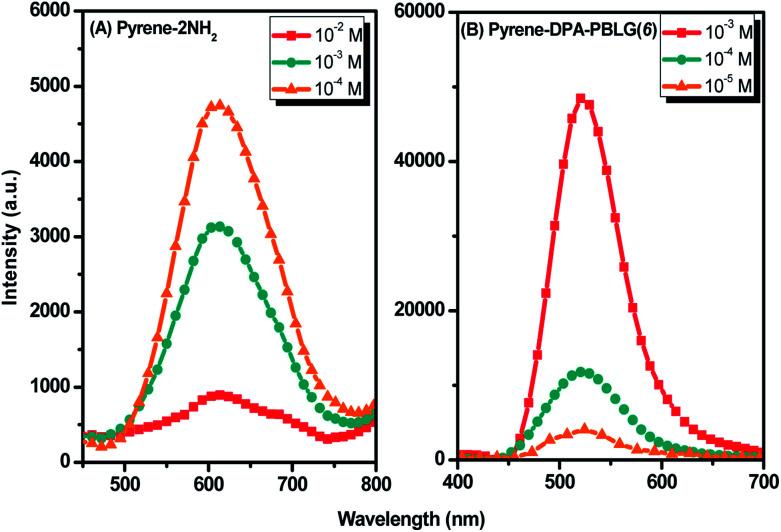
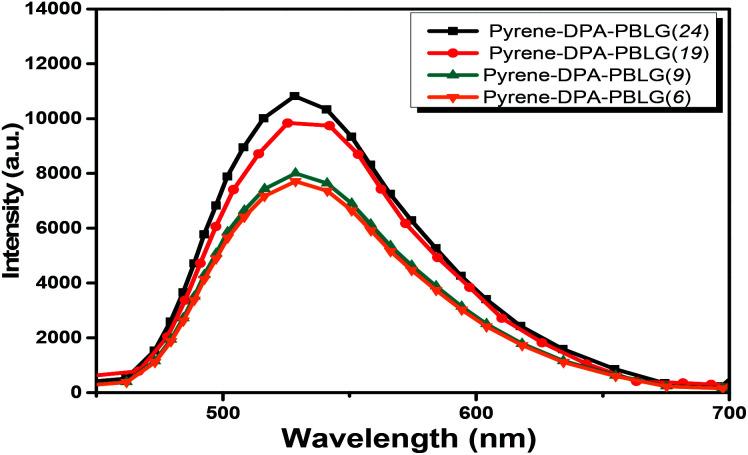
In this study we prepared-through ring-opening polymerization of γ-benzyl-l-glutamate -carboxyanhydride (BLG-NCA) initiated by ,di(4-aminophenyl)-1-aminopyrene (pyrene-DPA-2NH)-poly(γ-benzyl-l-glutamate) (PBLG) polymers with various degrees of polymerization (DP), each featuring a di(4-aminophenyl)pyrenylamine (DPA) luminophore on the main backbone. The secondary structures of these pyrene-DPA-PBLG polypeptides were investigated using Fourier transform infrared spectroscopy and wide-angle X-ray diffraction, revealing that the polypeptides with DPs of less than 19 were mixtures of α-helical and β-sheet conformations, whereas the α-helical structures were preferred for longer chains. Interestingly, pyrene-DPA-2NH exhibited weak photoluminescence (PL), yet the emission of the pyrene-DPA-PBLG polypeptides was 16-fold stronger, suggesting that attaching PBLG chains to pyrene-DPA-2NH turned on a radiative pathway for the non-fluorescent molecule. Furthermore, pyrene-DPA-2NH exhibited aggregation-caused quenching; in contrast, after incorporation into the PBLG segments with rigid-rod conformations, the resulting pyrene-DPA-PBLG polypeptides displayed aggregation-induced emission. Transmission electron microscopy revealed that mixing these polypeptides with multiwalled carbon nanotubes (MWCNTs) in DMF led to the formation of extremely dispersible pyrene-DPA-PBLG/MWCNT composites. The fabrication of MWCNT composites with such biocompatible polymers should lead to bio-inspired carbon nanostructures with useful biomedical applications.
在本研究中,我们通过γ-苄基-L-谷氨酸羧基酸酐(BLG-NCA)的开环聚合反应制备了聚(γ-苄基-L-谷氨酸)(PBLG)聚合物,该反应由二(4-氨基苯基)-1-氨基芘(芘-DPA-2NH)引发,所得聚合物具有不同的聚合度(DP),每条主链上均带有二(4-氨基苯基)芘基胺(DPA)发光团。使用傅里叶变换红外光谱和广角X射线衍射对这些芘-DPA-PBLG多肽的二级结构进行了研究,结果表明,聚合度小于19的多肽是α-螺旋和β-折叠构象的混合物,而较长链则更倾向于形成α-螺旋结构。有趣的是,芘-DPA-2NH表现出较弱的光致发光(PL),而芘-DPA-PBLG多肽的发射强度则强16倍,这表明将PBLG链连接到芘-DPA-2NH上为这种非荧光分子开启了一条辐射途径。此外,芘-DPA-2NH表现出聚集导致的猝灭;相反,在掺入具有刚性棒状构象的PBLG链段后,所得的芘-DPA-PBLG多肽表现出聚集诱导发光。透射电子显微镜显示,在N,N-二甲基甲酰胺(DMF)中将这些多肽与多壁碳纳米管(MWCNT)混合会导致形成极易分散的芘-DPA-PBLG/MWCNT复合材料。用这种生物相容性聚合物制备MWCNT复合材料应能产生具有有用生物医学应用的仿生碳纳米结构。






 Zotero 插件