
来自囊性纤维化和其他慢性呼吸道感染患者的嗜麦芽寡养单胞菌分离株的分类地位、抗生素耐药性和毒力因子产生。
Taxonomic position, antibiotic resistance and virulence factor production by Stenotrophomonas isolates from patients with cystic fibrosis and other chronic respiratory infections.
机构信息
Department of Medical Microbiology, University Medical Center Utrecht, PO Box 85500, 3508, GA, Utrecht, the Netherlands.
Servicio de Microbiología, Hospital Universitario Ramón y Cajal and Instituto Ramón y Cajal de Investigación Sanitaria (IRYCIS), Madrid, Spain.
出版信息
BMC Microbiol. 2022 May 12;22(1):129. doi: 10.1186/s12866-022-02466-5.
BACKGROUND
The potential pathogenic role of Stenotrophomonas maltophilia in lung disease and in particular in cystic fibrosis is unclear. To develop further understanding of the biology of this taxa, the taxonomic position, antibiotic resistance and virulence factors of S. maltophilia isolates from patients with chronic lung disease were studied.
RESULTS
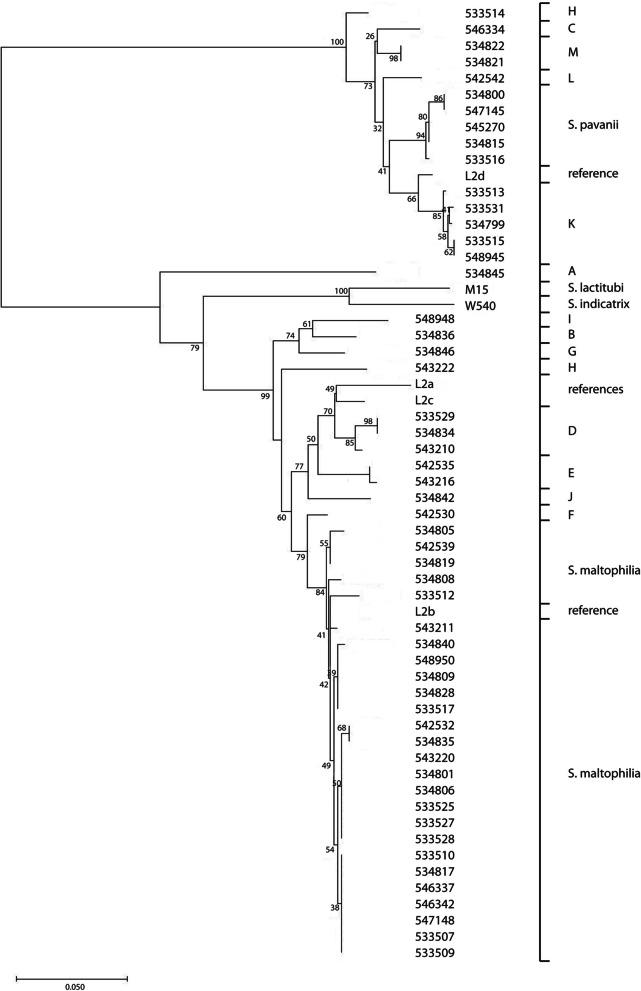
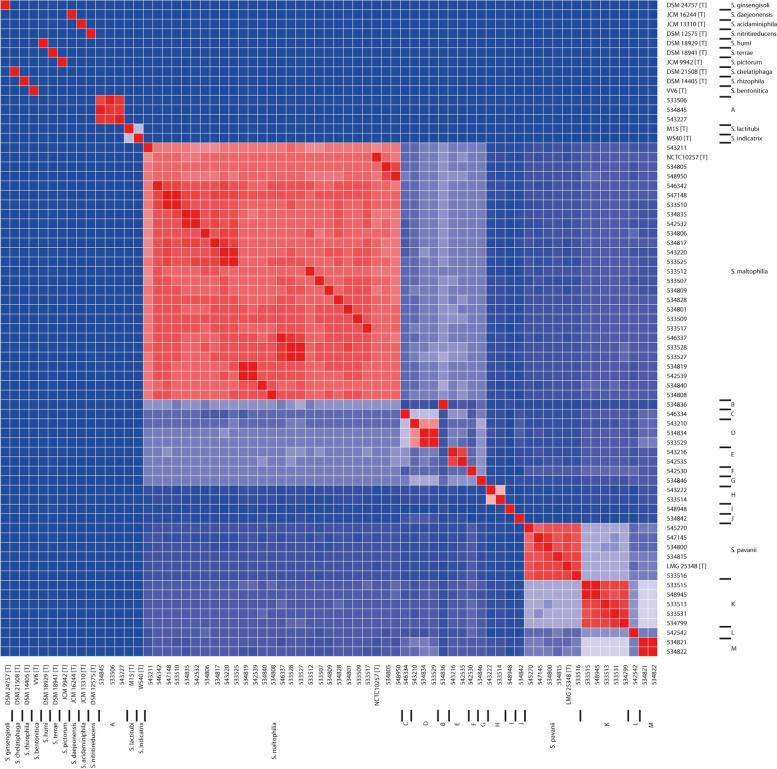
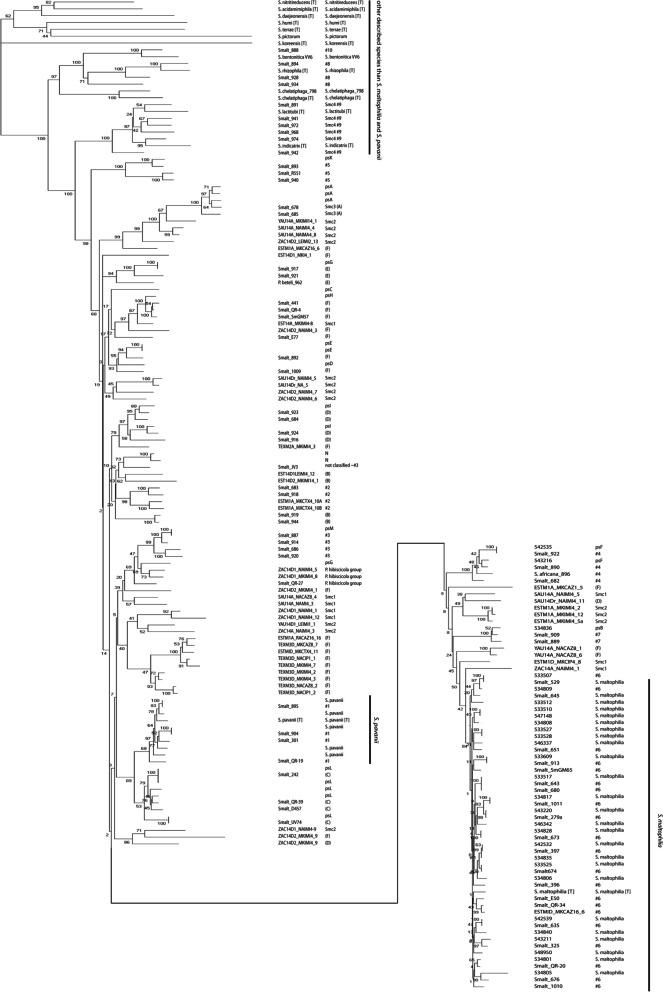
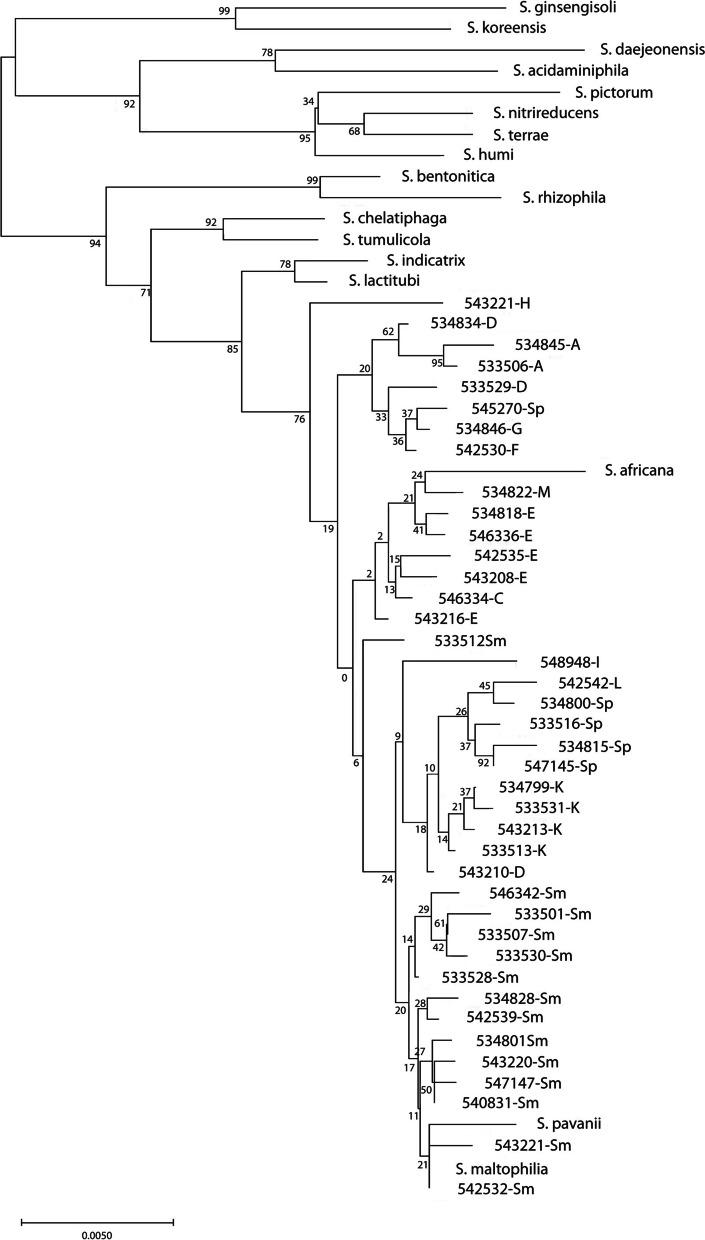
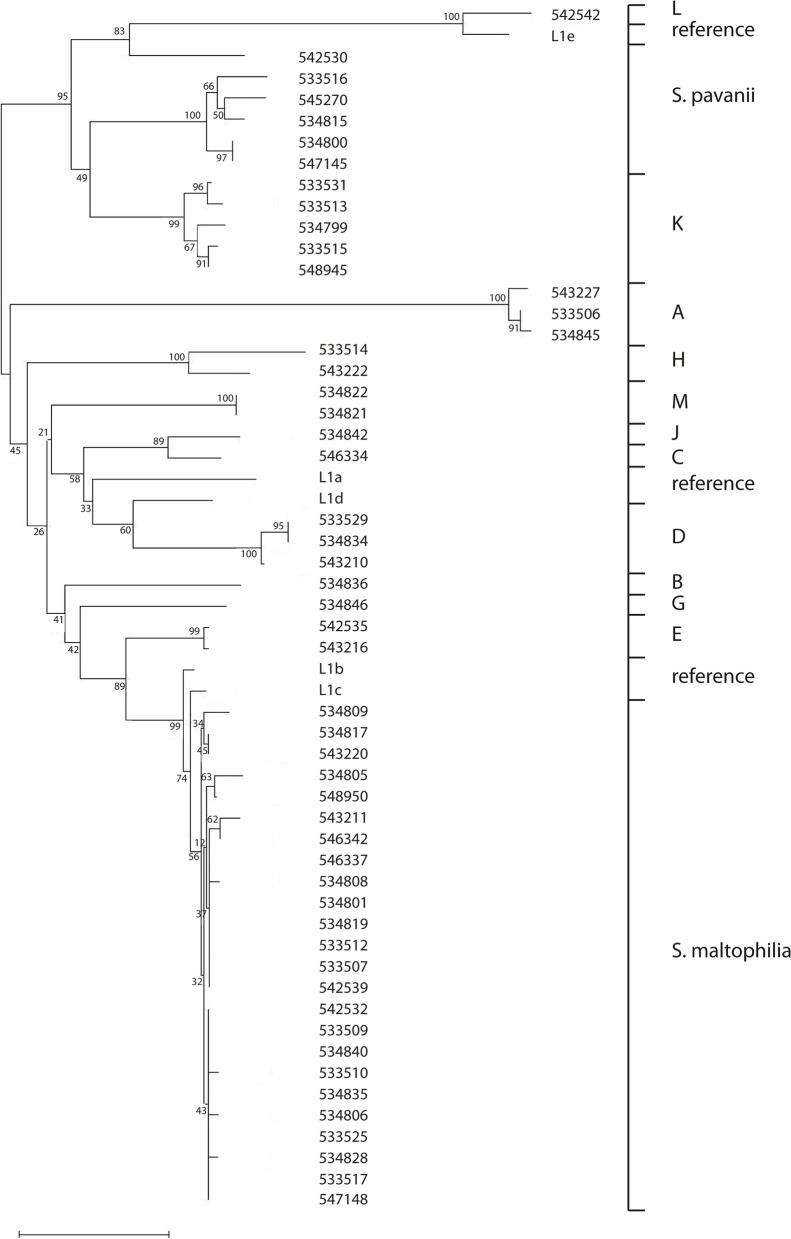
A total of 111 isolates recovered between 2003 and 2016 from respiratory samples from patients in five different countries were included. Based on a cut-off of 95%, analysis of average nucleotide identity by BLAST (ANIb) showed that the 111 isolates identified as S. maltophilia by Matrix-assisted laser desorption/ionization time of flight mass spectrometry (MALDI-TOF/MS) belonged to S. maltophilia (n = 65), S. pavanii (n = 6) and 13 putative novel species (n = 40), which each included 1-5 isolates; these groupings coincided with the results of the 16S rDNA analysis, and the L1 and L2 ß-lactamase Neighbor-Joining phylogeny. Chromosomally encoded aminoglycoside resistance was identified in all S. maltophilia and S. pavani isolates, while acquired antibiotic resistance genes were present in only a few isolates. Nevertheless, phenotypic resistance levels against commonly used antibiotics, determined by standard broth microbroth dilution, were high. Although putative virulence genes were present in all isolates, the percentage of positive isolates varied. The Xps II secretion system responsible for the secretion of the StmPr1-3 proteases was mainly limited to isolates identified as S. maltophilia based on ANIb, but no correlation with phenotypic expression of protease activity was found. The RPF two-component quorum sensing system involved in virulence and antibiotic resistance expression has two main variants with one variant lacking 190 amino acids in the sensing region.
CONCLUSIONS
The putative novel Stenotrophomonas species recovered from patient samples and identified by MALDI-TOF/MS as S. maltophilia, differed from S. maltophilia in resistance and virulence genes, and therefore possibly in pathogenicity. Revision of the Stenotrophomonas taxonomy is needed in order to reliably identify strains within the genus and elucidate the role of the different species in disease.
背景
嗜麦芽寡养单胞菌在肺部疾病,特别是囊性纤维化中的潜在致病作用尚不清楚。为了进一步了解该菌的生物学特性,研究了来自 5 个不同国家慢性肺部疾病患者的嗜麦芽寡养单胞菌分离株的分类地位、抗生素耐药性和毒力因子。
结果
共纳入了 2003 年至 2016 年间从 5 个不同国家的呼吸样本中分离的 111 株嗜麦芽寡养单胞菌。基于 95%的截断值,通过 BLAST 分析平均核苷酸同一性(ANIb)表明,基质辅助激光解吸/电离飞行时间质谱(MALDI-TOF/MS)鉴定为嗜麦芽寡养单胞菌的 111 株分离株属于嗜麦芽寡养单胞菌(n=65)、嗜麦芽寡养单胞菌(n=6)和 13 种新的潜在种(n=40),每种分离株包括 1-5 株;这些分组与 16S rDNA 分析结果和 L1 和 L2β-内酰胺酶邻接法系统发育一致。所有嗜麦芽寡养单胞菌和嗜麦芽寡养单胞菌分离株均存在染色体编码的氨基糖苷类耐药性,而仅少数分离株存在获得性抗生素耐药基因。然而,通过标准肉汤微量稀释法测定的常用抗生素的表型耐药水平较高。虽然所有分离株均存在潜在的毒力基因,但阳性分离株的比例不同。负责分泌 StmPr1-3 蛋白酶的 Xps II 分泌系统主要局限于根据 ANIb 鉴定为嗜麦芽寡养单胞菌的分离株,但未发现与蛋白酶活性的表型表达相关。涉及毒力和抗生素耐药表达的 RPF 双组分群体感应系统有两个主要变体,其中一个变体在感应区缺少 190 个氨基酸。
结论
从患者样本中回收并通过 MALDI-TOF/MS 鉴定为嗜麦芽寡养单胞菌的新潜在嗜麦芽寡养单胞菌物种与嗜麦芽寡养单胞菌在耐药性和毒力基因方面存在差异,因此可能在致病性方面存在差异。需要对嗜麦芽寡养单胞菌的分类进行修订,以便可靠地鉴定属内菌株并阐明不同种在疾病中的作用。
 Zotero 插件