
阐明用于析氢反应的铂单原子催化剂的形成与结构演变
Elucidating the Formation and Structural Evolution of Platinum Single-Site Catalysts for the Hydrogen Evolution Reaction.
作者信息
Tang Peng, Lee Hyeon Jeong, Hurlbutt Kevin, Huang Po-Yuan, Narayanan Sudarshan, Wang Chenbo, Gianolio Diego, Arrigo Rosa, Chen Jun, Warner Jamie H, Pasta Mauro
机构信息
Department of Materials, University of Oxford, Parks Road, Oxford OX1 3PH, United Kingdom.
Oxford Suzhou Centre for Advanced Research, 388 Ruoshui Road, Suzhou 215123, Jiangsu Province, P. R. China.
出版信息
ACS Catal. 2022 Mar 4;12(5):3173-3180. doi: 10.1021/acscatal.1c05958. Epub 2022 Feb 23.
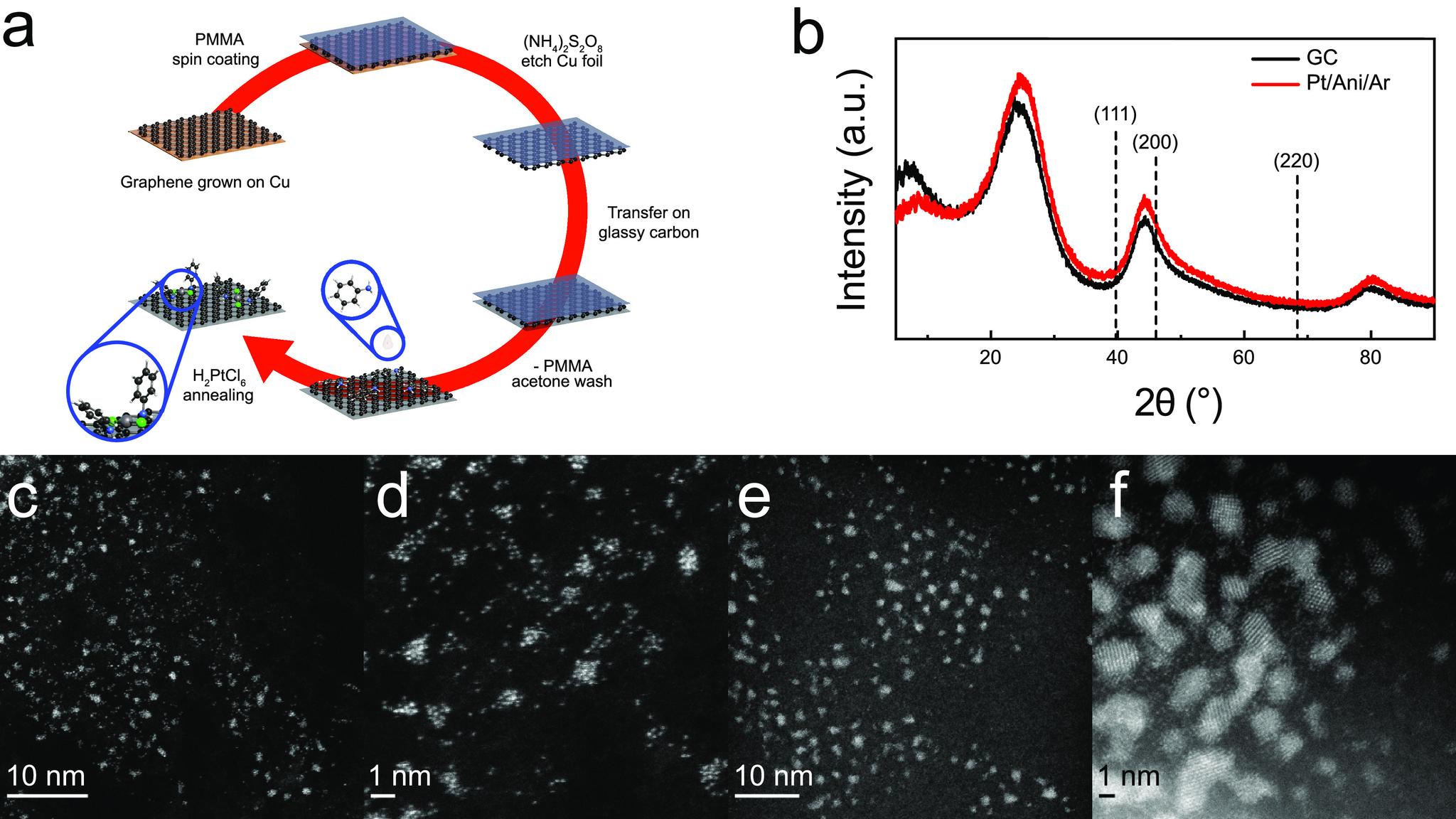
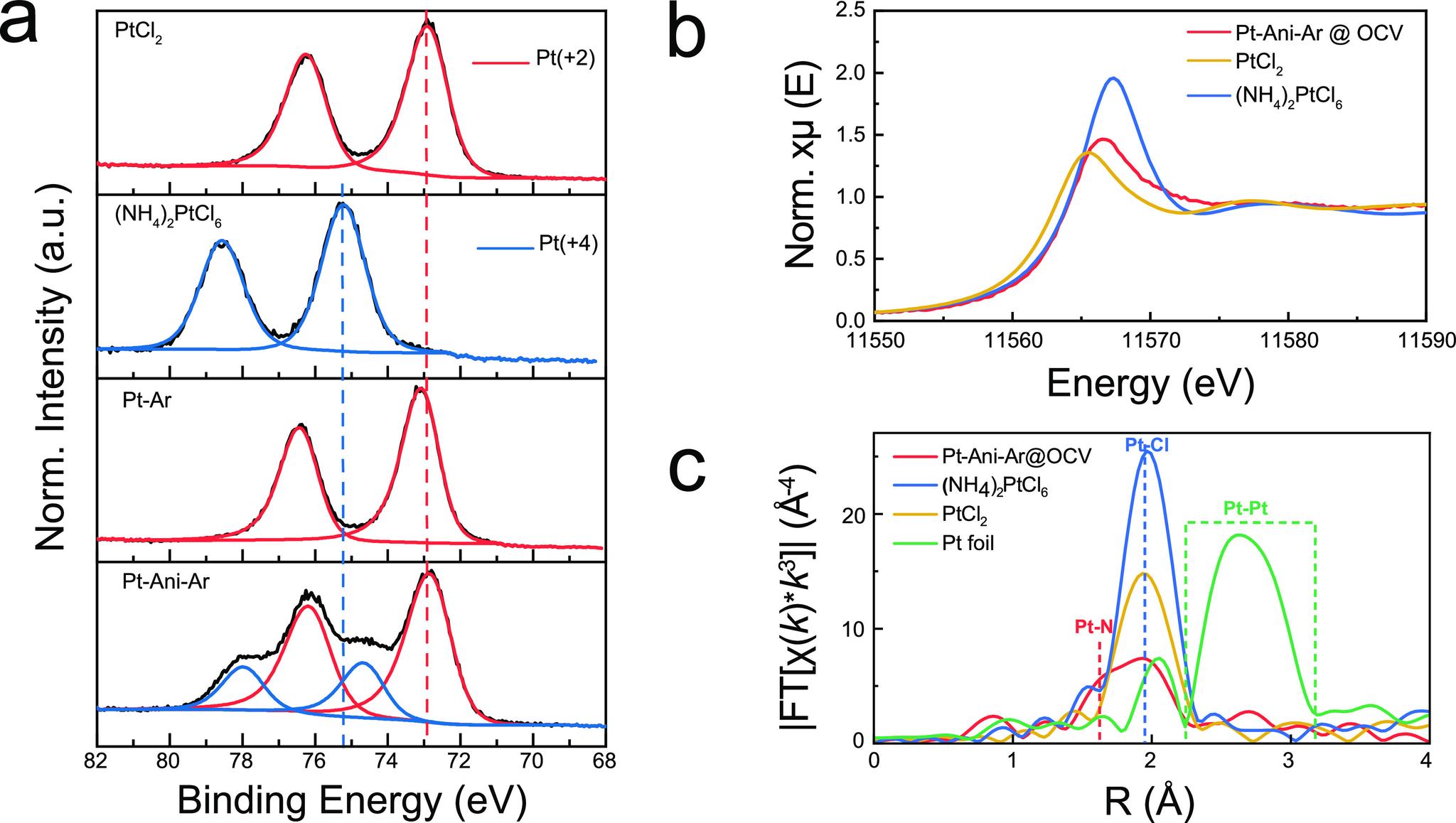
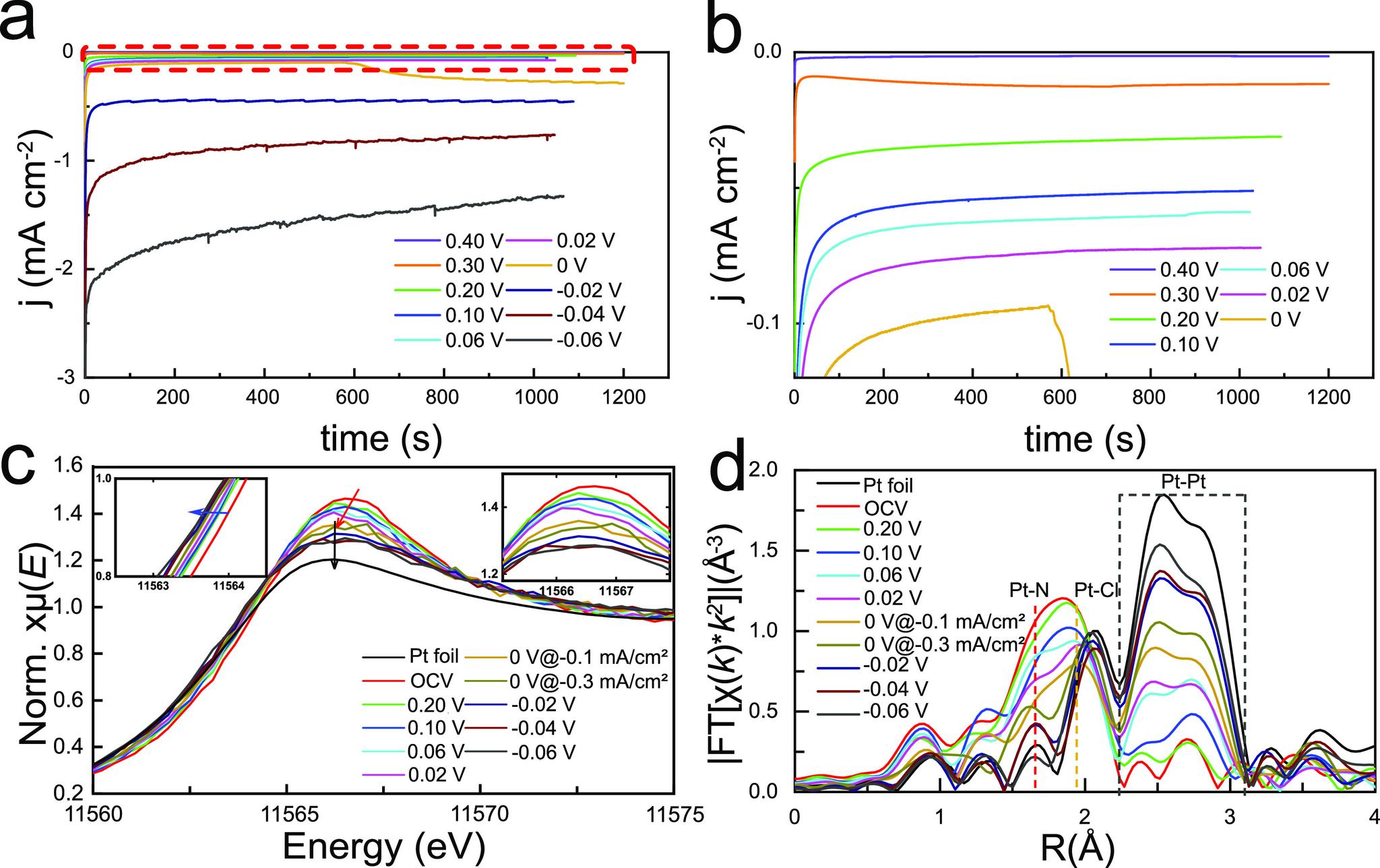
Platinum single-site catalysts (SSCs) are a promising technology for the production of hydrogen from clean energy sources. They have high activity and maximal platinum-atom utilization. However, the bonding environment of platinum during operation is poorly understood. In this work, we present a mechanistic study of platinum SSCs using operando, synchrotron-X-ray absorption spectroscopy. We synthesize an atomically dispersed platinum complex with aniline and chloride ligands onto graphene and characterize it with ex-situ electron microscopy, X-ray diffractometry, X-ray photoelectron spectroscopy, X-ray absorption near-edge structure spectroscopy (XANES), and extended X-ray absorption fine structure spectroscopy (EXAFS). Then, by operando EXAFS and XANES, we show that as a negatively biased potential is applied, the Pt-N bonds break first followed by the Pt-Cl bonds. The platinum is reduced from platinum(II) to metallic platinum(0) by the onset of the hydrogen-evolution reaction at 0 V. Furthermore, we observe an increase in Pt-Pt bonding, indicating the formation of platinum agglomerates. Together, these results indicate that while aniline is used to prepare platinum SSCs, the single-site complexes are decomposed and platinum agglomerates at operating potentials. This work is an important contribution to the understanding of the evolution of bonding environment in SSCs and provides some molecular insights into how platinum agglomeration causes the deactivation of SSCs over time.
铂单原子催化剂(SSCs)是一种利用清洁能源制氢的很有前景的技术。它们具有高活性和最大的铂原子利用率。然而,人们对铂在运行过程中的键合环境了解甚少。在这项工作中,我们使用原位同步辐射X射线吸收光谱对铂单原子催化剂进行了机理研究。我们将一种带有苯胺和氯配体的原子分散铂配合物合成到石墨烯上,并用非原位电子显微镜、X射线衍射、X射线光电子能谱、X射线吸收近边结构光谱(XANES)和扩展X射线吸收精细结构光谱(EXAFS)对其进行表征。然后,通过原位EXAFS和XANES,我们表明,当施加负偏压时,Pt-N键首先断裂,随后是Pt-Cl键。在0 V时,随着析氢反应的开始,铂从铂(II)还原为金属铂(0)。此外,我们观察到Pt-Pt键合增加,这表明形成了铂团聚体。总之,这些结果表明,虽然苯胺用于制备铂单原子催化剂,但在工作电位下,单原子配合物会分解,铂会发生团聚。这项工作对理解单原子催化剂中键合环境的演变做出了重要贡献,并为铂团聚如何导致单原子催化剂随时间失活提供了一些分子层面的见解。

 Zotero 插件