
波兰野猪的非洲猪瘟(ASF)趋势分析(2014 - 2020年)
African Swine Fever (ASF) Trend Analysis in Wild Boar in Poland (2014-2020).
作者信息
Frant Maciej Piotr, Gal-Cisoń Anna, Bocian Łukasz, Ziętek-Barszcz Anna, Niemczuk Krzysztof, Szczotka-Bochniarz Anna
机构信息
Department of Swine Diseases, National Veterinary Research Institute, Partyzantów Avenue 57, 24-100 Puławy, Poland.
Department of Epidemiology and Risk Assessment, National Veterinary Research Institute, Partyzantów Avenue 57, 24-100 Puławy, Poland.
出版信息
Animals (Basel). 2022 May 3;12(9):1170. doi: 10.3390/ani12091170.
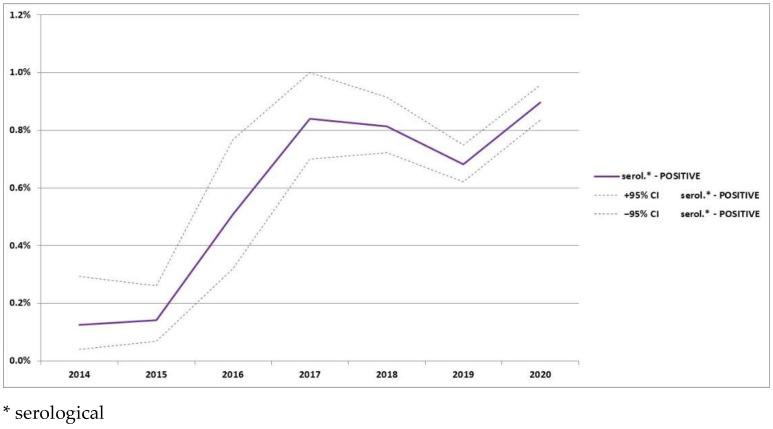
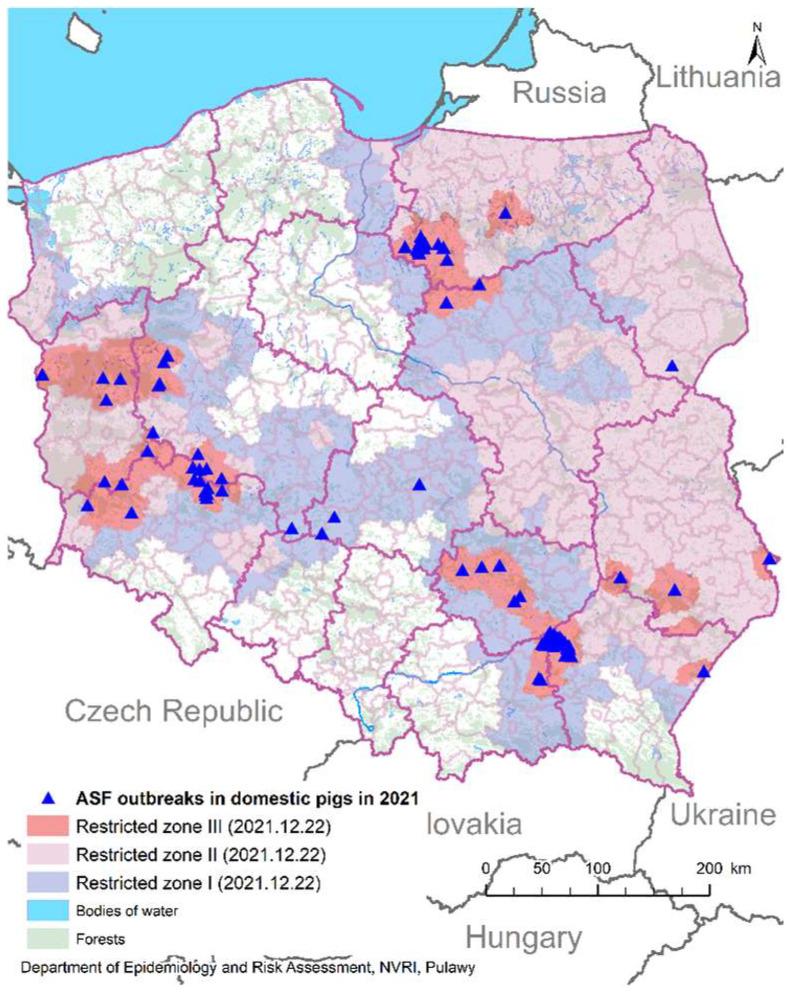
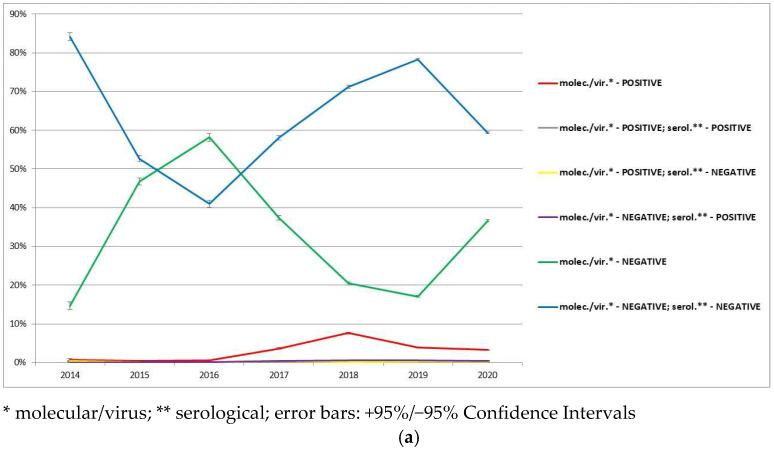
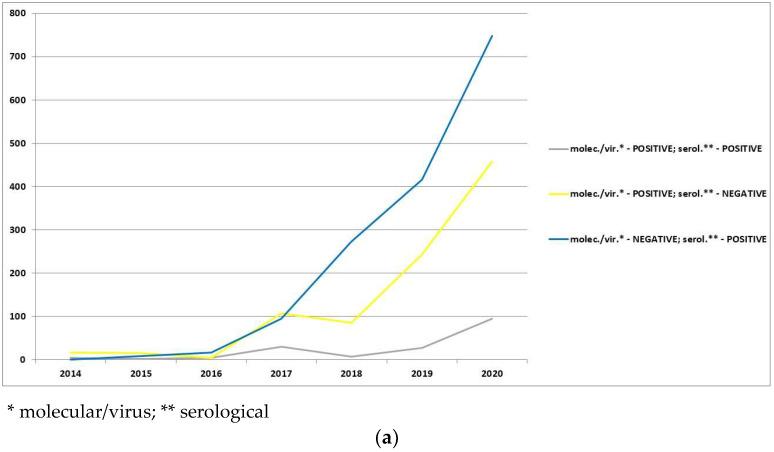
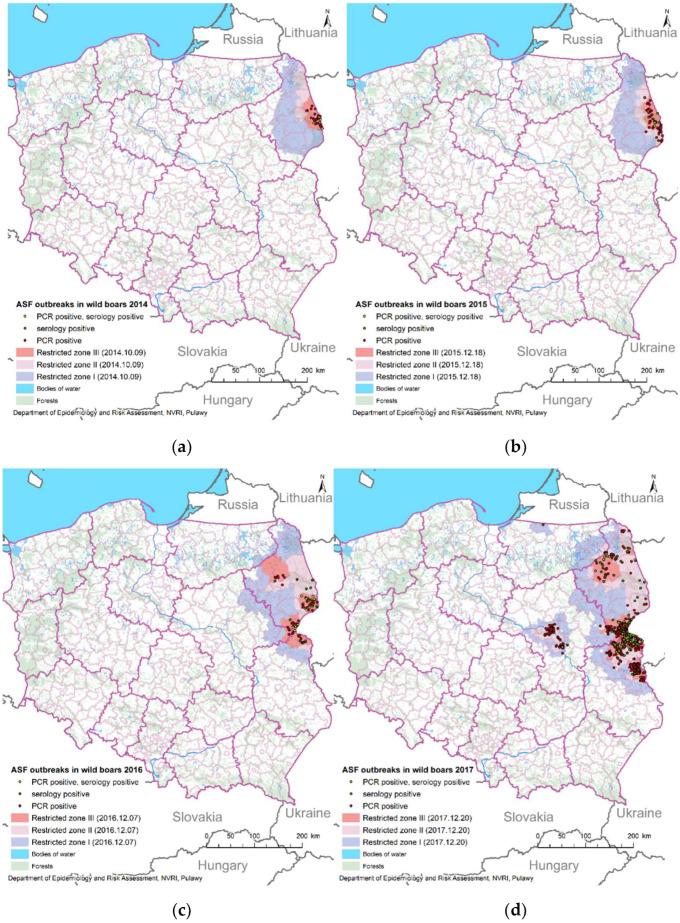
African swine fever (ASF) is a lethal hemorrhagic disease of , i.e., domestic pigs and wild boars. The disease was introduced to Poland in 2014 and is now present in the wild boar population. Appropriate ASF prevention requires further research for answers to fundamental questions about the importance of vectors in virus transmission, the impact of environmental factors on the presence of ASFV in wild boar habitats, and the role of survivors as potential virus carriers and their part in the potential endemicity of ASF. In order to analyze the changes in the molecular and serological prevalence of ASFV in wild boar population in Poland, real-time PCR and ELISA/IPT tests were conducted. In the analyzed period (2014-2020), most of the ASF-positive wild boars were molecular/virus-positive, however, over the years the percentage and the number of seropositive animals has increased. At the beginning of the epidemic, the disease was limited to a small area of the country. Since then, it has spread to new provinces of Poland. From the beginning and until today, most notifications of ASF-positive wild boars were for carcasses (passive surveillance), however, the number of serologically positive animals is still increasing. Despite the fact that notifications of ASF outbreaks are still being received near the eastern border of Poland, the old ASF area seems to be limited mainly to ASF serologically positive animals, which may indicate the beginning of ASF endemicity in Poland.
非洲猪瘟(ASF)是一种猪(即家猪和野猪)的致死性出血性疾病。该疾病于2014年传入波兰,目前在野猪种群中存在。适当的非洲猪瘟预防需要进一步研究,以回答有关媒介在病毒传播中的重要性、环境因素对野猪栖息地中非洲猪瘟病毒存在的影响以及幸存者作为潜在病毒携带者的作用及其在非洲猪瘟潜在地方性流行中的作用等基本问题。为了分析波兰野猪种群中非洲猪瘟病毒分子和血清学流行率的变化,进行了实时聚合酶链反应(PCR)和酶联免疫吸附测定(ELISA)/免疫过氧化物酶单层试验(IPT)检测。在分析期(2014 - 2020年)内,大多数非洲猪瘟阳性野猪为分子/病毒阳性,然而,多年来血清阳性动物的百分比和数量有所增加。在疫情初期,该疾病仅限于该国的一小片区域。从那时起,它已蔓延到波兰的新省份。从一开始到现在,大多数非洲猪瘟阳性野猪的通报都是关于尸体的(被动监测),然而,血清学阳性动物的数量仍在增加。尽管仍在波兰东部边境附近收到非洲猪瘟疫情通报,但旧的非洲猪瘟疫区似乎主要局限于非洲猪瘟血清学阳性动物,这可能表明波兰开始出现非洲猪瘟地方性流行。
 Zotero 插件