
超声预处理改善低盐凡纳滨对虾(Litopenaeus vannamei)鱼糜的凝胶特性。
Ultrasonic pretreatment improves the gelation properties of low-salt Penaeus vannamei (Litopenaeus vannamei) surimi.
机构信息
College of Food Science and Technology, Hebei Agricultural University, Baoding, Hebei 071000, China.
College of Food Science and Technology, Hebei Agricultural University, Baoding, Hebei 071000, China.
出版信息
Ultrason Sonochem. 2022 May;86:106031. doi: 10.1016/j.ultsonch.2022.106031. Epub 2022 May 10.
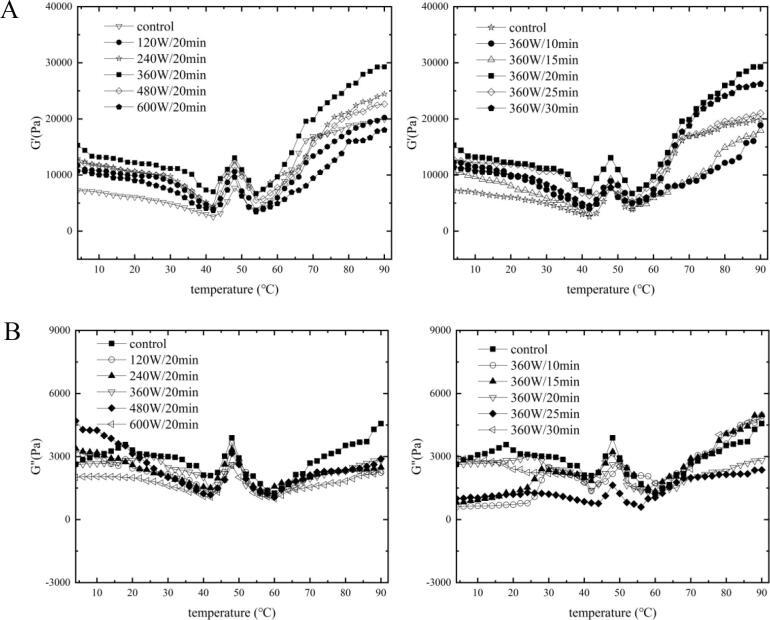
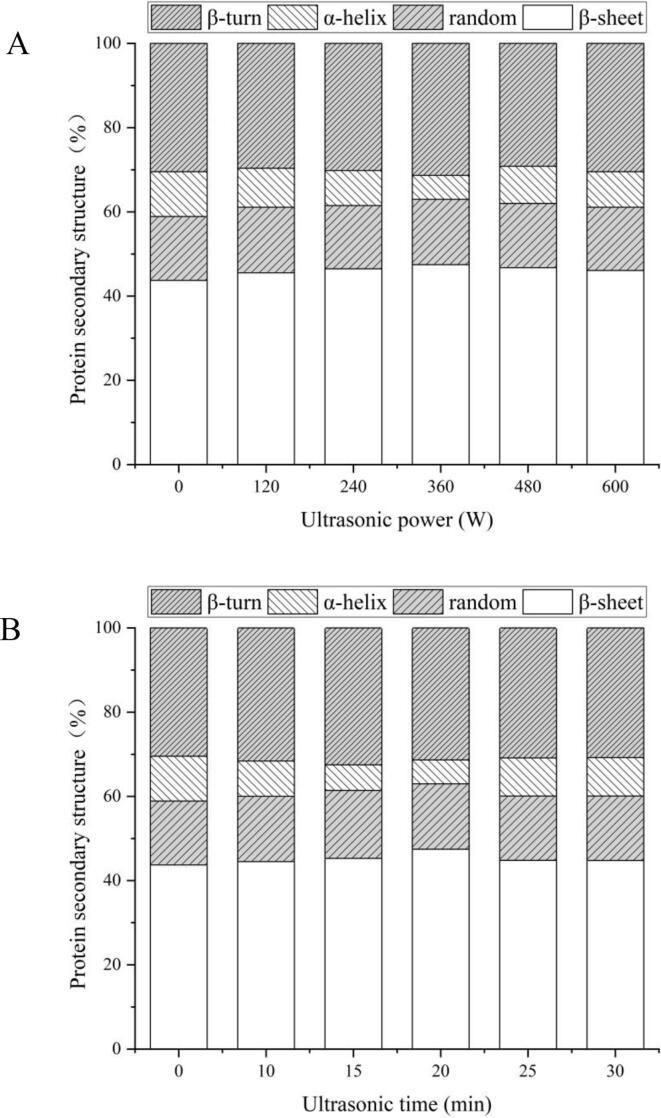
The effects of different ultrasonic pretreatments (120-600 W, 20 min; 360 W, 10-30 min) on the gel properties of shrimp surimi were investigated. Gel properties and protein functional properties were analysed to clarify the mechanism of action of ultrasound. The gel strength, water holding capacity and surface hydrophobicity of shrimp surimi gel increased initially and then decreased with the increase in ultrasound power or time, but the change in total sulfhydryl content showed the opposite trend, which indicated that proper ultrasound pretreatment could improve the gel properties of shrimp surimi, expand the protein to a greater extent and expose more SH groups and hydrophobic groups. According to scanning electron microscopy observation, ultrasound made shrimp surimi gel form a denser gel network. Fourier transform infrared analysis indicated that the α-helix content in shrimp surimi gel decreased initially and then increased with the increase of in ultrasound power or time, whereas the change in β-sheet content showed the opposite trend. And the protein was the most stable in 360 W/20 min pretreatment. SDS-PAGE patterns showed that proper ultrasound inhibited the degradation of actin and troponin C. In addition, dynamic rheology illustrated that the G' values of the ultrasonic pretreatment group were higher than that of the control group, indicating that ultrasound could improve the elasticity and stability of shrimp surimi gel. The results suggested that the shrimp surimi gel pretreated by 360 W/20 min ultrasound showed the best gel properties. Furthermore, the correlation between the indexes affecting the properties of the gel was analyzed. This study provides a new technical means to improve the gel properties of shrimp surimi.
研究了不同超声预处理(120-600 W,20 min;360 W,10-30 min)对虾糜凝胶性质的影响。分析了凝胶性质和蛋白质功能性质,以阐明超声的作用机制。随着超声功率或时间的增加,虾糜凝胶的凝胶强度、持水能力和表面疏水性先增加后降低,而总巯基含量的变化则呈现相反的趋势,这表明适当的超声预处理可以改善虾糜的凝胶性质,更广泛地展开蛋白质,暴露出更多的 SH 基团和疏水性基团。根据扫描电子显微镜观察,超声使虾糜凝胶形成更致密的凝胶网络。傅里叶变换红外分析表明,虾糜凝胶中的α-螺旋含量先降低后增加,随着超声功率或时间的增加而增加,而β-折叠含量的变化则呈现相反的趋势。并且在 360 W/20 min 预处理下蛋白质最稳定。SDS-PAGE 图谱表明,适当的超声抑制了肌动蛋白和肌钙蛋白 C 的降解。此外,动态流变学表明,超声预处理组的 G'值高于对照组,表明超声可以提高虾糜凝胶的弹性和稳定性。结果表明,经 360 W/20 min 超声预处理的虾糜凝胶具有最佳的凝胶性质。此外,还分析了影响凝胶性质的指标之间的相关性。本研究为改善虾糜凝胶性质提供了一种新的技术手段。
 Zotero 插件