
一种小分子稳定了阿尔茨海默氏症 Aβ肽的无规则天然状态。
A Small Molecule Stabilizes the Disordered Native State of the Alzheimer's Aβ Peptide.
机构信息
Department of Chemistry, University of Cambridge, CB2 1EW Cambridge, UK.
Google Research, Mountain View, California 94043, United States.
出版信息
ACS Chem Neurosci. 2022 Jun 15;13(12):1738-1745. doi: 10.1021/acschemneuro.2c00116. Epub 2022 Jun 1.
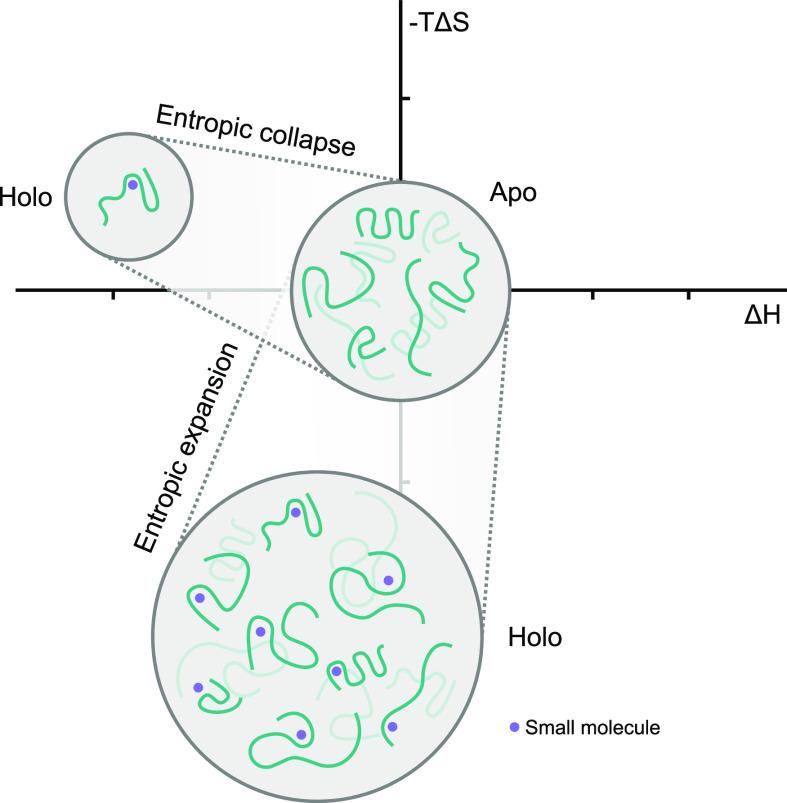
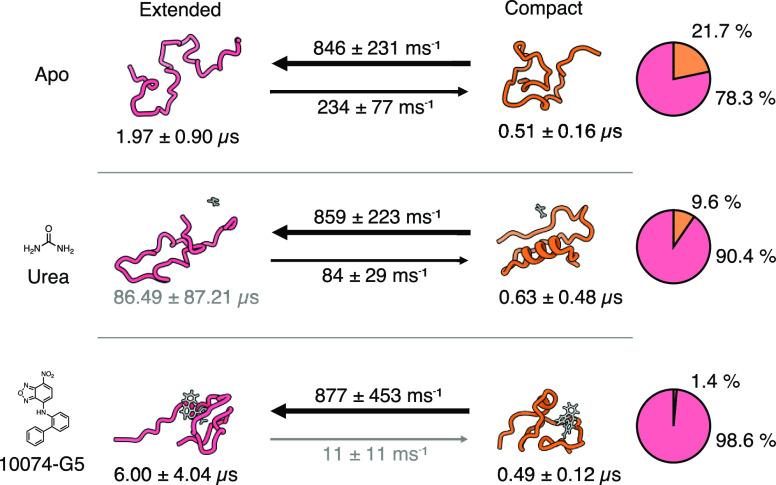
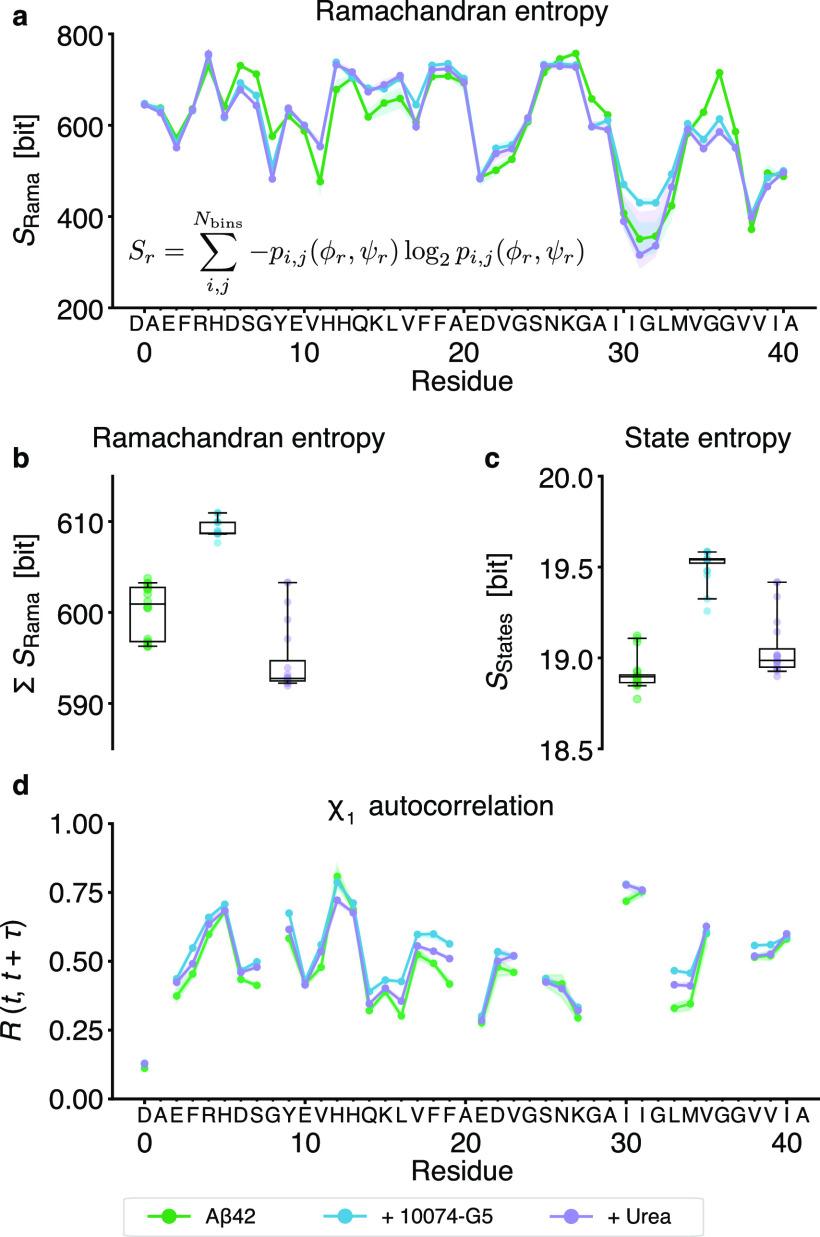
The stabilization of native states of proteins is a powerful drug discovery strategy. It is still unclear, however, whether this approach can be applied to intrinsically disordered proteins. Here, we report a small molecule that stabilizes the native state of the Aβ42 peptide, an intrinsically disordered protein fragment associated with Alzheimer's disease. We show that this stabilization takes place by a disordered binding mechanism, in which both the small molecule and the Aβ42 peptide remain disordered. This disordered binding mechanism involves enthalpically favorable local π-stacking interactions coupled with entropically advantageous global effects. These results indicate that small molecules can stabilize disordered proteins in their native states through transient non-specific interactions that provide enthalpic gain while simultaneously increasing the conformational entropy of the proteins.
稳定蛋白质的天然状态是一种强有力的药物发现策略。然而,目前尚不清楚这种方法是否可以应用于天然无序蛋白质。在这里,我们报告了一种小分子,可以稳定与阿尔茨海默病相关的 Aβ42 肽这种天然无序蛋白质片段的天然状态。我们表明,这种稳定化是通过无规结合机制发生的,其中小分子和 Aβ42 肽都保持无规状态。这种无规结合机制涉及有利的局部π-堆积相互作用与有利的全局熵效应相结合。这些结果表明,小分子可以通过提供焓增益的瞬时非特异性相互作用来稳定天然状态下的无序蛋白质,同时增加蛋白质的构象熵。

 Zotero 插件