
欧洲犬类主要媒介传播病原体的血清阳性率。
Seropositivity of main vector-borne pathogens in dogs across Europe.
机构信息
Department of Animal Health, Veterinary Faculty, Universidad Complutense de Madrid, Madrid, Spain.
Mount Veterinary Practice, Fleetwood, UK.
出版信息
Parasit Vectors. 2022 Jun 6;15(1):189. doi: 10.1186/s13071-022-05316-5.
BACKGROUND
Canine vector-borne disease (CVBD) has been an area of increasing interest in Europe over the last few decades, and there have been changes in the prevalence and distribution of many of these diseases. Monitoring CVBD infections in Europe is often done by individual countries, but aggregated data for the European countries are helpful to understand the distribution of CVBDs.
METHODS
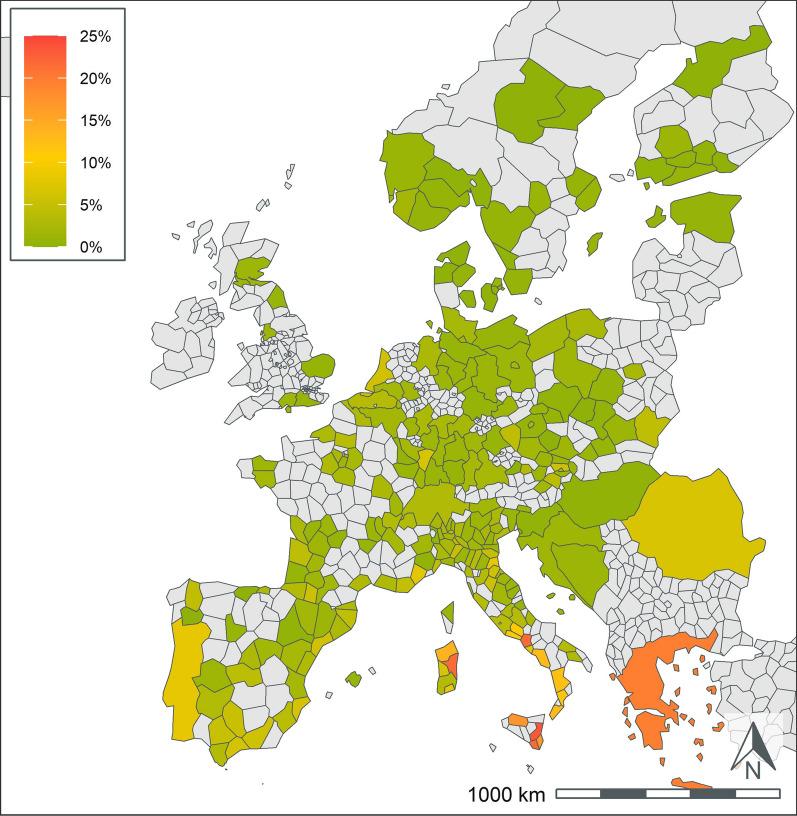
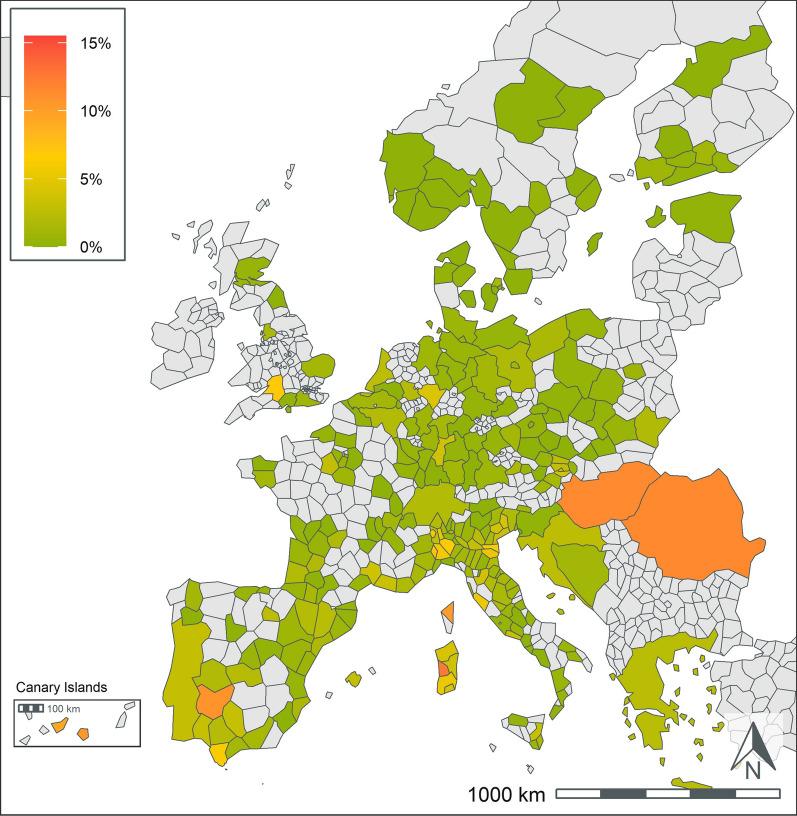
We used an extensive retrospective database of results from point-of-care rapid enzyme-linked immunosorbent assay (ELISA) tests on dogs across Europe to identify distribution and seropositivity in animals tested for selected CVBDs (Anaplasma spp., Ehrlichia spp., Borrelia burgdorferi, Leishmania spp., and Dirofilaria immitis) from 2016 through 2020. Geographic distribution of positive tests and relative percent positive values were mapped by the Nomenclature of Territorial Units for Statistics classification for regions with sufficient test results for reporting.
RESULTS
A total of 404,617 samples corresponding to 1,134,648 canine results were available from dogs tested in 35 countries over the 5-year study period. Over this period the number of test results per year increased whereas test positivity decreased. Leishmania spp. had the largest increase in total test results from 25,000 results in 2016 to over 60,000 results in 2020. Test positivity for Leishmania spp. fell from 13.9% in 2016 to 9.4% in 2020. Test positivity fell for Anaplasma spp. (7.3 to 5.3%), Ehrlichia spp. (4.3 to 3.4%), and Borrelia burgdorferi (3.3 to 2.4%). Dirofilaria immitis test positivity trended down with a high of 2.7% in 2016 and low of 1.8% in 2018. Leishmania spp. test positivity was highest in endemic areas and in several non-endemic countries with low numbers of test results. Co-positivity rates were significantly higher than expected for all pathogen test positive pairs except for Ehrlichia spp. with Borrelia burgdorferi and D. immitis with Borrelia burgdorferi.
CONCLUSIONS
This study represents the largest data set on CVBD seropositivity in Europe to date. The increase in the number of test results and decreasing test positivity over the study period may reflect changes in testing behavior and increased screening of healthy animals. The Europe-wide mapping of CVBD provides expected test positivity that can help inform veterinarians' decisions on screening and improve prevention and identification of these important, sometimes zoonotic, diseases.
背景
在过去几十年中,犬媒介传染病 (CVBD) 一直是欧洲日益关注的领域,许多此类疾病的流行和分布都发生了变化。欧洲对 CVBD 感染的监测通常由各个国家进行,但汇总欧洲国家的数据有助于了解 CVBD 的分布情况。
方法
我们使用了一个广泛的欧洲犬即时酶联免疫吸附测定 (ELISA) 检测结果的回顾性数据库,以确定从 2016 年到 2020 年在选定的 CVBD(嗜吞噬细胞无形体属、埃立克体属、伯氏疏螺旋体、利什曼原虫属和犬恶丝虫)中进行检测的动物的分布和血清阳性率。具有足够报告结果的测试结果的地区按统计区域命名法分类进行了阳性测试和相对阳性百分比的地理分布映射。
结果
在 5 年的研究期间,从 35 个国家接受检测的 404,617 个样本对应了 1,134,648 只犬的检测结果。在此期间,每年的检测结果数量增加,而检测阳性率下降。利什曼原虫属的总检测结果从 2016 年的 25,000 次增加到 2020 年的 60,000 次以上,增幅最大。利什曼原虫属的检测阳性率从 2016 年的 13.9%下降到 2020 年的 9.4%。嗜吞噬细胞无形体属(7.3%至 5.3%)、埃立克体属(4.3%至 3.4%)和伯氏疏螺旋体(3.3%至 2.4%)的检测阳性率也有所下降。犬恶丝虫属的检测阳性率呈下降趋势,2016 年最高为 2.7%,2018 年最低为 1.8%。利什曼原虫属的检测阳性率在流行地区和几个流行地区以外的低检测结果国家最高。除了埃立克体属与伯氏疏螺旋体和犬恶丝虫属与伯氏疏螺旋体的检测阳性对以外,所有病原体检测阳性对的共同阳性率均显著高于预期。
结论
本研究代表了迄今为止欧洲关于 CVBD 血清阳性率的最大数据集。研究期间检测结果数量的增加和检测阳性率的下降可能反映了检测行为的变化以及对健康动物的筛查增加。全欧洲范围内的 CVBD 检测提供了预期的检测阳性率,可以帮助兽医做出筛查决策,并改善这些重要的、有时是人畜共患的疾病的预防和识别。




 Zotero 插件