
转录组分析揭示了春化过程中与开花相关的长链非编码RNA。
Transcriptomic Analysis Reveals LncRNAs Associated with Flowering of during Vernalization.
作者信息
Liu Xiaoxia, Luo Mimi, Li Mengfei, Wei Jianhe
机构信息
State Key Laboratory of Aridland Crop Science, College of Life Science and Technology, Gansu Agricultural University, Lanzhou 730070, China.
Institute of Medicinal Plant Development, Chinese Academy of Medical Sciences & Peking Union Medical College, Beijing 100193, China.
出版信息
Curr Issues Mol Biol. 2022 Apr 26;44(5):1867-1888. doi: 10.3390/cimb44050128.
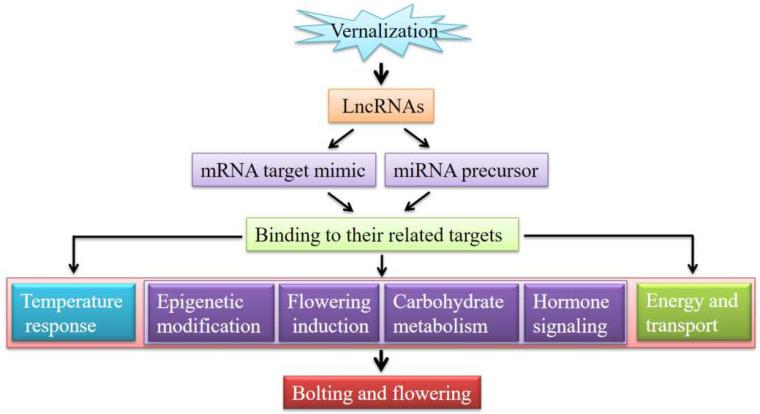
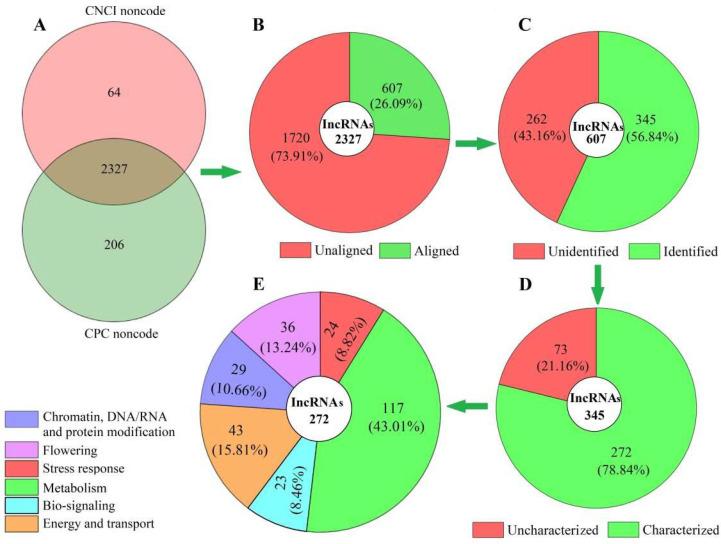
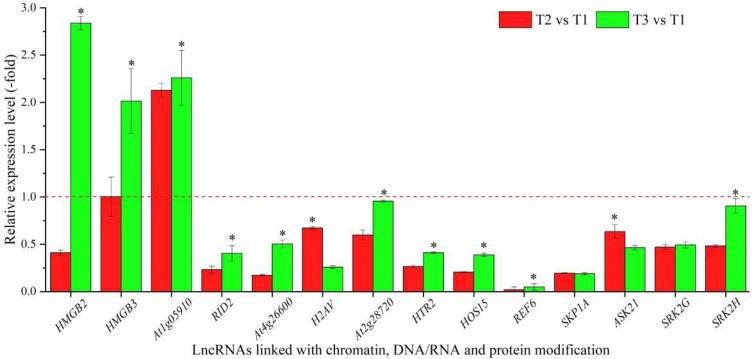
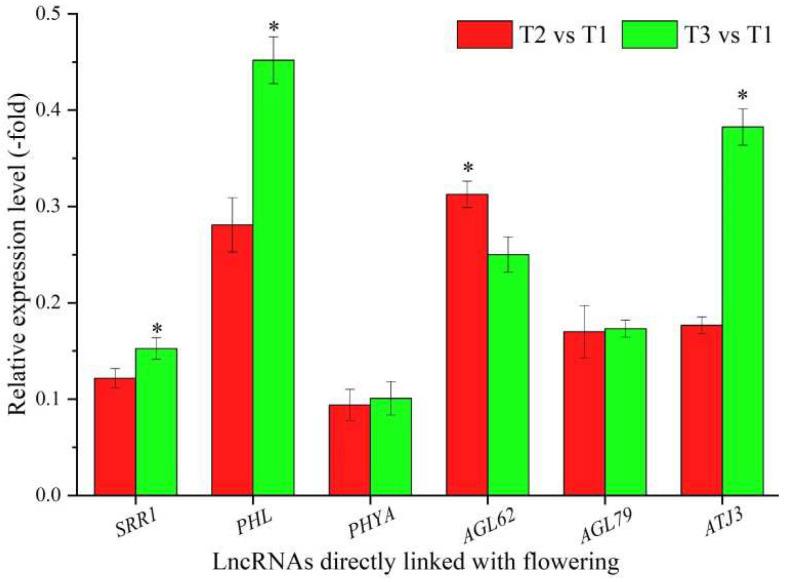
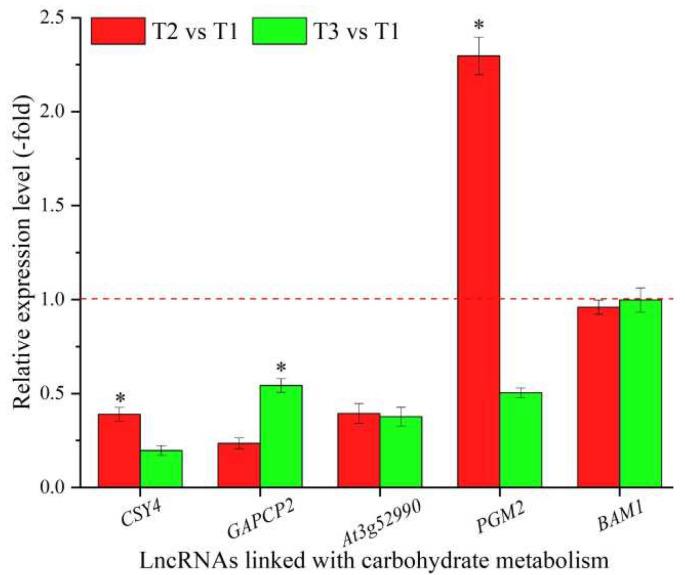
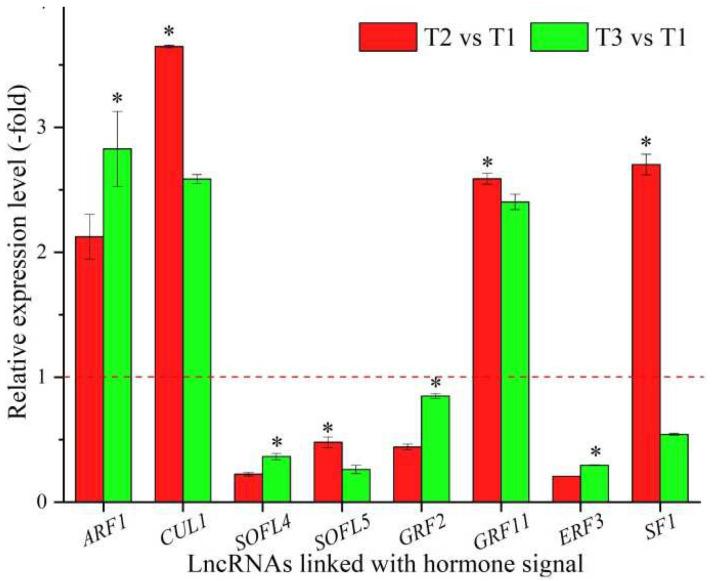
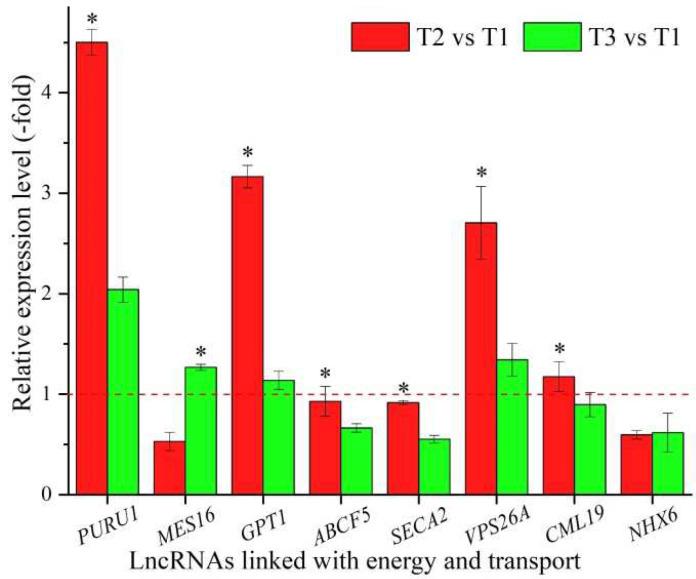
is a "low-temperature and long-day" perennial plant that produces bioactive compounds such as phthalides, organic acids, and polysaccharides for various types of clinical agents, including those with cardio-cerebrovascular, hepatoprotective, and immunomodulatory effects. To date, the regulatory mechanism of flowering under the photoperiod has been revealed, while the regulatory network of flowering genes during vernalization, especially in the role of lncRNAs, has yet to be identified. Here, lncRNAs associated with flowering were identified based on the full-length transcriptomic analysis of at vernalization and freezing temperatures, and the coexpressed mRNAs of lncRNAs were validated by qRT-PCR. We obtained a total of 2327 lncRNAs after assessing the protein-coding potential of coexpressed mRNAs, with 607 lncRNAs aligned against the TAIR database of model plant , 345 lncRNAs identified, and 272 lncRNAs characterized on the SwissProt database. Based on the biological functions of coexpressed mRNAs, the 272 lncRNAs were divided into six categories: (1) chromatin, DNA/RNA and protein modification; (2) flowering; (3) stress response; (4) metabolism; (5) bio-signaling; and (6) energy and transport. The differential expression levels of representatively coexpressed mRNAs were almost consistent with the flowering of . It can be concluded that the flowering of is positively or negatively regulated by lncRNAs, which provides new insights into the regulation mechanism of the flowering of .
是一种“低温长日照”多年生植物,能产生苯酞类、有机酸和多糖等生物活性化合物,用于各类临床制剂,包括具有心脑血管、保肝和免疫调节作用的制剂。迄今为止,已揭示了光周期下开花的调控机制,而春化过程中开花基因的调控网络,尤其是lncRNAs的作用,尚未明确。在此,基于在春化和冷冻温度下的全长转录组分析鉴定了与开花相关的lncRNAs,并通过qRT-PCR验证了lncRNAs的共表达mRNA。在评估共表达mRNA的蛋白质编码潜力后,我们共获得了2327个lncRNAs,其中607个lncRNAs与模式植物的TAIR数据库比对,鉴定出345个lncRNAs,并在SwissProt数据库中对272个lncRNAs进行了特征描述。根据共表达mRNA的生物学功能,将272个lncRNAs分为六类:(1)染色质、DNA/RNA和蛋白质修饰;(2)开花;(3)应激反应;(4)代谢;(5)生物信号传导;(6)能量和运输。代表性共表达mRNA的差异表达水平与的开花情况基本一致。可以得出结论,的开花受到lncRNAs的正向或负向调控,这为的开花调控机制提供了新的见解。

 Zotero 插件