
肝细胞癌(HCC)的新兴疗法
Emerging Therapies for Hepatocellular Carcinoma (HCC).
作者信息
Chakraborty Eesha, Sarkar Devanand
机构信息
C. Kenneth and Dianne Wright Center for Clinical and Translational Research, Virginia Commonwealth University, Richmond, VA 23298, USA.
Department of Human and Molecular Genetics, Massey Cancer Center, VCU Institute of Molecular Medicine (VIMM), Virginia Commonwealth University, Richmond, VA 23298, USA.
出版信息
Cancers (Basel). 2022 Jun 4;14(11):2798. doi: 10.3390/cancers14112798.
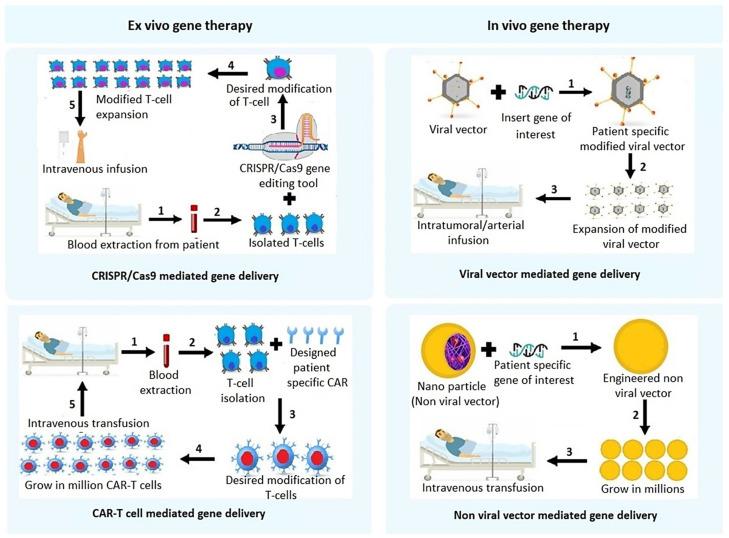
Hepatocellular carcinoma (HCC) arises from hepatocytes and accounts for 90% of primary liver cancer. According to Global Cancer Incidence, Mortality and Prevalence (GLOBOCAN) 2020, globally HCC is the sixth most common cancer and the third most common cause of cancer-related deaths. Reasons for HCC prognosis remaining dismal are that HCC is asymptomatic in its early stages, leading to late diagnosis, and it is markedly resistant to conventional chemo- and radiotherapy. Liver transplantation is the treatment of choice in early stages, while surgical resection, radiofrequency ablation (RFA) and trans arterial chemoembolization (TACE) are Food and Drug Administration (FDA)-approved treatments for advanced HCC. Additional first line therapy for advanced HCC includes broad-spectrum tyrosine kinase inhibitors (TKIs), such as sorafenib and lenvatinib, as well as a combination of immunotherapy and anti-angiogenesis therapy, namely atezolizumab and bevacizumab. However, these strategies provide nominal extension in the survival curve, cause broad spectrum toxic side effects, and patients eventually develop therapy resistance. Some common mutations in HCC, such as in telomerase reverse transcriptase (), catenin beta 1 () and tumor protein p53 () genes, are still considered to be undruggable. In this context, identification of appropriate gene targets and specific gene delivery approaches create the potential of gene- and immune-based therapies for the safe and effective treatment of HCC. This review elaborates on the current status of HCC treatment by focusing on potential gene targets and advanced techniques, such as oncolytic viral vectors, nanoparticles, chimeric antigen receptor (CAR)-T cells, immunotherapy, and clustered regularly interspaced short palindromic repeats/CRISPR-associated protein 9 (CRISPR/Cas9), and describes future prospects in HCC treatment.
肝细胞癌(HCC)起源于肝细胞,占原发性肝癌的90%。根据《2020年全球癌症发病率、死亡率和患病率》(GLOBOCAN),在全球范围内,HCC是第六大常见癌症,也是癌症相关死亡的第三大常见原因。HCC预后仍然不佳的原因是其在早期无症状,导致诊断延迟,并且对传统化疗和放疗具有明显抗性。肝移植是早期的首选治疗方法,而手术切除、射频消融(RFA)和经动脉化疗栓塞(TACE)是美国食品药品监督管理局(FDA)批准的晚期HCC治疗方法。晚期HCC的其他一线治疗方法包括广谱酪氨酸激酶抑制剂(TKIs),如索拉非尼和仑伐替尼,以及免疫疗法和抗血管生成疗法的联合应用,即阿替利珠单抗和贝伐单抗。然而,这些策略仅能使生存曲线略有延长,会引起广泛的毒副作用,并且患者最终会产生治疗抗性。HCC中的一些常见突变,如端粒酶逆转录酶()、连环蛋白β1()和肿瘤蛋白p53()基因中的突变,仍被认为是不可靶向治疗的。在此背景下,确定合适的基因靶点和特定的基因递送方法为基于基因和免疫的HCC安全有效治疗创造了潜力。本综述通过关注潜在基因靶点和先进技术,如溶瘤病毒载体、纳米颗粒、嵌合抗原受体(CAR)-T细胞、免疫疗法和成簇规律间隔短回文重复序列/CRISPR相关蛋白9(CRISPR/Cas9),阐述了HCC治疗的现状,并描述了HCC治疗的未来前景。
 Zotero 插件