
久坐生活方式和咀嚼功能障碍:是时候重新审视其对与年龄相关的认知能力下降和齿状回星形胶质细胞形态的影响了。
The Sedentary Lifestyle and Masticatory Dysfunction: Time to Review the Contribution to Age-Associated Cognitive Decline and Astrocyte Morphotypes in the Dentate Gyrus.
机构信息
Laboratório de Investigações em Neurodegeneração e Infecção, Instituto de Ciências Biológicas, Hospital Universitário João de Barros Barreto, Universidade Federal do Pará, Belém 66073-005, PA, Brazil.
Curso de Medicina, Centro Universitário do Estado do Pará, Belém 66613-903, PA, Brazil.
出版信息
Int J Mol Sci. 2022 Jun 6;23(11):6342. doi: 10.3390/ijms23116342.
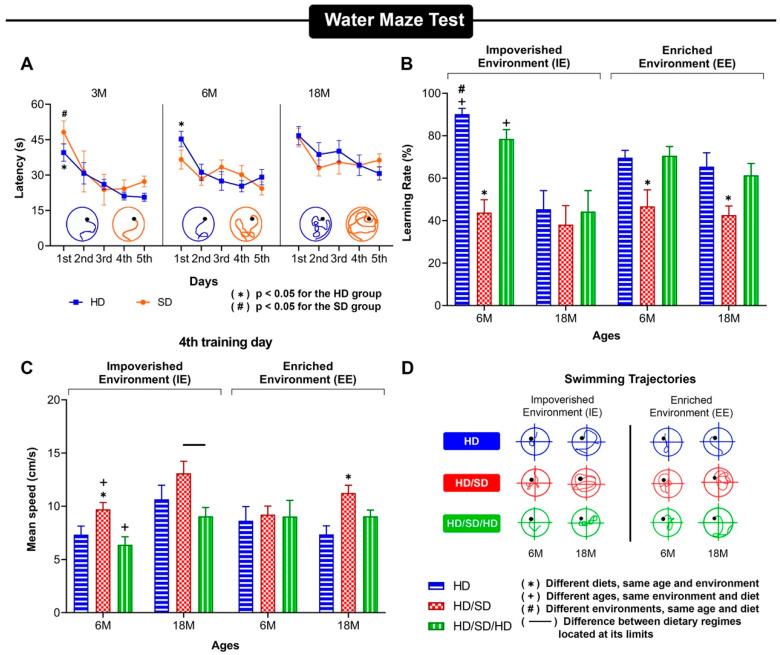
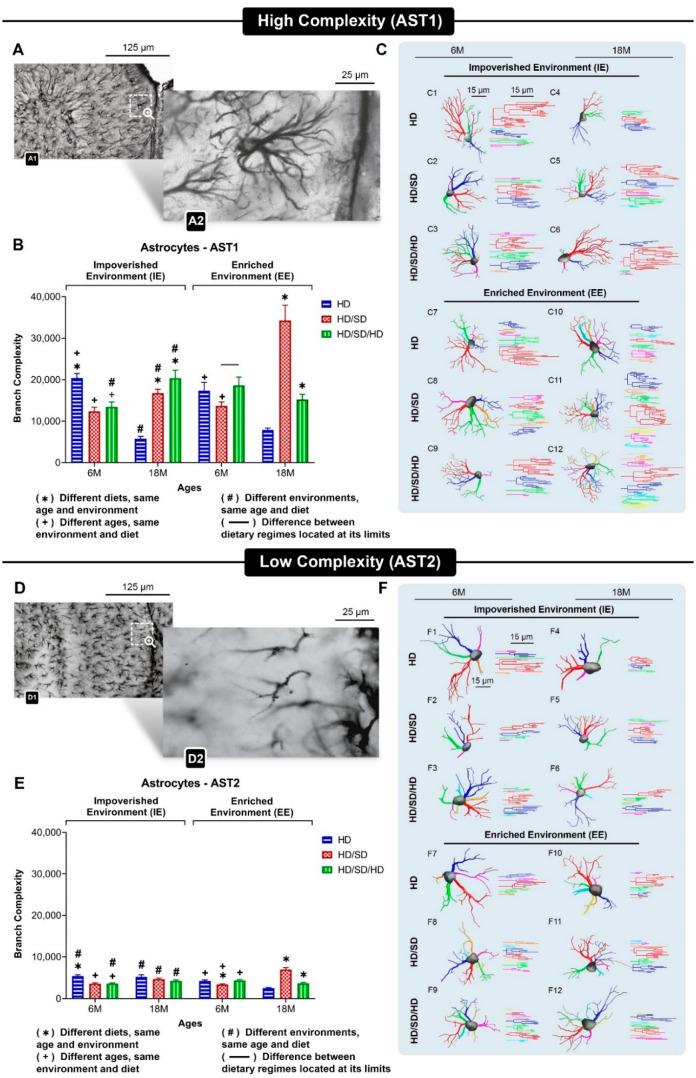
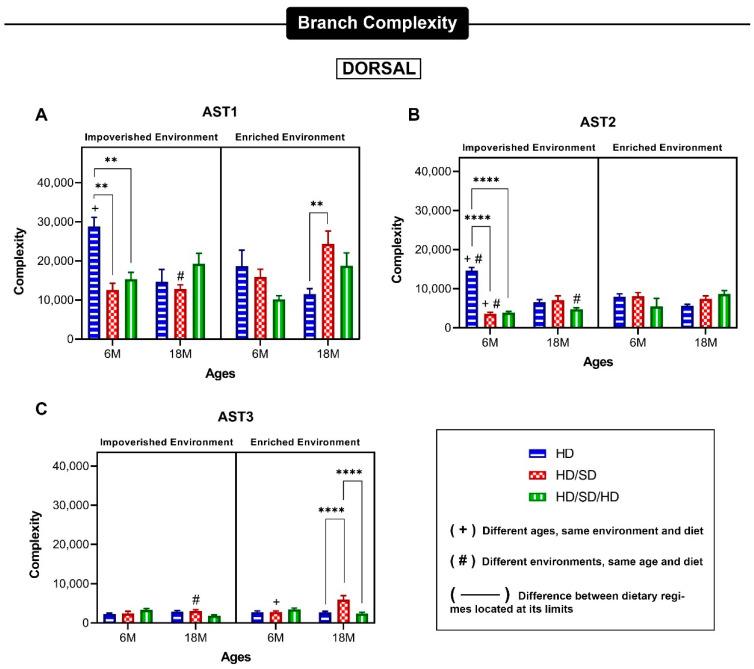
As aging and cognitive decline progresses, the impact of a sedentary lifestyle on the appearance of environment-dependent cellular morphologies in the brain becomes more apparent. Sedentary living is also associated with poor oral health, which is known to correlate with the rate of cognitive decline. Here, we will review the evidence for the interplay between mastication and environmental enrichment and assess the impact of each on the structure of the brain. In previous studies, we explored the relationship between behavior and the morphological features of dentate gyrus glial fibrillary acidic protein (GFAP)-positive astrocytes during aging in contrasting environments and in the context of induced masticatory dysfunction. Hierarchical cluster and discriminant analysis of GFAP-positive astrocytes from the dentate gyrus molecular layer revealed that the proportion of AST1 (astrocyte arbors with greater complexity phenotype) and AST2 (lower complexity) are differentially affected by environment, aging and masticatory dysfunction, but the relationship is not straightforward. Here we re-evaluated our previous reconstructions by comparing dorsal and ventral astrocyte morphologies in the dentate gyrus, and we found that morphological complexity was the variable that contributed most to cluster formation across the experimental groups. In general, reducing masticatory activity increases astrocyte morphological complexity, and the effect is most marked in the ventral dentate gyrus, whereas the effect of environment was more marked in the dorsal dentate gyrus. All morphotypes retained their basic structural organization in intact tissue, suggesting that they are subtypes with a non-proliferative astrocyte profile. In summary, the increased complexity of astrocytes in situations where neuronal loss and behavioral deficits are present is counterintuitive, but highlights the need to better understand the role of the astrocyte in these conditions.
随着年龄的增长和认知能力的下降,久坐不动的生活方式对大脑中依赖环境的细胞形态出现的影响变得更加明显。久坐不动的生活方式也与口腔健康状况不佳有关,而口腔健康状况与认知能力下降的速度有关。在这里,我们将回顾咀嚼和环境丰富之间相互作用的证据,并评估它们各自对大脑结构的影响。在之前的研究中,我们在不同的环境中以及在诱导性咀嚼功能障碍的背景下,探讨了行为与齿状回胶质纤维酸性蛋白 (GFAP) 阳性星形胶质细胞形态特征之间的关系。对不同环境和咀嚼功能障碍下齿状回分子层中 GFAP 阳性星形胶质细胞的层次聚类和判别分析表明,AST1(具有更高复杂性表型的星形胶质细胞分支)和 AST2(较低复杂性)的比例受环境、衰老和咀嚼功能障碍的影响不同,但这种关系并不简单。在这里,我们通过比较齿状回背侧和腹侧星形胶质细胞的形态,重新评估了我们之前的重建结果,我们发现形态复杂性是跨实验组形成聚类的最重要变量。总的来说,减少咀嚼活动会增加星形胶质细胞的形态复杂性,这种影响在腹侧齿状回最为明显,而环境的影响在背侧齿状回更为明显。所有形态都在完整组织中保留了其基本的结构组织,这表明它们是具有非增殖性星形胶质细胞特征的亚型。总之,在存在神经元丢失和行为缺陷的情况下,星形胶质细胞复杂性的增加是违反直觉的,但这强调了需要更好地理解星形胶质细胞在这些情况下的作用。




 Zotero 插件