
肾移植受者B细胞受体重链互补决定区3的高通量测序:初步报告
High-Throughput Sequencing of Complementarity Determining Region 3 in the Heavy Chain of B-Cell Receptor in Renal Transplant Recipients: A Preliminary Report.
作者信息
Wu Tsai-Hung, Liao Hsien-Tzung, Li Tzu-Hao, Tsai Hung-Cheng, Lin Niang-Cheng, Chen Cheng-Yen, Tsai Shih-Feng, Huang Tzu-Hao, Tsai Chang-Youh, Yu Chia-Li
机构信息
Division of Nephrology, Taipei Veterans General Hospital, Taipei 11217, Taiwan.
Division of Allergy, Immunology & Rheumatology, Taipei Veterans General Hospital, Taipei 11217, Taiwan.
出版信息
J Clin Med. 2022 May 25;11(11):2980. doi: 10.3390/jcm11112980.
BACKGROUND
Graft failure resulting from rejection or any other adverse event usually originates from an aberrant and/or exaggerated immune response and is often catastrophic in renal transplantation. So, it is essential to monitor patients' immune status for detecting a rejection/graft failure early on.
METHODS
We monitored the sequence change of complementary determining region 3 (CDR3) in B-cell receptor (BCR) immunoglobulin heavy-chain () immune repertoire (iR) in 14 renal transplant patients using next-generation sequencing (NGS), correlating its diversity to various clinical events occurring after transplantation. in peripheral blood mononuclear cells was sequenced along the post-transplantation course by NGS using the iRweb server.
RESULTS
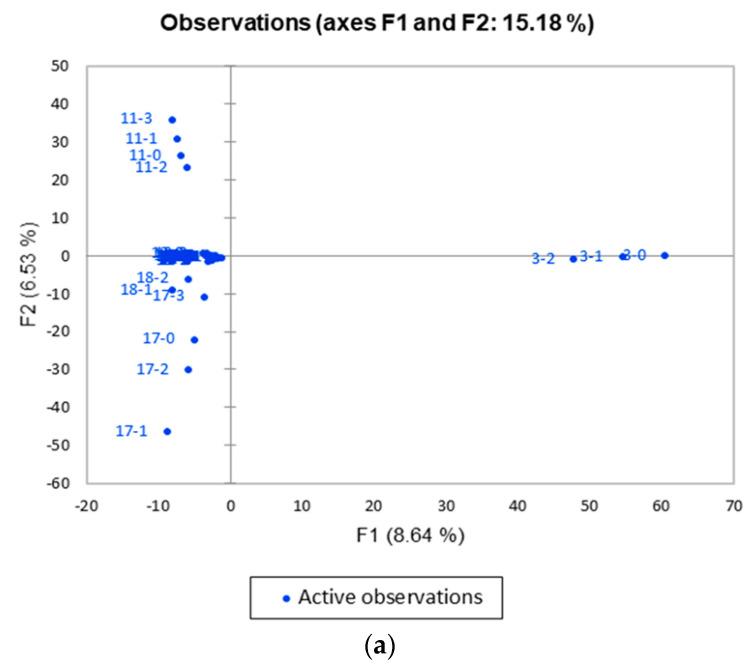
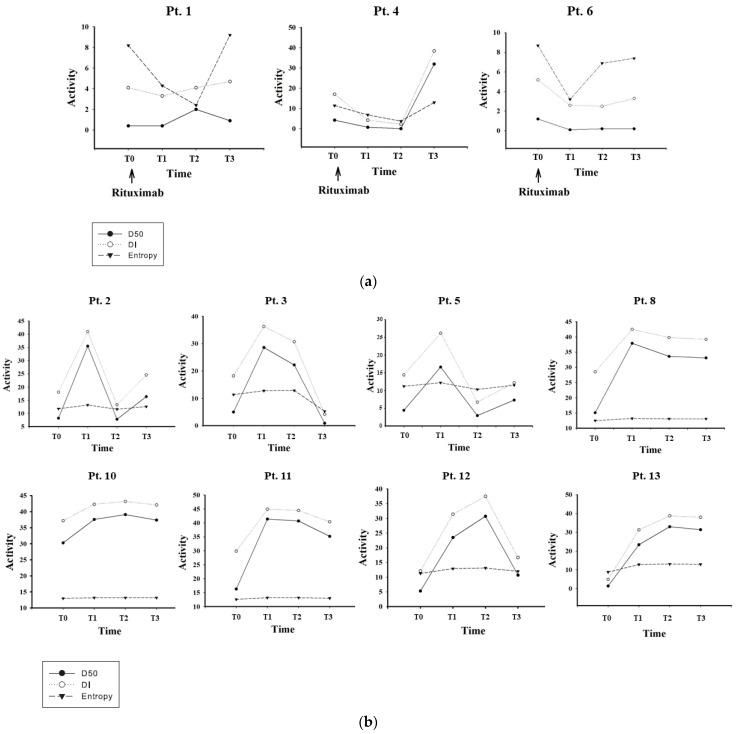
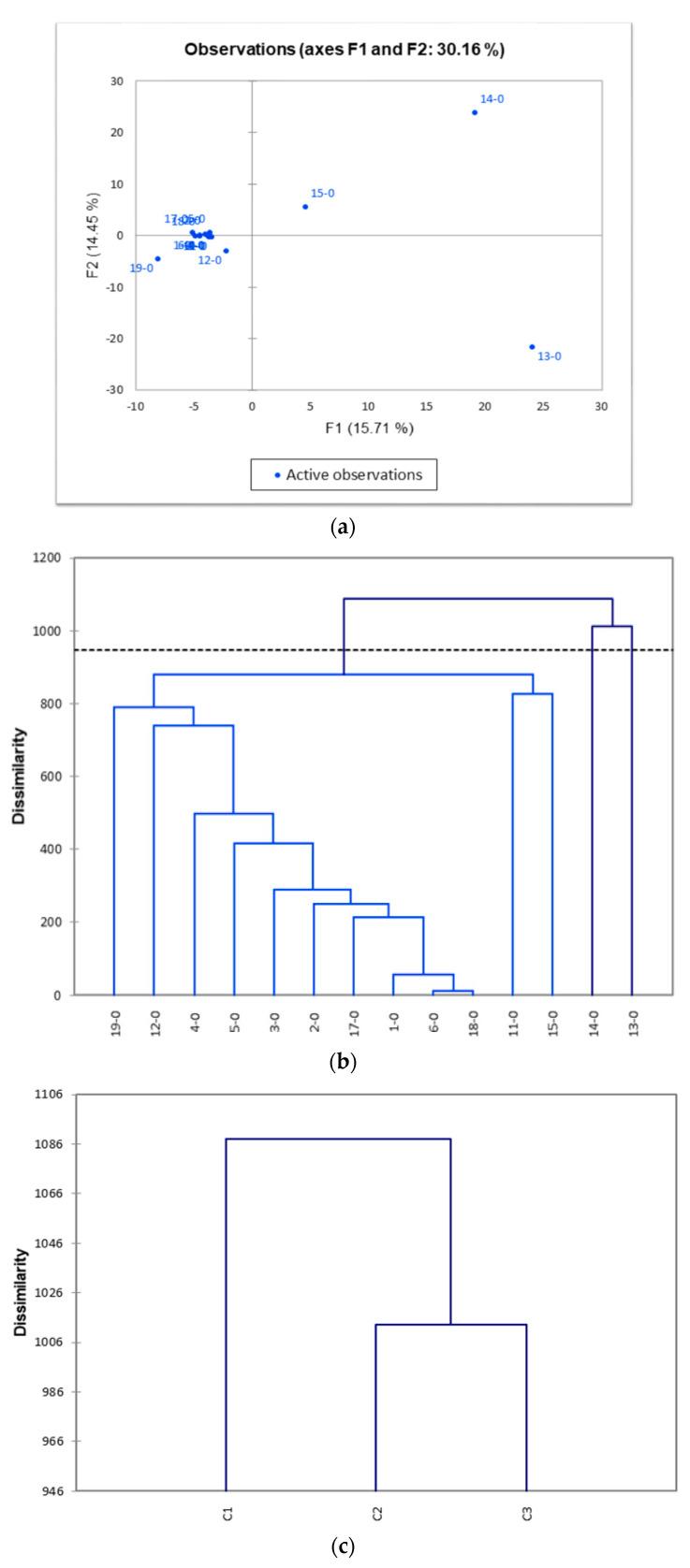
Datasets covering VDJ regions of indicated clonal diversity (D50) variations along the post-transplant course. Furthermore, principal component analysis showed the clustering of these sequence variations. A total of 544 shared sequences were identified before transplantation. D50 remained low in three patients receiving rituximab. Among them, one's D50 resumed after 3 m, indicating graft tolerance. The D50 rapidly increased after grafting and decreased thereafter in four patients without rejection, decreased in two patients with T-cell-mediated rejection (TCMR) and exhibited a sharp down-sliding after 3 m in two patients receiving donations after cardiac death (DCD). In another two patients with TCMR, D50 was low just before individual episodes, but either became persistently low or returned to a plateau, depending on the failure or success of the immunosuppressive treatments. Shared CDR3 clonal expansions correlated to D50 changes. Agglomerative hierarchical clustering showed a commonly shared CDR3 sequence and at least two different clusters in five patients.
CONCLUSIONS
Clonal diversity in -3 varied depending on clinical courses of 14 renal transplant patients, including B-cell suppression therapy, TCMR, DCD, and graft tolerance. Adverse events on renal graft failure might lead to different clustering of iR. However, these preliminary data need further verification in further studies for the possible applications of iR changes as genetic expression biomarkers or laboratory parameters to detect renal graft failure/rejection earlier.
背景
由排斥反应或任何其他不良事件导致的移植物失败通常源于异常和/或过度的免疫反应,在肾移植中往往是灾难性的。因此,监测患者的免疫状态对于早期检测排斥反应/移植物失败至关重要。
方法
我们使用下一代测序(NGS)监测了14例肾移植患者B细胞受体(BCR)免疫球蛋白重链()免疫组库(iR)中互补决定区3(CDR3)的序列变化,并将其多样性与移植后发生的各种临床事件相关联。使用iRweb服务器通过NGS对外周血单个核细胞中的沿移植后过程进行测序。
结果
覆盖的VDJ区域的数据集显示移植后过程中克隆多样性(D50)的变化。此外,主成分分析显示了这些序列变化的聚类。移植前共鉴定出544个共享序列。3例接受利妥昔单抗治疗的患者中D50保持较低水平。其中1例在3个月后D50恢复,表明移植物耐受。4例未发生排斥反应的患者移植后D50迅速升高,随后下降;2例发生T细胞介导的排斥反应(TCMR)的患者D50下降;2例接受心脏死亡后捐赠(DCD)的患者在3个月后D50急剧下降。另外2例TCMR患者在个体发作前D50较低,但根据免疫抑制治疗的失败或成功,要么持续较低,要么恢复到平台期。共享的CDR3克隆扩增与D50变化相关。凝聚层次聚类显示5例患者中有一个共同的共享CDR3序列和至少两个不同的聚类。
结论
14例肾移植患者的临床过程不同,包括B细胞抑制治疗、TCMR、DCD和移植物耐受,其-3中的克隆多样性也有所不同。肾移植失败的不良事件可能导致iR的不同聚类。然而,这些初步数据需要在进一步的研究中进一步验证,以确定iR变化作为基因表达生物标志物或实验室参数用于更早检测肾移植失败/排斥反应的可能应用。
 Zotero 插件