
通过贝叶斯估计检测卫生专业人员中的 SARS-CoV-2 血清流行率:疫苗接种前后巴西的一项案例研究。
Seroprevalence of SARS-CoV-2 on health professionals via Bayesian estimation: a Brazilian case study before and after vaccines.
机构信息
CEERMA - Center for Risk Analysis, Reliability Engineering and Environmental Modeling, Universidade Federal de Pernambuco, Brazil; Technology Center, Universidade Federal de Pernambuco, Brazil.
CEERMA - Center for Risk Analysis, Reliability Engineering and Environmental Modeling, Universidade Federal de Pernambuco, Brazil; Department of Production Engineering, Universidade Federal de Pernambuco, Brazil.
出版信息
Acta Trop. 2022 Sep;233:106551. doi: 10.1016/j.actatropica.2022.106551. Epub 2022 Jun 9.
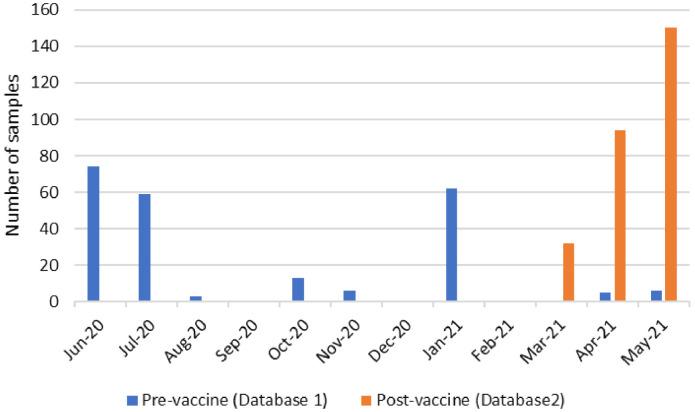
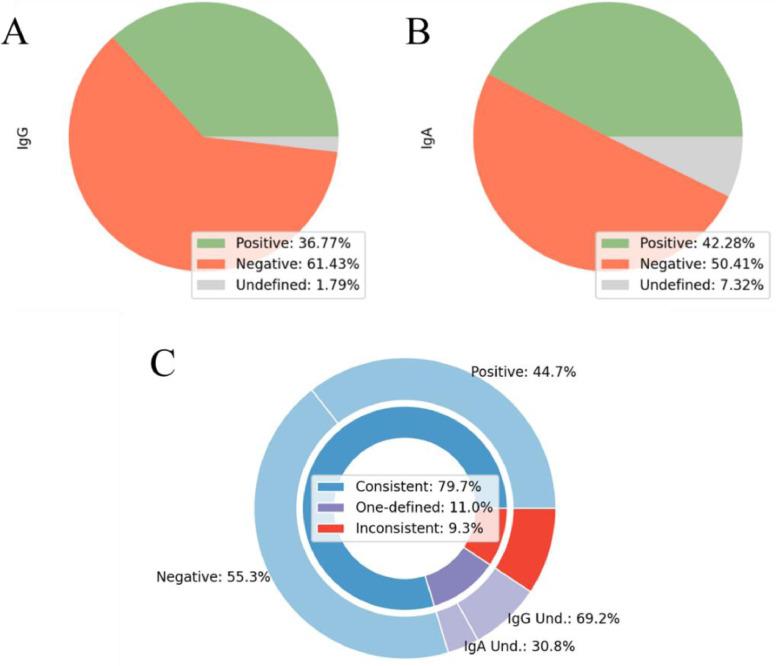
The increasing number of COVID-19 infections brought by the current pandemic has encouraged the scientific community to analyze the seroprevalence in populations to support health policies. In this context, accurate estimations of SARS-CoV-2 antibodies based on antibody tests metrics (e.g., specificity and sensitivity) and the study of population characteristics are essential. Here, we propose a Bayesian analysis using IgA and IgG antibody levels through multiple scenarios regarding data availability from different information sources to estimate the seroprevalence of health professionals in a Northeastern Brazilian city: no data available, data only related to the test performance, data from other regions. The study population comprises 432 subjects with more than 620 collections analyzed via IgA/IgG ELISA tests. We conducted the study in pre- and post-vaccination campaigns started in Brazil. We discuss the importance of aggregating available data from various sources to create informative prior knowledge. Considering prior information from the USA and Europe, the pre-vaccine seroprevalence means are 8.04% and 10.09% for IgG and 7.40% and 9.11% for IgA. For the post-vaccination campaign and considering local informative prior, the median is 84.83% for IgG, which confirms a sharp increase in the seroprevalence after vaccination. Additionally, stratification considering differences in sex, age (younger than 30 years, between 30 and 49 years, and older than 49 years), and presence of comorbidities are provided for all scenarios.
当前大流行带来的 COVID-19 感染病例不断增加,促使科学界分析人群中的血清流行率,以支持卫生政策。在这种情况下,基于抗体测试指标(例如特异性和敏感性)以及人群特征研究,对 SARS-CoV-2 抗体进行准确估计至关重要。在这里,我们提出了一种贝叶斯分析方法,通过不同信息来源的多种情况来分析 IgA 和 IgG 抗体水平,以估计巴西东北部一个城市的卫生专业人员的血清流行率:没有数据可用,仅与测试性能相关的数据,来自其他地区的数据。研究人群包括 432 名受试者,通过 IgA/IgG ELISA 测试分析了超过 620 次采集。我们在巴西开始的疫苗接种前和疫苗接种后进行了这项研究。我们讨论了聚合来自各种来源的可用数据以创建有意义的先验知识的重要性。考虑到来自美国和欧洲的先验信息,疫苗接种前 IgG 和 IgA 的血清流行率平均值分别为 8.04%和 7.40%,以及 10.09%和 9.11%。对于疫苗接种后运动,并考虑到当地的信息先验,IgG 的中位数为 84.83%,这证实了接种疫苗后血清流行率的急剧上升。此外,还针对所有情况提供了考虑性别、年龄(30 岁以下、30 至 49 岁和 49 岁以上)和合并症差异的分层。



 Zotero 插件