
[具体两种物质名称]的适应性反应与洗必泰耐药性发展的比较。 (注:原文中“vs.”前和后具体物质名称缺失)
A Comparison of the Adaptive Response of vs. and the Development of Chlorhexidine Resistance.
作者信息
van de Lagemaat Marieke, Stockbroekx Valerie, Geertsema-Doornbusch Gésinda I, Dijk Melissa, Carniello Vera, Woudstra Willem, van der Mei Henny C, Busscher Henk J, Ren Yijin
机构信息
University of Groningen and University Medical Center Groningen, Department of Orthodontics, Groningen, Netherlands.
University of Groningen and University Medical Center Groningen, Department of Biomedical Engineering, Groningen, Netherlands.
出版信息
Front Microbiol. 2022 May 19;13:861890. doi: 10.3389/fmicb.2022.861890. eCollection 2022.
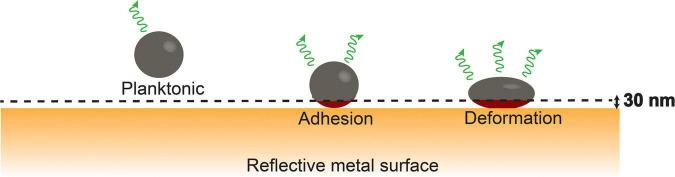
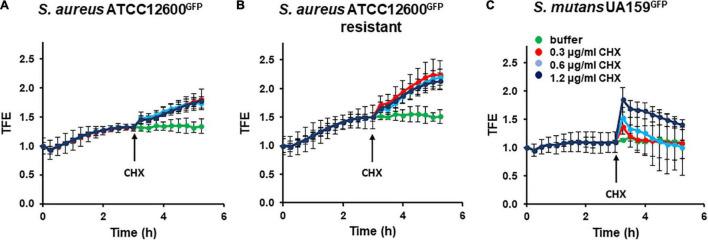
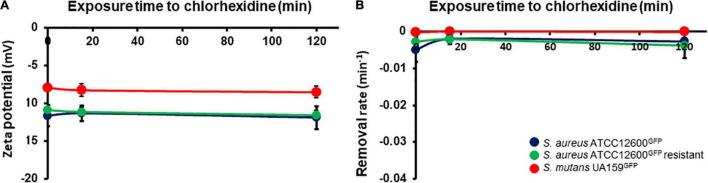
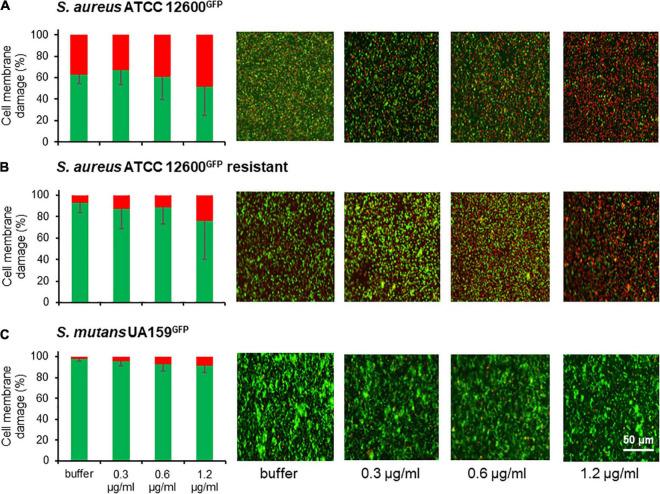
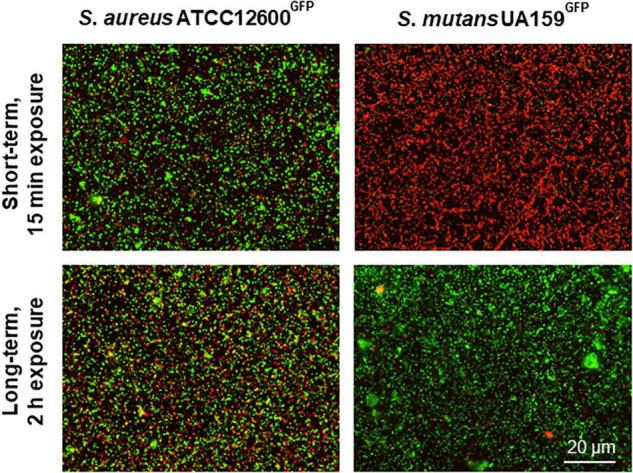
Antimicrobials with nonselective antibacterial efficacy such as chlorhexidine can be effective in reducing biofilm, but bear the risk of inducing resistance in specific bacteria. In clinical practice, bacteria such as have been found resistant to chlorhexidine, but other bacteria, including , have largely remained susceptible to chlorhexidine despite its widespread use in oral healthcare. Here, we aim to forward a possible reason as to why can acquire resistance against chlorhexidine, while remains susceptible to chlorhexidine. Measurement of surface-enhanced fluorescence indicated that chlorhexidine caused gradual, but irreversible deformation to adhering green fluorescent due to irreparable damage to the cell wall. Concurrently, the metabolic activity of adhering staphylococci was higher than of planktonic bacteria, suggesting efflux mechanisms may have been activated upon cell wall deformation, impeding the buildup of a high chlorhexidine concentration in the cytoplasm and therewith stimulating the development of chlorhexidine resistance in . Exposure of to chlorhexidine caused immediate, but reversible deformation in adhering streptococci, indicative of rapid self-repair of cell wall damage done by chlorhexidine. Due to cell wall self-repair, will be unable to effectively reduce the chlorhexidine concentration in the cytoplasm causing solidification of the cytoplasm. In line, no increased metabolic activity was observed in during exposure to chlorhexidine. Therewith, self-repair is suicidal and prevents the development of a chlorhexidine-resistant progeny in .
具有非选择性抗菌功效的抗菌剂,如洗必泰,可有效减少生物膜,但存在诱导特定细菌产生耐药性的风险。在临床实践中,已发现诸如[具体细菌名称1]等细菌对洗必泰耐药,但包括[具体细菌名称2]在内的其他细菌,尽管洗必泰在口腔保健中广泛使用,却基本仍对其敏感。在此,我们旨在提出一个可能的原因,解释为何[具体细菌名称1]能够获得对洗必泰的耐药性,而[具体细菌名称2]仍对洗必泰敏感。表面增强荧光测量表明,洗必泰由于对细胞壁造成不可修复的损伤,导致附着的绿色荧光[细菌名称]逐渐但不可逆地变形。同时,附着葡萄球菌的代谢活性高于浮游细菌,这表明细胞壁变形时可能激活了外排机制,阻碍了洗必泰在细胞质中高浓度的积累,从而刺激了[具体细菌名称1]中洗必泰耐药性的发展。将[具体细菌名称2]暴露于洗必泰会导致附着链球菌立即但可逆的变形,这表明洗必泰对细胞壁造成的损伤能迅速自我修复。由于细胞壁自我修复,[具体细菌名称2]将无法有效降低细胞质中的洗必泰浓度,导致细胞质凝固。相应地,在[具体细菌名称2]暴露于洗必泰期间未观察到代谢活性增加。因此,自我修复是自毁性的,并阻止了[具体细菌名称2]中洗必泰耐药后代的产生。

 Zotero 插件