
采用稳定同位素比分析对茶提取物和合成产品中的茶氨酸进行特征描述。
Characterization of L-theanine in tea extracts and synthetic products using stable isotope ratio analysis.
机构信息
Technology Transfer Centre, Fondazione Edmund Mach (FEM), Via E. Mach 1, 38098, San Michele all'Adige, Italy.
Department of Agricultural and Environmental Sciences, University of Udine, Via Sondrio 2A, 33100, Udine, UD, Italy.
出版信息
J Food Drug Anal. 2021 Jun 15;29(2):311-318. doi: 10.38212/2224-6614.3349.
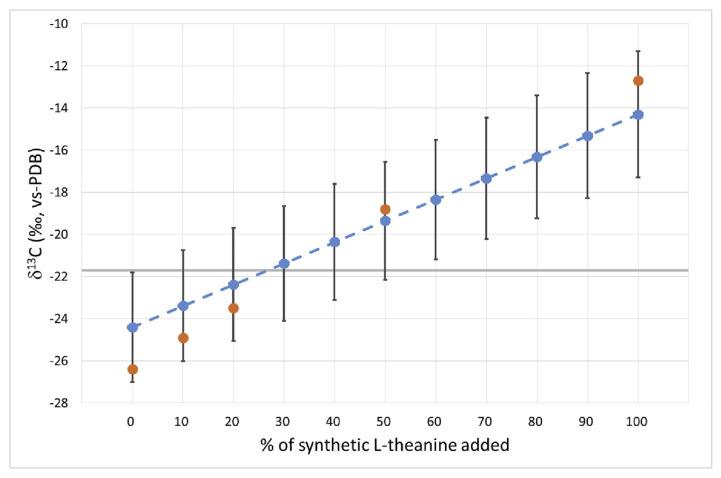
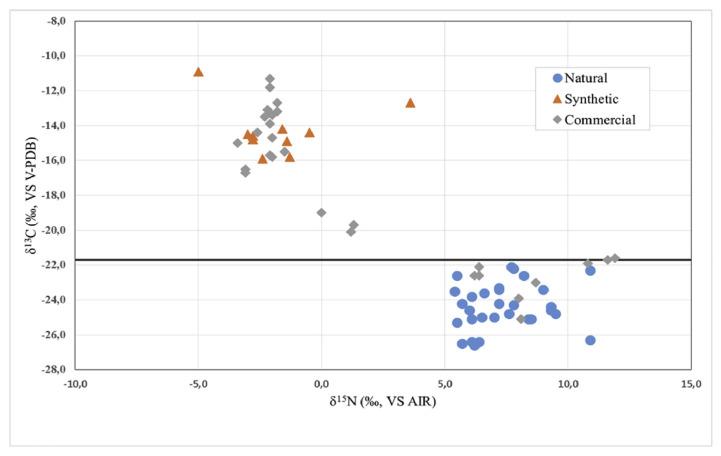
L-theanine involves a great number of health benefits and dietary supplements containing this molecule are becoming increasingly popular. There is, therefore, a growing need to find ways to discriminate between natural L-theanine extracted from tea leaves and the cheaper, synthetic one obtained using specific bacterial enzymes. A first attempt of stable isotope ratio analysis characterization of the possible synthetic adulterant L-theanine (δC of -14.3 ± 1.5‰), obtained from vegetable substrates with C4 photosynthetic cycle, and of the more expensive natural L-theanine (δC of -24.4 ± 1.3‰), extracted from Camellia sinensis plants with C3 photosynthetic cycle, is reported here.
L-茶氨酸具有许多健康益处,含有这种分子的膳食补充剂越来越受欢迎。因此,人们越来越需要找到区分茶叶中提取的天然 L-茶氨酸和使用特定细菌酶获得的更便宜的合成 L-茶氨酸的方法。本研究首次尝试用稳定同位素比分析方法对可能的合成掺杂物 L-茶氨酸(δC 值为-14.3 ± 1.5‰)进行特征分析,这种 L-茶氨酸来自 C4 光合作用的蔬菜底物,以及更昂贵的天然 L-茶氨酸(δC 值为-24.4 ± 1.3‰),它是从具有 C3 光合作用的茶树植物中提取的。
 Zotero 插件