
考察各种铁螯合剂对分化的 PC12 细胞的保护作用,以防止 6-羟多巴胺和多巴胺引起的氧化损伤。
Examination of diverse iron-chelating agents for the protection of differentiated PC12 cells against oxidative injury induced by 6-hydroxydopamine and dopamine.
机构信息
Faculty of Pharmacy, Charles University, Akademika Heyrovského 1203, 500 05, Hradec Králové, Czech Republic.
Department of Chemistry, Duke University, Durham, NC, USA.
出版信息
Sci Rep. 2022 Jun 13;12(1):9765. doi: 10.1038/s41598-022-13554-x.
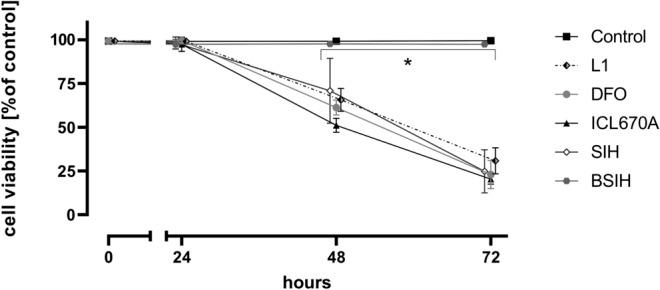
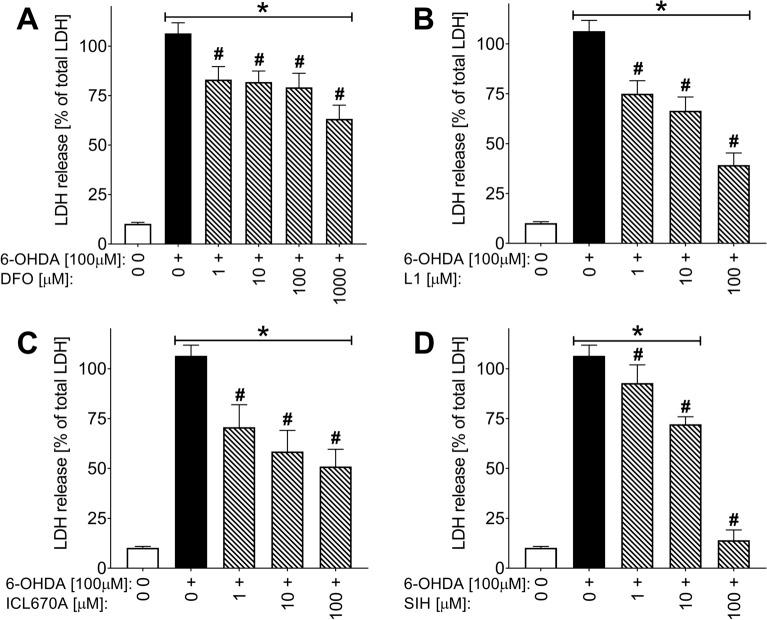
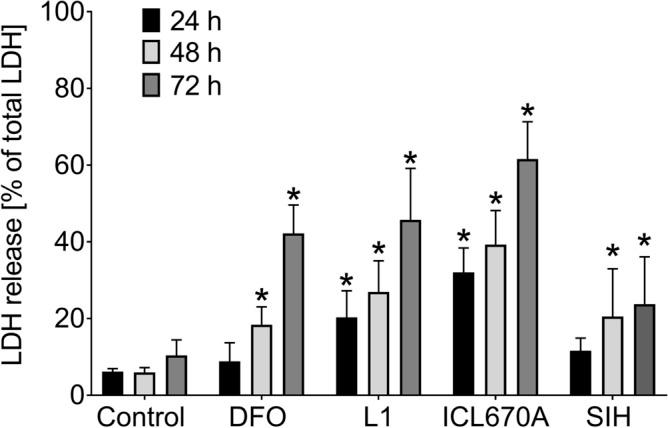
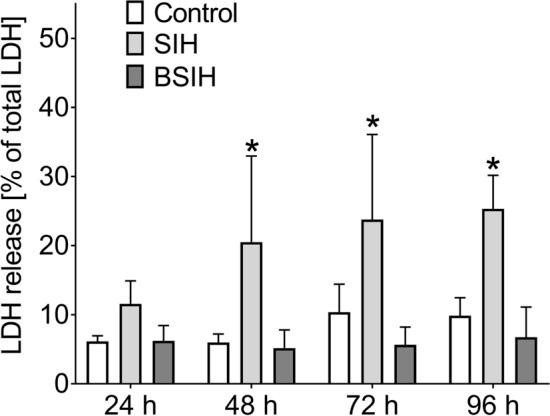
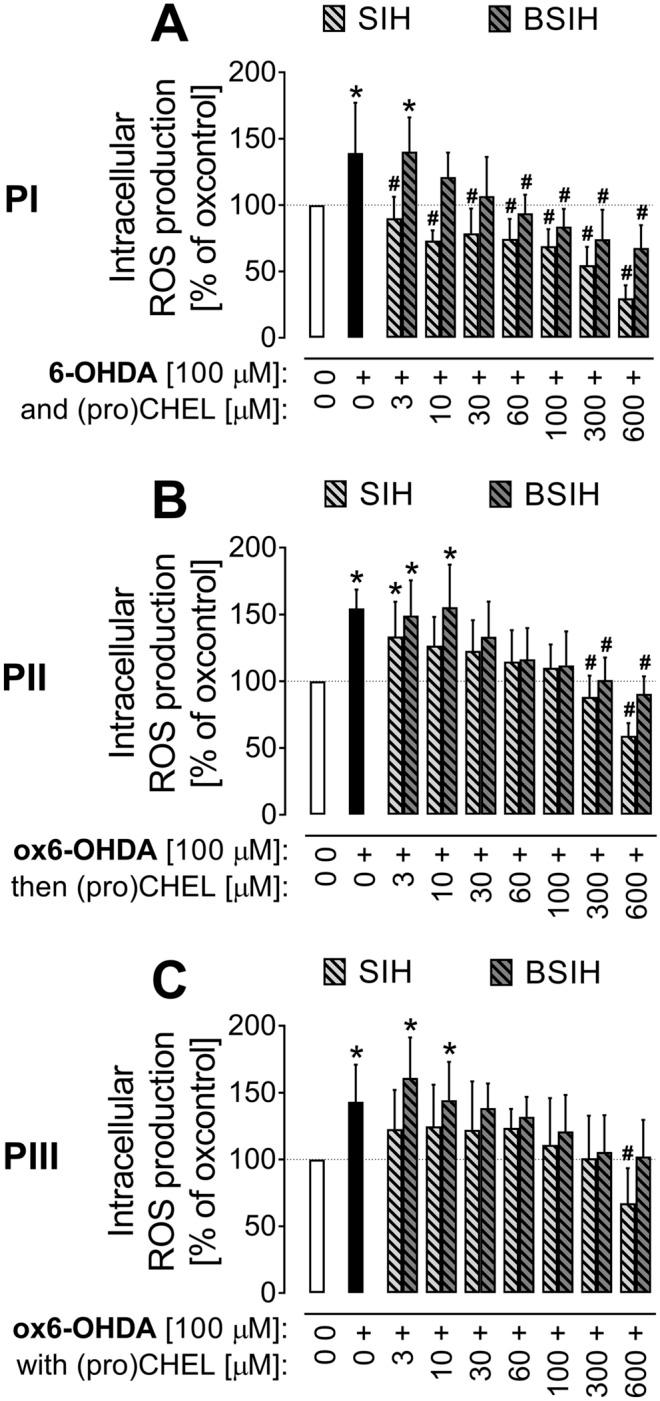
Labile redox-active iron ions have been implicated in various neurodegenerative disorders, including the Parkinson's disease (PD). Iron chelation has been successfully used in clinical practice to manage iron overload in diseases such as thalassemia major; however, the use of conventional iron chelators in pathological states without systemic iron overload remains at the preclinical investigative level and is complicated by the risk of adverse outcomes due to systemic iron depletion. In this study, we examined three clinically-used chelators, namely, desferrioxamine, deferiprone and deferasirox and compared them with experimental agent salicylaldehyde isonicotinoyl hydrazone (SIH) and its boronate-masked prochelator BSIH for protection of differentiated PC12 cells against the toxicity of catecholamines 6-hydroxydopamine and dopamine and their oxidation products. All the assayed chelating agents were able to significantly reduce the catecholamine toxicity in a dose-dependent manner. Whereas hydrophilic chelator desferrioxamine exerted protection only at high and clinically unachievable concentrations, deferiprone and deferasirox significantly reduced the catecholamine neurotoxicity at concentrations that are within their plasma levels following standard dosage. SIH was the most effective iron chelator to protect the cells with the lowest own toxicity of all the assayed conventional chelators. This favorable feature was even more pronounced in prochelator BSIH that does not chelate iron unless its protective group is cleaved in disease-specific oxidative stress conditions. Hence, this study demonstrated that while iron chelation may have general neuroprotective potential against catecholamine auto-oxidation and toxicity, SIH and BSIH represent promising lead molecules and warrant further studies in more complex animal models.
不稳定的氧化还原活性铁离子与各种神经退行性疾病有关,包括帕金森病(PD)。铁螯合已成功用于临床实践中,以管理地中海贫血等疾病中的铁过载;然而,在没有全身铁过载的病理状态下使用常规铁螯合剂仍处于临床前研究水平,并因全身铁耗竭而导致不良后果的风险而变得复杂。在这项研究中,我们研究了三种临床使用的螯合剂,即去铁胺、地拉罗司和去铁酮,并将它们与实验试剂水杨醛异烟酰腙(SIH)及其硼酸酯掩蔽前体 BSIH 进行了比较,以评估它们对分化的 PC12 细胞免受儿茶酚胺 6-羟多巴胺和多巴胺及其氧化产物毒性的保护作用。所有测试的螯合剂都能够以剂量依赖性方式显著降低儿茶酚胺的毒性。虽然亲水性螯合剂去铁胺仅在高浓度和临床无法达到的浓度下发挥保护作用,但地拉罗司和去铁酮在标准剂量后其血浆水平内的浓度下显著降低了儿茶酚胺的神经毒性。SIH 是保护细胞的最有效铁螯合剂,与所有测试的常规螯合剂相比,其自身毒性最低。在前体 BSIH 中,这种有利的特征更为明显,除非其保护基团在特定于疾病的氧化应激条件下被切割,否则它不会螯合铁。因此,这项研究表明,虽然铁螯合可能具有一般的神经保护潜力,可对抗儿茶酚胺的自动氧化和毒性,但 SIH 和 BSIH 代表有前途的先导分子,并值得在更复杂的动物模型中进一步研究。


 Zotero 插件