
香烟烟雾提取物介导的脂肪酸结合蛋白4上调通过激活p38丝裂原活化蛋白激酶/ MAPK激活蛋白激酶2信号通路,抑制支气管上皮细胞的活力并诱导其凋亡、炎症和氧化应激。
Cigarette smoke extract-mediated FABP4 upregulation suppresses viability and induces apoptosis, inflammation and oxidative stress of bronchial epithelial cells by activating p38 MAPK/MK2 signaling pathway.
作者信息
Zhang Wei, Zhang Yibin, Zhu Qi
机构信息
Center for Rehabilitation Medicine, Rehabilitation & Sports Medicine Research Institute of Zhejiang Province, Department of Rehabilitation Medicine, Zhejiang Provincial People's Hospital (Affiliated People's Hospital, Hangzhou Medical College), Hangzhou, 310014, Zhejiang, China.
Department of Respiratory, The Third People's Hospital of Yuhang District, Hangzhou, 311115, Zhejiang, China.
出版信息
J Inflamm (Lond). 2022 Jun 15;19(1):7. doi: 10.1186/s12950-022-00304-z.
BACKGROUND
Long-term inhalation of cigarette smoke is considered to be one of the main causes of bronchial epithelioid cell damage, but its underlying mechanism has to be further clarified.
METHODS
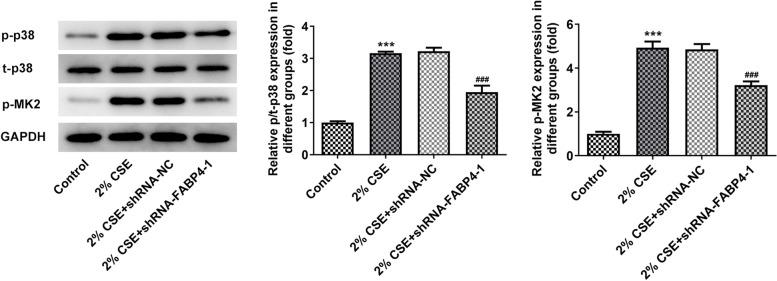
Gene expression at mRNA level and protein levels were detected by qRT-PCR and western blot analysis respectively. CCK-8, TUNEL assays, ELISA, western blot analysis and commercial kits were utilized to test cell viability, apoptosis inflammatory response and oxidative stress. The correlation between fatty acid binding protein 4 (FABP4) and the p38 mitogen-activated protein kinase (MAPK)/MAPK activated kinase 2 (MK2) signaling pathway was verified by western blot analysis and rescue assays.
RESULTS
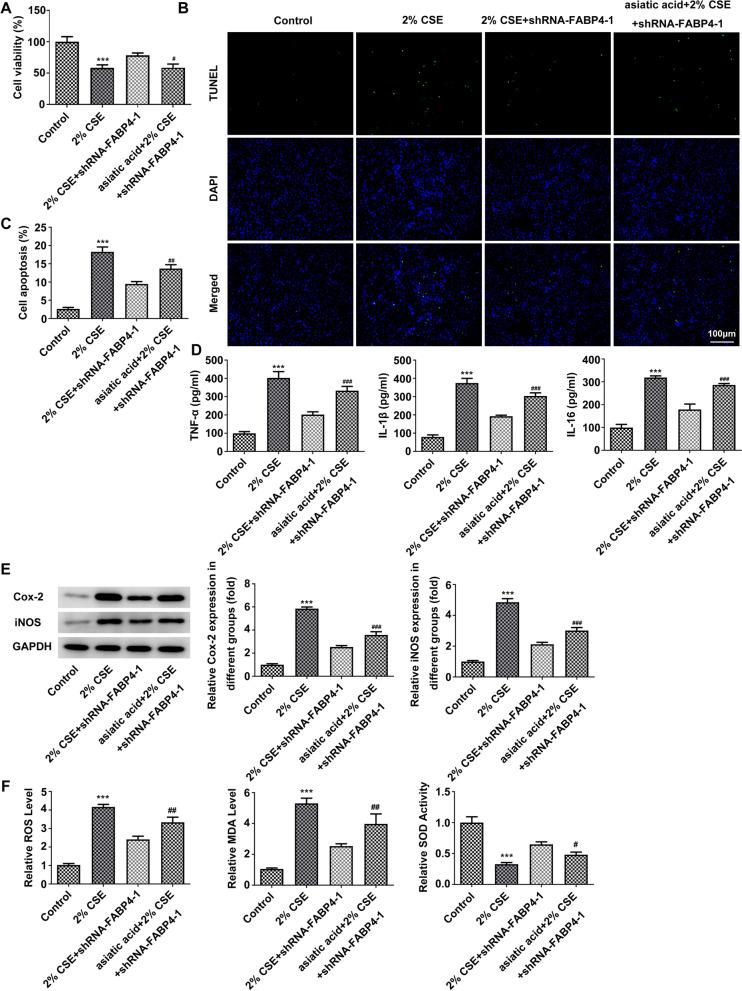
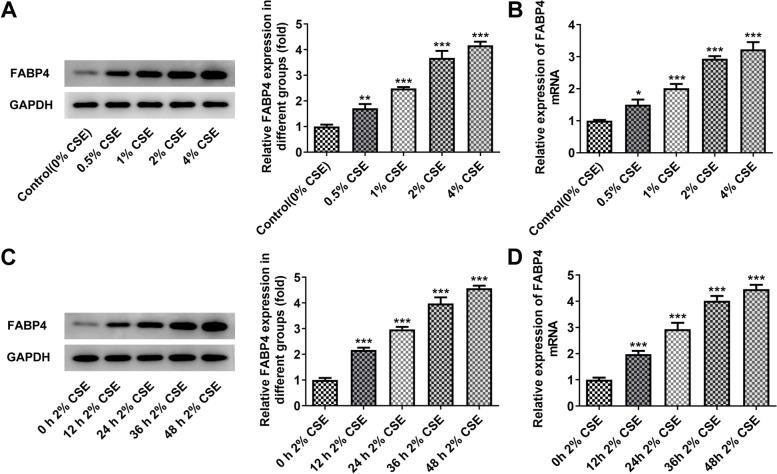
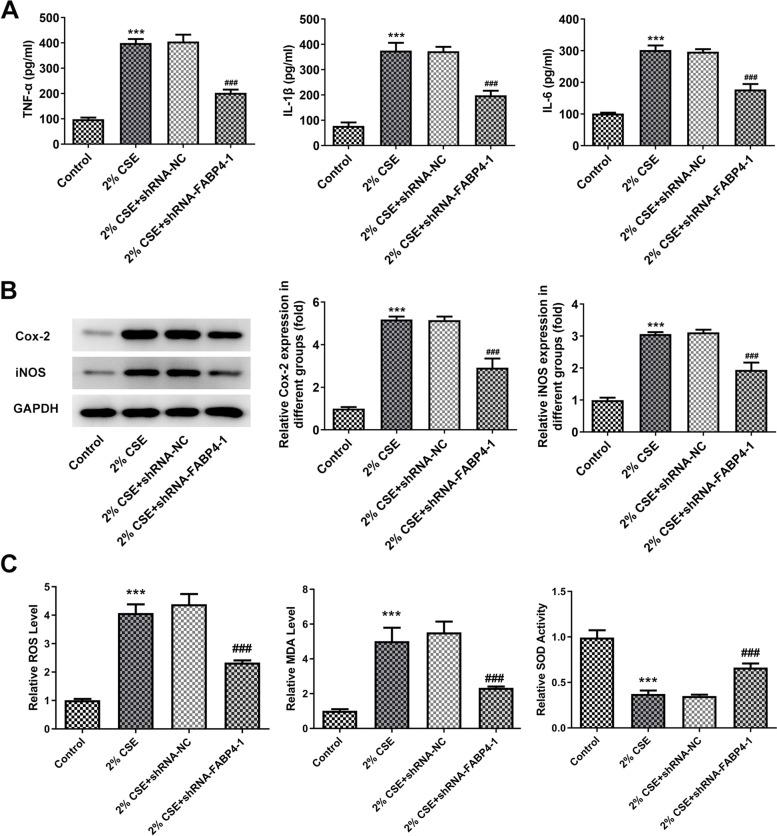
Cigarette smoke extract (CSE) exposure decreased viability, induced apoptosis and inflammatory response in 16HBE cells. Moreover, the expression of FABP4 in CSE-treated 16HBE cells was up-regulated in a time and dose-dependent manner. Ablation of FABP4 in 16HBE cells significantly protected against CSE-mediated cell viability decline and apoptosis. Further, FABP4 knockdown suppressed inflammatory response by down-regulating the elevated levels of cellular inflammatory factors including TNF-α, IL-1β, IL-6, Cyclooxygenase-2 (Cox-2) and inducible nitric oxide synthase (iNOS) in CSE-treated 16HBE cells. The oxidative stress induced by CSE in 16HBE cells was also inhibited by FABP4 silence as evidence by reduced ROS and MDA level but increased SOD activity caused by FABP4 silence. Finally, all the above effects of FABP4 silence on CSE-treated 16HBE cells were reversed by asiatic acid, an agonist of p38 mitogen-activated protein kinase (MAPK).
CONCLUSIONS
The up-regulation of FABP4 expression mediated by CSE exerted pro-inflammatory, pro-oxidative stress and pro-apoptotic effects on bronchial epithelial cells by activating the p38 MAPK/MK2 signaling pathway. Our findings help to further understand the underlying mechanism of cigarette smoke-induced bronchial inflammation.
背景
长期吸入香烟烟雾被认为是支气管上皮样细胞损伤的主要原因之一,但其潜在机制仍有待进一步阐明。
方法
分别通过qRT-PCR和蛋白质免疫印迹分析检测mRNA水平和蛋白质水平的基因表达。使用CCK-8、TUNEL检测、ELISA、蛋白质免疫印迹分析和商业试剂盒检测细胞活力、细胞凋亡、炎症反应和氧化应激。通过蛋白质免疫印迹分析和挽救实验验证脂肪酸结合蛋白4(FABP4)与p38丝裂原活化蛋白激酶(MAPK)/MAPK活化激酶2(MK2)信号通路之间的相关性。
结果
香烟烟雾提取物(CSE)暴露降低了16HBE细胞的活力,诱导了细胞凋亡和炎症反应。此外,CSE处理的16HBE细胞中FABP4的表达呈时间和剂量依赖性上调。在16HBE细胞中敲除FABP4可显著保护细胞免受CSE介导的细胞活力下降和细胞凋亡。此外,FABP4基因敲低通过下调CSE处理的16HBE细胞中包括肿瘤坏死因子-α、白细胞介素-1β、白细胞介素-6、环氧化酶-2(Cox-2)和诱导型一氧化氮合酶(iNOS)在内的细胞炎症因子水平的升高来抑制炎症反应。FABP4沉默还抑制了CSE在16HBE细胞中诱导的氧化应激,表现为FABP4沉默导致活性氧(ROS)和丙二醛(MDA)水平降低,但超氧化物歧化酶(SOD)活性增加。最后,p38丝裂原活化蛋白激酶(MAPK)激动剂齐墩果酸可逆转FABP4沉默对CSE处理的16HBE细胞的上述所有影响。
结论
CSE介导的FABP4表达上调通过激活p38 MAPK/MK2信号通路对支气管上皮细胞产生促炎、促氧化应激和促凋亡作用。我们的研究结果有助于进一步了解香烟烟雾诱导支气管炎症的潜在机制。

 Zotero 插件