
模拟青少年急性术后疼痛向慢性术后疼痛的转变:关于流行病学、围手术期及社会心理因素的叙述性综述
Modeling the transition from acute to chronic postsurgical pain in youth: A narrative review of epidemiologic, perioperative, and psychosocial factors.
作者信息
Rosenbloom Brittany N, Katz Joel
机构信息
Child Health Evaluative Sciences, The Hospital for Sick Children, Toronto, Ontario, Canada.
Department of Psychology, York University, Toronto, Ontario, Canada.
出版信息
Can J Pain. 2022 Jun 9;6(2):166-174. doi: 10.1080/24740527.2022.2059754. eCollection 2022.
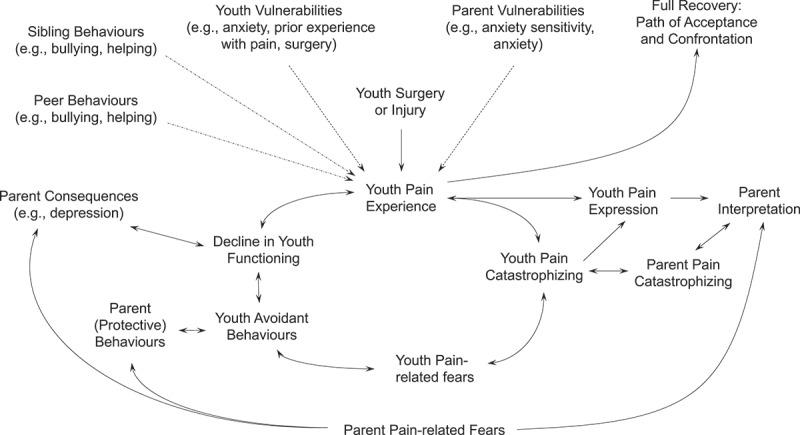
A growing number of studies have identified high rates of pediatric chronic postsurgical pain (CPSP) after major surgery. Pediatric CPSP is associated with pain-related distress and comorbid mental health outcomes, such as anxiety and depression. From a biopsychosocial perspective, youth factors, such as genetics, epigenetics, sex, presurgical pain, sleep, anxiety, and pain catastrophizing, as well as parent factors, such as cognitive appraisals of their child's pain expression and pain catastrophizing, converge and lead to chronic pain disability. A comprehensive and testable psychosocial model of the transition from acute to chronic pediatric postsurgical pain has not been developed. This narrative review begins by evaluating the epidemiology and trajectories of pediatric CPSP and moves on to examine the more influential psychosocial models that have been proposed to understand the development of pediatric CPSP. Much of the literature to date has been conducted on adolescents undergoing spinal fusion. To conceptualize the transition from acute to chronic pain in youth, a combined diathesis-stress and interpersonal fear avoidance model is presented. Novel areas of future research include the potential influence that siblings and peers have on a youth's development of CPSP as well as the influence of gender.
越来越多的研究发现,大手术后小儿慢性术后疼痛(CPSP)的发生率很高。小儿CPSP与疼痛相关的痛苦以及共病的心理健康结果有关,如焦虑和抑郁。从生物心理社会的角度来看,青少年因素,如遗传学、表观遗传学、性别、术前疼痛、睡眠、焦虑和疼痛灾难化,以及父母因素,如对孩子疼痛表达的认知评估和疼痛灾难化,相互作用,导致慢性疼痛残疾。尚未建立一个从急性小儿术后疼痛到慢性疼痛转变的全面且可检验的社会心理模型。这篇叙述性综述首先评估小儿CPSP的流行病学和病程,接着考察为理解小儿CPSP的发展而提出的更具影响力的社会心理模型。迄今为止,大部分文献是针对接受脊柱融合术的青少年进行的。为了概念化青少年从急性疼痛到慢性疼痛的转变,提出了一个综合的素质-应激和人际恐惧回避模型。未来研究的新领域包括兄弟姐妹和同伴对青少年CPSP发展的潜在影响以及性别的影响。
 Zotero 插件