
构建用于全场景智能医疗保健的医院智能孪生体。
Building the hospital intelligent twins for all-scenario intelligence health care.
作者信息
Cheng Weibin, Lian Wanmin, Tian Junzhang
机构信息
Institute for Healthcare Artificial Intelligence Application, Guangdong Second Provincial General Hospital, Guangzhou, China.
School of Data Science, City University of Hong Kong, Hong Kong.
出版信息
Digit Health. 2022 Jun 12;8:20552076221107894. doi: 10.1177/20552076221107894. eCollection 2022 Jan-Dec.
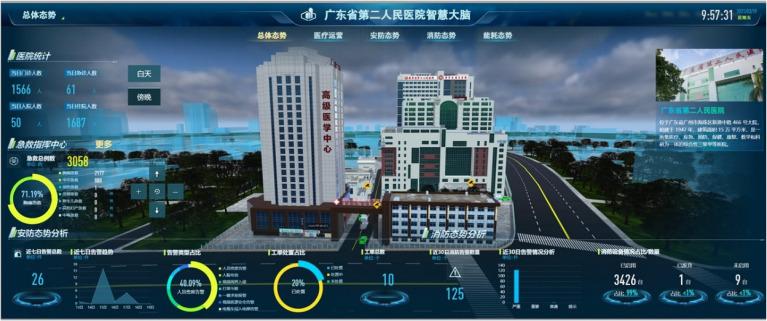
The COVID-19 pandemic has accelerated a long-term trend of smart hospital development. However, there is no consistent conceptualization of what a smart hospital entails. Few hospitals have genuinely reached being "smart," primarily failing to bring systems together and consider implications from all perspectives. Hospital Intelligent Twins, a new technology integration powered by IoT, AI, cloud computing, and 5G application to create all-scenario intelligence for health care and hospital management. This communication presented a smart hospital for all-scenario intelligence by creating the hospital Intelligent Twins. Intelligent Twins is widely involved in medical activities. However, solving the medical ethics, protecting patient privacy, and reducing security risks involved are significant challenges for all-scenario intelligence applications. This exploration of creating hospital Intelligent Twins that can be a worthwhile endeavor to assess how to inform evidence-based decision-making better and enhance patient satisfaction and outcomes.
新冠疫情加速了智能医院发展的长期趋势。然而,对于智能医院的内涵并没有一致的概念界定。很少有医院真正达到“智能”状态,主要是因为未能将各种系统整合在一起,也没有从所有角度考虑其影响。医院智能孪生体是一种由物联网、人工智能、云计算和5G应用驱动的新技术集成,旨在为医疗保健和医院管理创造全场景智能。本通信通过创建医院智能孪生体展示了一个全场景智能的智能医院。智能孪生体广泛参与医疗活动。然而,解决医学伦理问题、保护患者隐私以及降低相关安全风险是全场景智能应用面临的重大挑战。这种创建医院智能孪生体的探索可能是一项有价值的努力,有助于评估如何更好地为循证决策提供信息,提高患者满意度并改善治疗结果。
 Zotero 插件