
鼻鼻窦疾病鼻腔盐水治疗的最佳设备与方案:系统评价
Optimal Device and Regimen of Nasal Saline Treatment for Sinonasal Diseases: Systematic Review.
作者信息
Chitsuthipakorn Wirach, Kanjanawasee Dichapong, Hoang Minh P, Seresirikachorn Kachorn, Snidvongs Kornkiat
机构信息
Center of Excellence in Otolaryngology-Head and Neck Surgery, Rajavithi Hospital, Bangkok, Thailand.
College of Medicine, Rangsit University, Bangkok, Thailand.
出版信息
OTO Open. 2022 Jun 13;6(2):2473974X221105277. doi: 10.1177/2473974X221105277. eCollection 2022 Apr-Jun.
OBJECTIVE
This review aimed to systematically determine the optimal nasal saline regimen for different types of sinonasal diseases.
DATA SOURCES
PubMed, Embase, SCOPUS, Cochrane Library, Web of Science, ClinicalTrials.gov. The last search was on December 6, 2021.
REVIEW METHODS
Study selection was done by 2 independent authors. Randomized controlled trials and meta-analyses were included. The effects of nasal saline treatment through various devices, saline tonicities, and buffer statuses were evaluated in patients with allergic and nonallergic rhinitis, acute and chronic rhinosinusitis (CRS), CRS with cystic fibrosis, and postoperative care, including septoplasty/turbinoplasty and endoscopic sinus surgery.
RESULTS
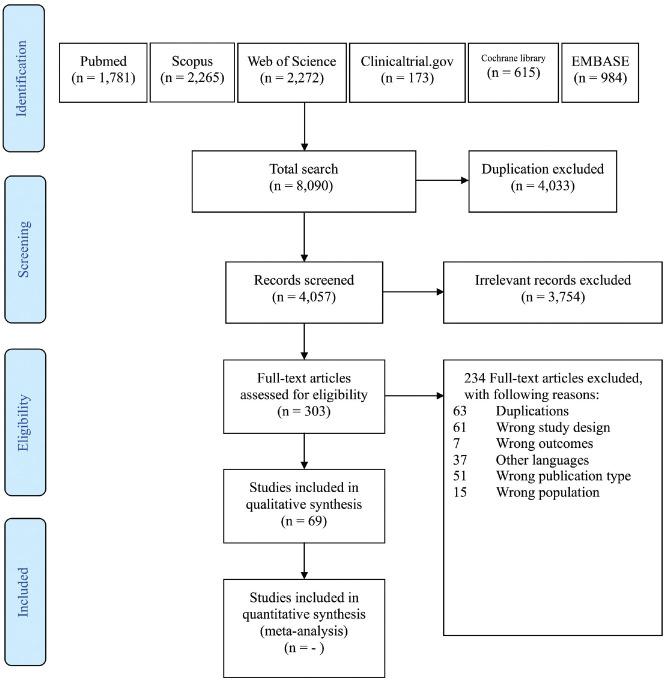
Sixty-nine studies were included: 10 meta-analyses and 59 randomized controlled trials. For allergic rhinitis, large-volume devices (≥60 mL) were effective for treating adults, while low-volume devices (5-59 mL) were effective for children. Isotonic saline was preferred over hypertonic saline due to fewer adverse events. For acute rhinosinusitis, saline irrigation was beneficial in children, but it was an option for adults. Large-volume devices were more effective, especially in the common cold subgroup. For CRS, large-volume devices were effective for adults, but saline drop was the only regimen that had available data in children. Buffered isotonic saline was more tolerable than nonbuffered or hypertonic saline. The data for CRS with cystic fibrosis and nonallergic rhinitis were limited. For postoperative care, buffered isotonic saline delivered by large-volume devices was effective.
CONCLUSION
Nasal saline treatment is recommended for treating most sinonasal diseases. Optimal delivery methods for each condition should be considered to achieve therapeutic effects of saline treatment.
目的
本综述旨在系统地确定针对不同类型鼻鼻窦疾病的最佳鼻腔盐水治疗方案。
数据来源
PubMed、Embase、SCOPUS、Cochrane图书馆、Web of Science、ClinicalTrials.gov。最后一次检索时间为2021年12月6日。
综述方法
由两名独立作者进行研究筛选。纳入随机对照试验和荟萃分析。评估了通过各种装置、盐水张力和缓冲状态进行鼻腔盐水治疗对变应性和非变应性鼻炎、急慢性鼻-鼻窦炎(CRS)、囊性纤维化合并CRS患者以及术后护理(包括鼻中隔成形术/鼻甲成形术和鼻内镜鼻窦手术)的影响。
结果
共纳入69项研究:10项荟萃分析和59项随机对照试验。对于变应性鼻炎,大容量装置(≥60 mL)对成人治疗有效,而小容量装置(5 - 59 mL)对儿童有效。由于不良事件较少,等渗盐水优于高渗盐水。对于急性鼻-鼻窦炎,盐水冲洗对儿童有益,但对成人而言是一种选择。大容量装置更有效,尤其是在普通感冒亚组中。对于CRS,大容量装置对成人有效,但滴鼻盐水是儿童中唯一有可用数据的治疗方案。缓冲等渗盐水比非缓冲或高渗盐水更易耐受。囊性纤维化合并CRS和非变应性鼻炎的数据有限。对于术后护理,大容量装置输送的缓冲等渗盐水有效。
结论
推荐鼻腔盐水治疗用于大多数鼻鼻窦疾病。应考虑针对每种情况的最佳给药方法,以实现盐水治疗的疗效。
 Zotero 插件