
电子烟暴露于产前酒精和 δ-9-四氢大麻酚对运动发育的影响。
Effects of prenatal alcohol and delta-9-tetrahydrocannabinol exposure via electronic cigarettes on motor development.
机构信息
Department of Psychology, Center for Behavioral Teratology, San Diego State University, San Diego, California, USA.
Department of Psychology, West Chester University, West Chester, Pennsylvania, USA.
出版信息
Alcohol Clin Exp Res. 2022 Aug;46(8):1408-1422. doi: 10.1111/acer.14892. Epub 2022 Jul 26.
BACKGROUND
Prenatal alcohol exposure can lead to a wide range of neurological and behavioral deficits, including alterations in motor domains. However, much less is known about the effects of prenatal cannabis exposure on motor development, despite cannabis being the most consumed illicit drug among women. Cannabis use among pregnant women has become increasingly popular given the widespread perception that consumption is safe during pregnancy. Moreover, alcohol and cannabis are commonly used together, even among pregnant women. Yet few studies have explored the potential consequences of combined prenatal exposure on behavioral domains.
METHODS
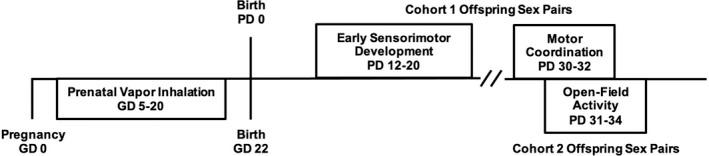
Using our previously established model, during gestational days 5 to 20, four groups of pregnant Sprague-Dawley rats were exposed to vaporized alcohol, delta-9-Tetrahydrocannabinol (THC) via electronic (e-) cigarettes, the combination of alcohol and THC, or a vehicle. Following birth, offspring were tested on early sensorimotor development, adolescent motor coordination, and adolescent activity levels.
RESULTS
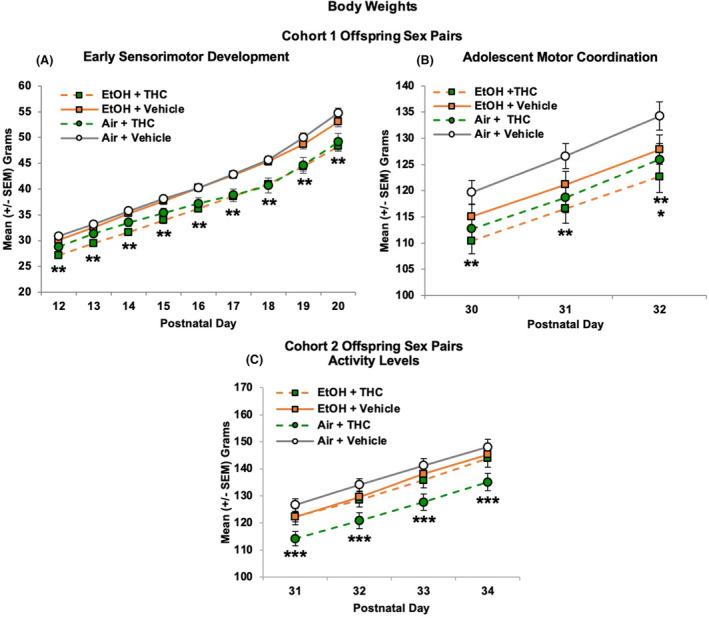
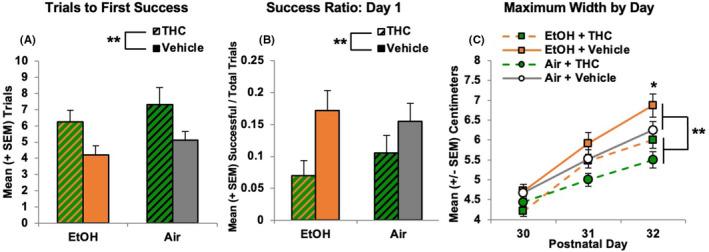
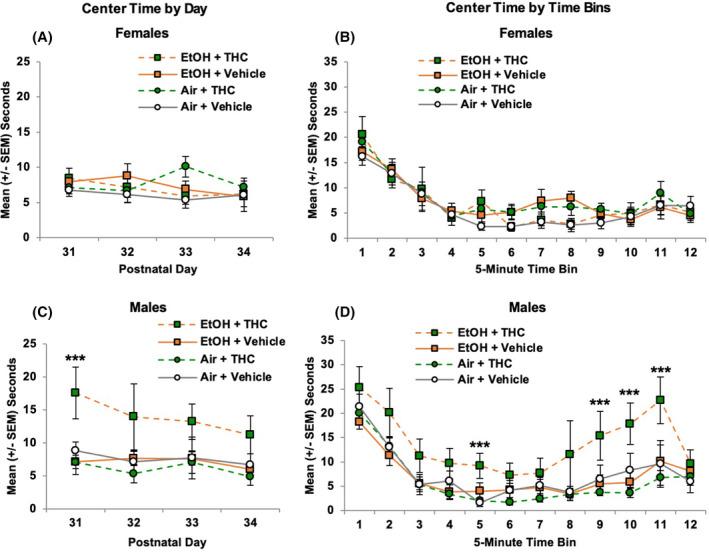
Prenatal THC e-cigarette exposure delayed sensorimotor development early in life and impaired motor coordination later in early adolescence; combined prenatal alcohol and THC exposure did not have additive effects on sensorimotor development. However, combined prenatal exposure produced hyperactivity among male offspring.
CONCLUSIONS
Prenatal cannabis exposure may lead to impaired motor skills throughout early development and combined exposure with alcohol during gestation may lead to hyperactivity in early adolescence. These findings have important implications for informing pregnant women of the risks to the fetus associated with prenatal cannabis exposure, with and without alcohol, and could influence public policy.
背景
产前酒精暴露可导致广泛的神经和行为缺陷,包括运动领域的改变。然而,尽管大麻是女性中最常消费的非法药物,但对于产前大麻暴露对运动发育的影响,人们知之甚少。由于普遍认为怀孕期间消费是安全的,因此孕妇使用大麻的情况越来越普遍。此外,即使在孕妇中,酒精和大麻也经常一起使用。然而,很少有研究探讨联合产前暴露对行为领域的潜在后果。
方法
使用我们之前建立的模型,在妊娠第 5 至 20 天期间,四组怀孕的 Sprague-Dawley 大鼠暴露于汽化酒精、通过电子烟产生的 delta-9-四氢大麻酚(THC)、酒精和 THC 的组合或载体。出生后,对后代进行早期感觉运动发育、青少年运动协调和青少年活动水平测试。
结果
产前 THC 电子烟暴露延迟了生命早期的感觉运动发育,并损害了青少年早期的运动协调能力;产前酒精和 THC 联合暴露对感觉运动发育没有叠加效应。然而,联合产前暴露导致雄性后代多动。
结论
产前大麻暴露可能导致整个早期发育中运动技能受损,而在妊娠期间与酒精联合暴露可能导致青少年早期多动。这些发现对告知孕妇与产前大麻暴露相关的胎儿风险具有重要意义,包括与酒精联合和不联合暴露的情况,并可能影响公共政策。




 Zotero 插件