
社会应激学习的情境泛化受外侧杏仁核中食欲素受体的调节。
Contextual generalization of social stress learning is modulated by orexin receptors in basolateral amygdala.
机构信息
Department of Biology, University of South Dakota, Vermillion, SD, 57069, USA; Neuroscience Group, Division of Basic Biomedical Sciences, Sanford School of Medicine, University of South Dakota, Vermillion, SD, 57069, USA; Veterans Affairs Research Service, Sioux Falls VA Health Care System, Sioux Falls, SD, 57105, USA; Pediatrics and Rare Diseases Group, Sanford Research, Sioux Falls, SD, 57104, USA.
Department of Biology, University of South Dakota, Vermillion, SD, 57069, USA; Neuroscience Group, Division of Basic Biomedical Sciences, Sanford School of Medicine, University of South Dakota, Vermillion, SD, 57069, USA.
出版信息
Neuropharmacology. 2022 Sep 1;215:109168. doi: 10.1016/j.neuropharm.2022.109168. Epub 2022 Jun 17.
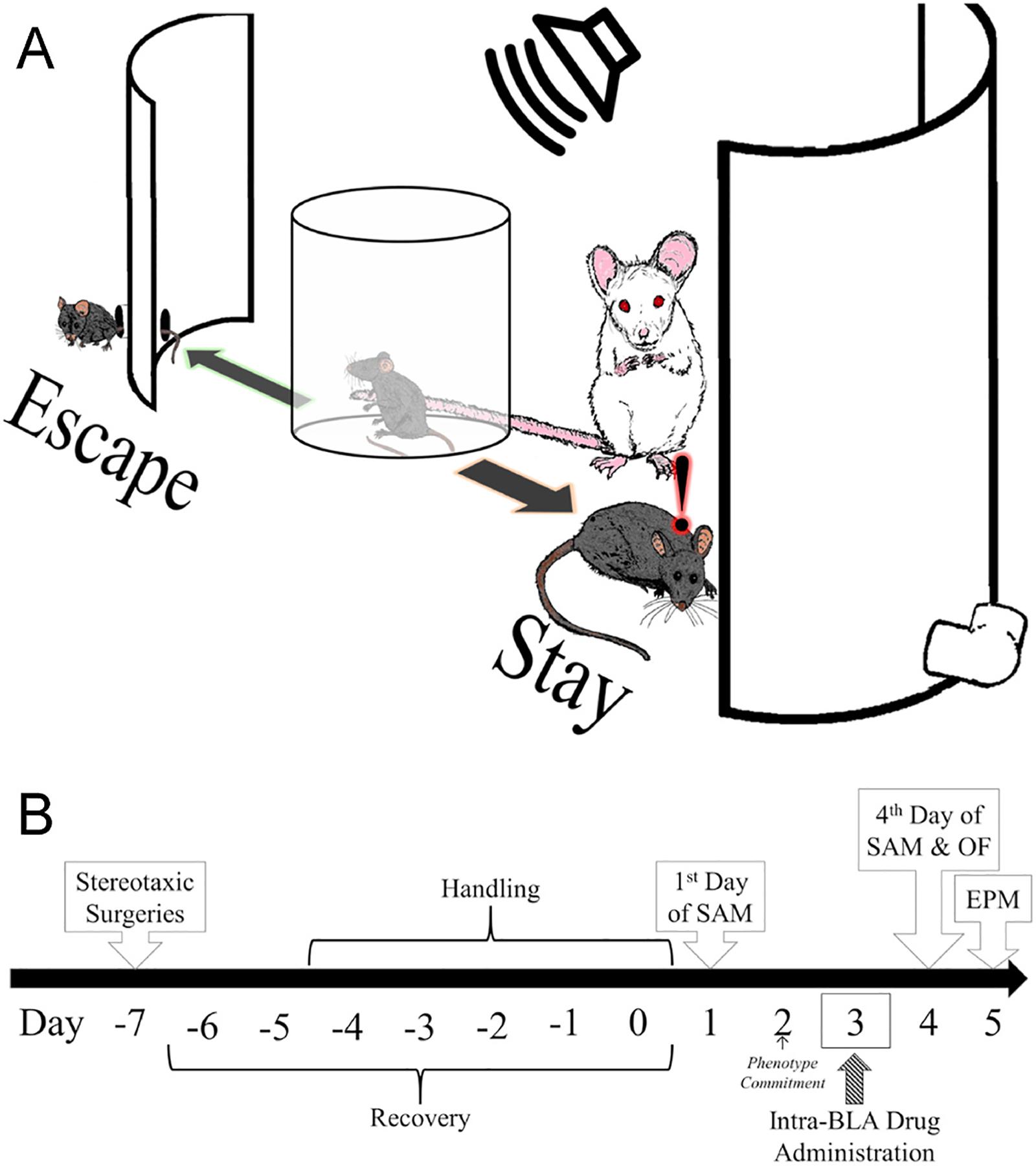
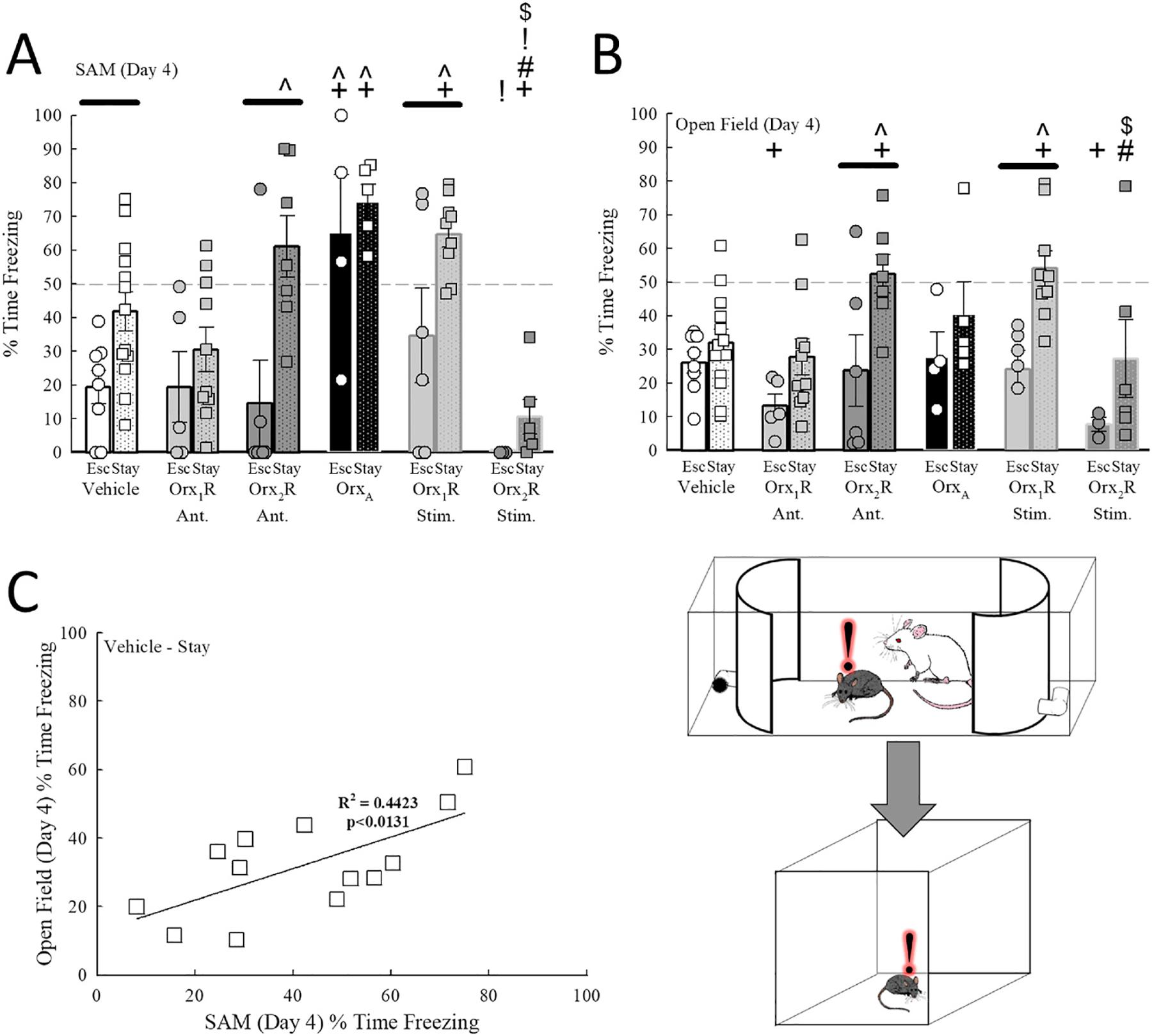
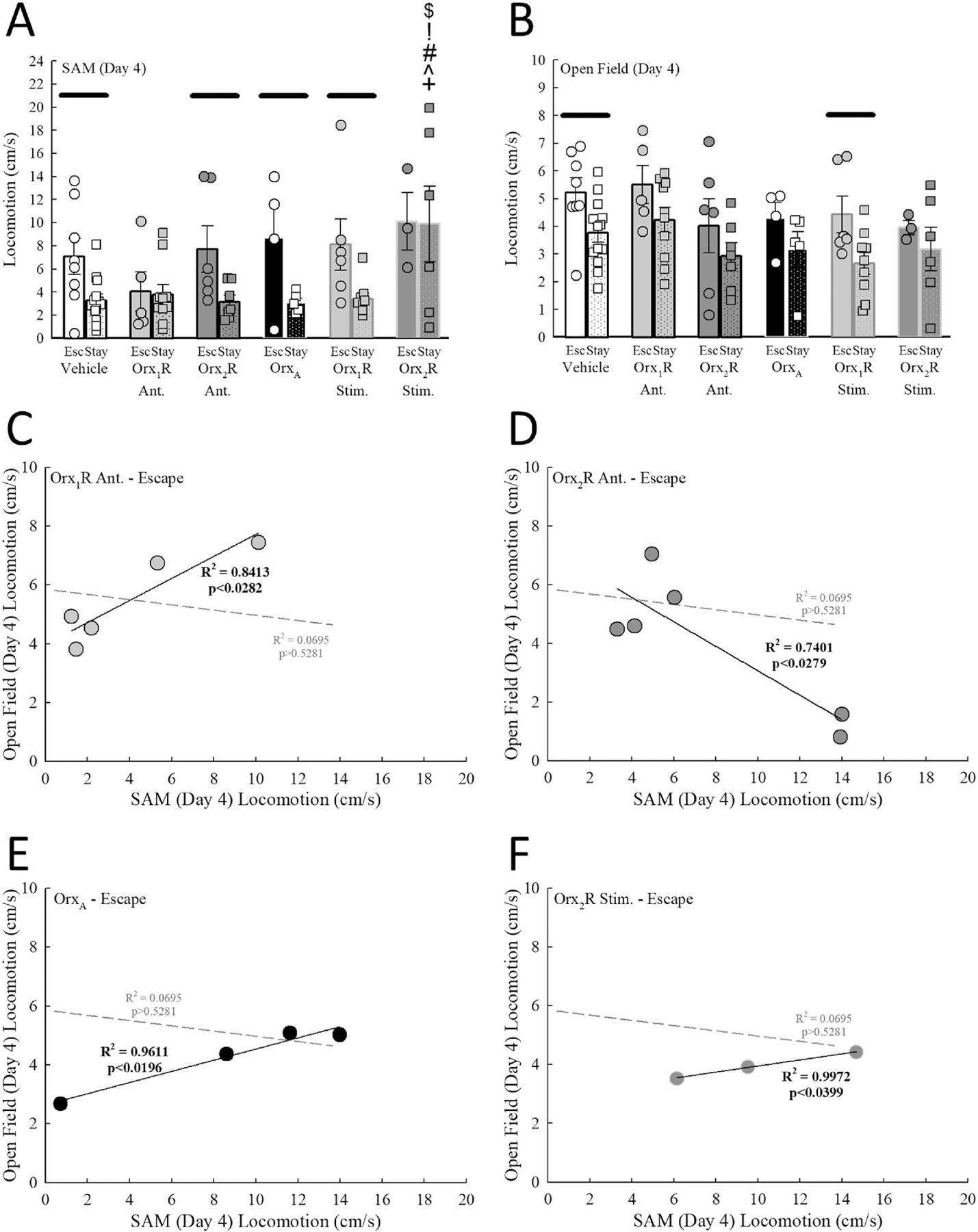
Fear-associated memories and behavior are often expressed in contexts/environments distinctively different from those in which they are created. This generalization process contributes to psychological disorders, particularly PTSD. Stress-related neurocircuits in the basolateral amygdala (BLA) receive inputs from hypothalamic orexin (Orx) neurons, which mediate neuronal activity by targeting orexin 1 (OrxR) and orexin 2 (OrxR) receptors via opposing functions. In BLA, inhibition of OrxR or activation of OrxR ameliorate stress responsiveness and behavior. We discovered that most OrxR cells also express CamKIIα, while a majority of OrxR cells are colocalized with GAD67. Further, OrxR gene Hcrtr1 expression was positively correlated, and OrxR gene Hcrtr2 expression was negatively correlated, with freezing in a phenotype-dependent fashion (Escape vs Stay) in the Stress Alternatives Model (SAM). The SAM consists of 4-days of social interaction between test mice and novel larger aggressors. Exits positioned at opposite ends of the SAM oval arena provide opportunities to actively avoid aggression. By Day 2, mice commit to behavioral phenotypes: Escape or Stay. Pharmacologically manipulating Orx receptor activity in the BLA, before Day 3 of the SAM, was followed with standard tests of anxiety: Open Field (OF) and Elevated Plus Maze (EPM). In Stay mice, freezing in response to social conflict and locomotion during SAM interaction (not home cage locomotion) were generalized to OF, and blocked by intra-BLA OrxR antagonism, but not OrxR antagonism. Moreover, patterns of social avoidance for Escape and Stay mice were recapitulated in OF, with generalization mediated by OrxR and OrxR antagonism, plus OrxR stimulation.
恐惧相关的记忆和行为通常在与它们形成时明显不同的环境中表达。这个泛化过程导致了心理障碍,特别是创伤后应激障碍。下丘脑的食欲素(Orx)神经元激活基底外侧杏仁核(BLA)中的应激相关神经回路,通过靶向食欲素 1(OrxR)和食欲素 2(OrxR)受体的相反功能来调节神经元活动。在 BLA 中,抑制 OrxR 或激活 OrxR 可以改善应激反应和行为。我们发现,大多数 OrxR 细胞也表达 CamKIIα,而大多数 OrxR 细胞与 GAD67 共定位。此外,OrxR 基因 Hcrtr1 的表达与冷冻呈正相关,而 OrxR 基因 Hcrtr2 的表达与冷冻呈负相关,其方式与应激替代模型(SAM)中的冻结表型(逃避与停留)相关。SAM 由测试小鼠与新的大型攻击者之间 4 天的社会互动组成。SAM 椭圆形竞技场的相对两端的出口提供了主动避免攻击的机会。到第 2 天,老鼠会表现出行为表型:逃避或停留。在 SAM 的第 3 天之前,在 BLA 中人为地操纵 Orx 受体活性,然后进行标准的焦虑测试:旷场(OF)和高架十字迷宫(EPM)。在停留的老鼠中,对社交冲突的冻结和 SAM 互动期间的运动(不是家笼运动)被推广到 OF,并被 BLA 中的 OrxR 拮抗剂阻断,但不是 OrxR 拮抗剂。此外,逃避和停留老鼠的社会回避模式在 OF 中得到再现,通过 OrxR 和 OrxR 拮抗剂以及 OrxR 刺激介导。


 Zotero 插件