
分子影像学在指导乳腺癌治疗中的新应用。
Novel applications of molecular imaging to guide breast cancer therapy.
机构信息
Department of Radiology, Hospital of the University if Pennsylvania, 3400 Spruce Street, Philadelphia, PA, 19104, USA.
出版信息
Cancer Imaging. 2022 Jun 21;22(1):31. doi: 10.1186/s40644-022-00468-0.
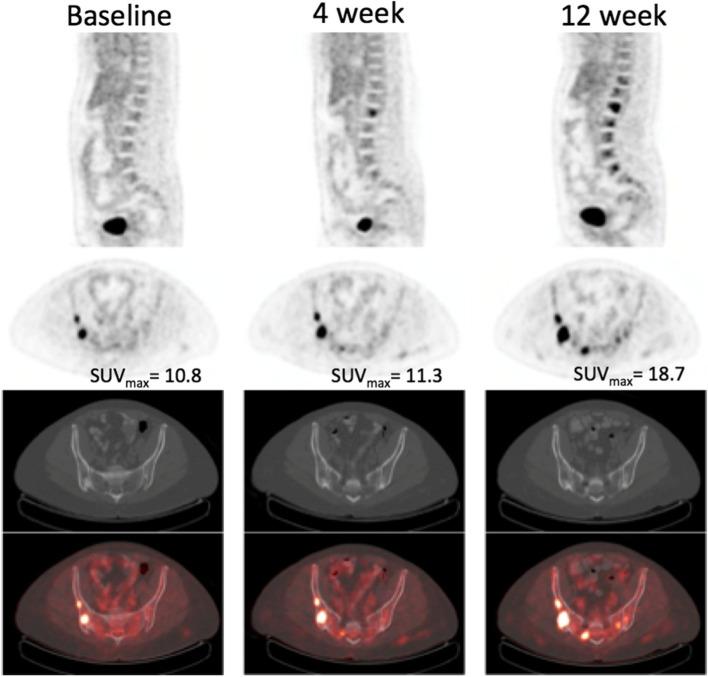
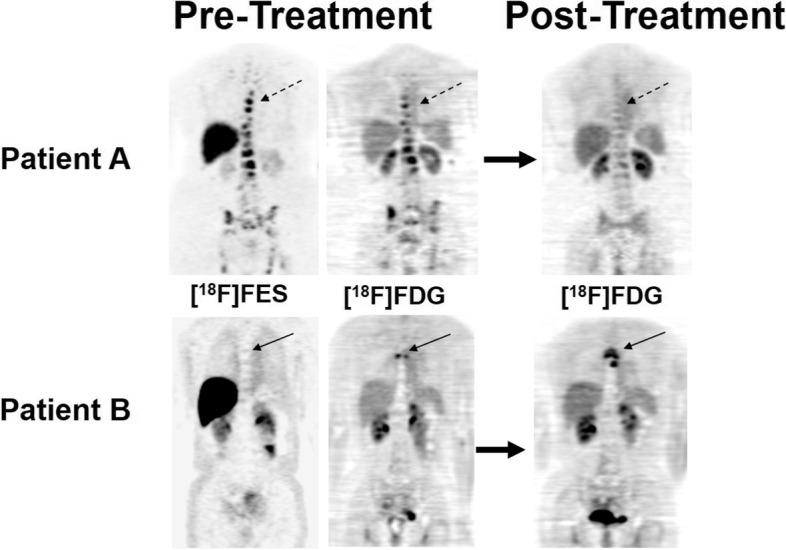
The goals of precision oncology are to provide targeted drug therapy based on each individual's specific tumor biology, and to enable the prediction and early assessment of treatment response to allow treatment modification when necessary. Thus, precision oncology aims to maximize treatment success while minimizing the side effects of inadequate or suboptimal therapies. Molecular imaging, through noninvasive assessment of clinically relevant tumor biomarkers across the entire disease burden, has the potential to revolutionize clinical oncology, including breast oncology. In this article, we review breast cancer positron emission tomography (PET) imaging biomarkers for providing early response assessment and predicting treatment outcomes. For 2-fluoro-2-deoxy-D-glucose (FDG), a marker of cellular glucose metabolism that is well established for staging multiple types of malignancies including breast cancer, we highlight novel applications for early response assessment. We then review current and future applications of novel PET biomarkers for imaging the steroid receptors, including the estrogen and progesterone receptors, the HER2 receptor, cellular proliferation, and amino acid metabolism.
精准肿瘤学的目标是根据每个人特定的肿瘤生物学提供靶向药物治疗,并能够预测和早期评估治疗反应,以便在必要时进行治疗调整。因此,精准肿瘤学旨在最大限度地提高治疗成功率,同时将不适当或不理想治疗的副作用降至最低。通过无创评估整个疾病负担中与临床相关的肿瘤生物标志物,分子成像有可能彻底改变临床肿瘤学,包括乳腺癌。在本文中,我们回顾了用于提供早期反应评估和预测治疗结果的乳腺癌正电子发射断层扫描 (PET) 成像生物标志物。对于 2-氟-2-脱氧-D-葡萄糖 (FDG),一种细胞葡萄糖代谢的标志物,已被广泛用于分期多种恶性肿瘤,包括乳腺癌,我们重点介绍了用于早期反应评估的新应用。然后,我们回顾了当前和未来用于成像甾体受体(包括雌激素和孕激素受体、HER2 受体、细胞增殖和氨基酸代谢)的新型 PET 生物标志物的应用。

 Zotero 插件