
当前犬猫中肠道内纤毛虫(蓝氏贾第鞭毛虫)的全球现状、亚型分布和人畜共患病意义:一项系统评价和荟萃分析。
Current global status, subtype distribution and zoonotic significance of Blastocystis in dogs and cats: a systematic review and meta-analysis.
机构信息
Zoonotic Diseases Research Center, Ilam University of Medical Sciences, Ilam, Iran.
Department of Pathobiology, Faculty of Veterinary Medicine, Urmia University, Urmia, Iran.
出版信息
Parasit Vectors. 2022 Jun 22;15(1):225. doi: 10.1186/s13071-022-05351-2.
BACKGROUND
Blastocystis is a common intestinal protozoa found in animal and human fecal samples, with over 1 billion individuals infected worldwide. Since domestication, dogs and cats have had a close bond with humans. However, their close proximity poses a potential health risk since they may harbor several zoonotic agents. A global estimate of Blastocystis infection and subtype (ST) distribution in dogs and cats would therefore be of great health importance to humans.
METHODS
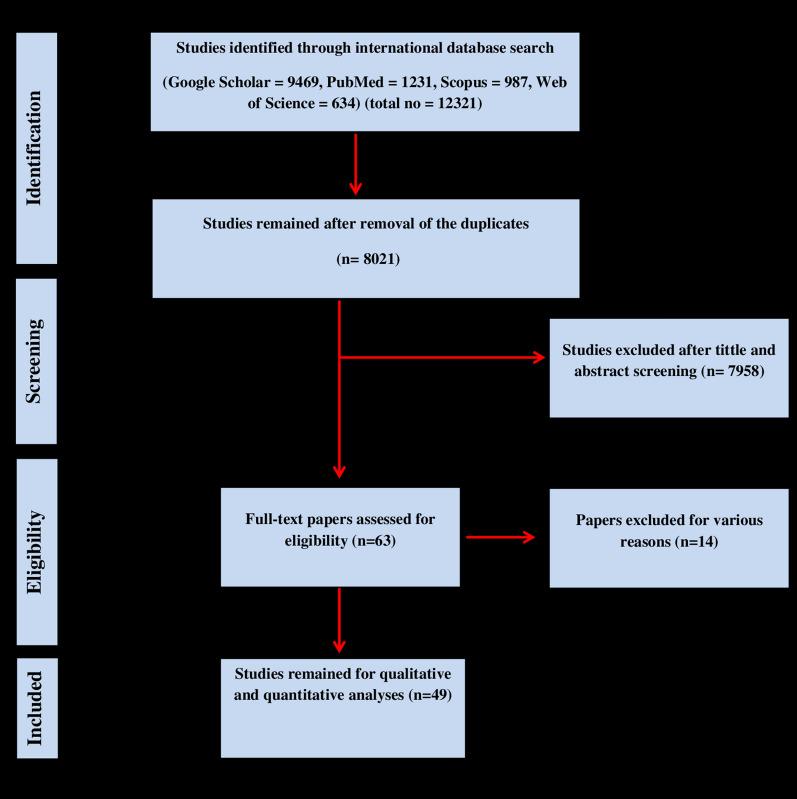
We performed a comprehensive systematic search of four English-language databases (PubMed, Scopus, Google Scholar, Web of Science) for relevant articles up to 8 November 2021. The random-effects model was used to make pooled estimates with confidence intervals (CIs).
RESULTS
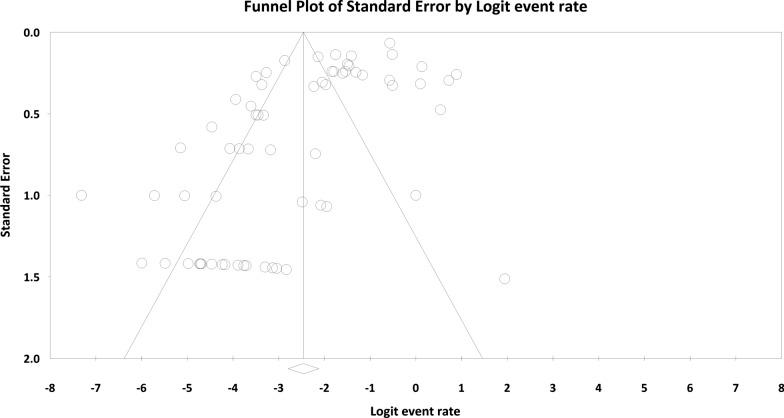
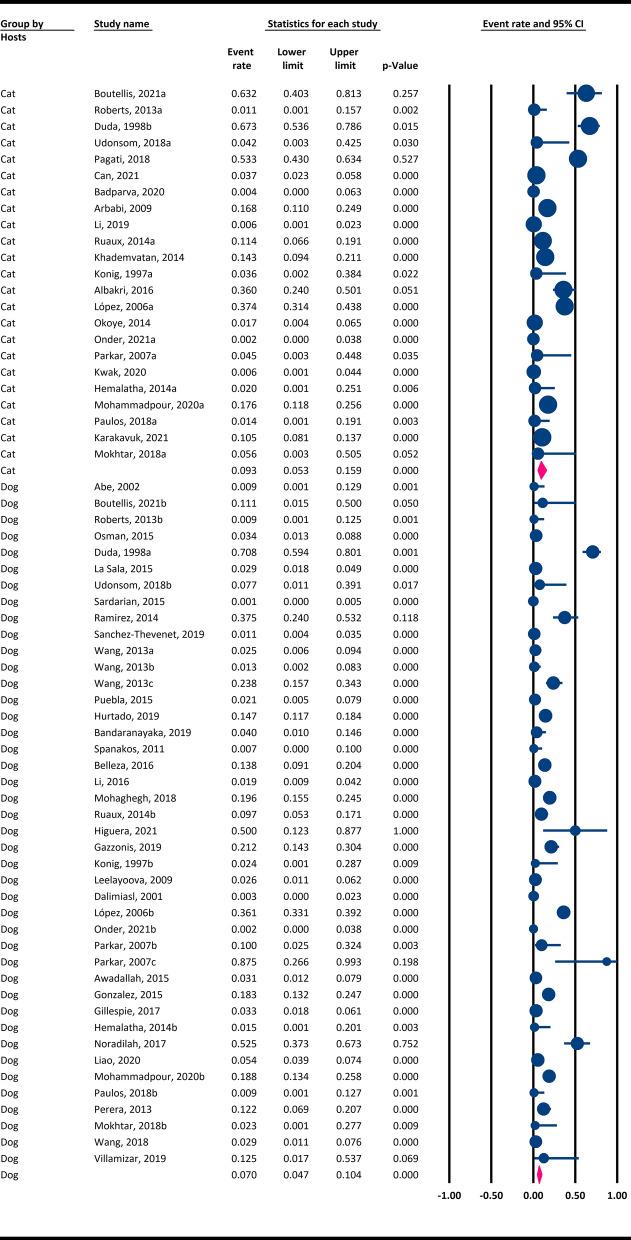
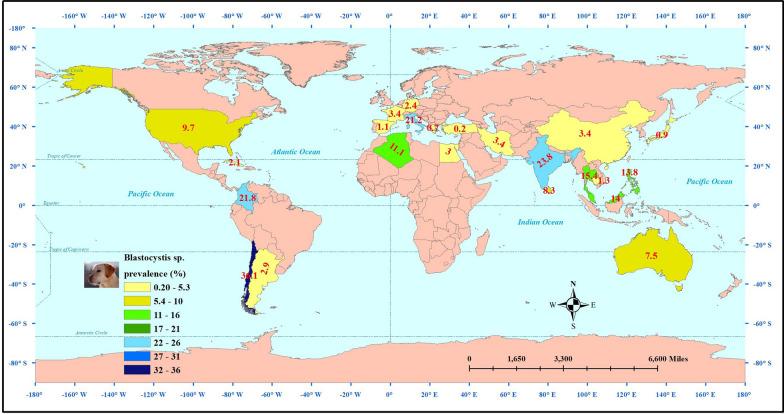
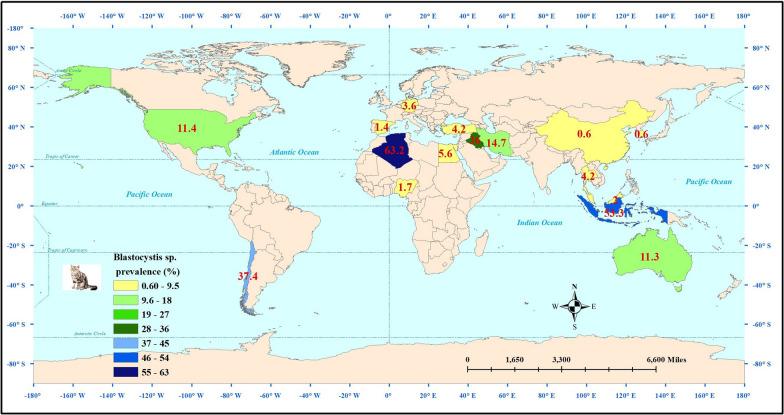
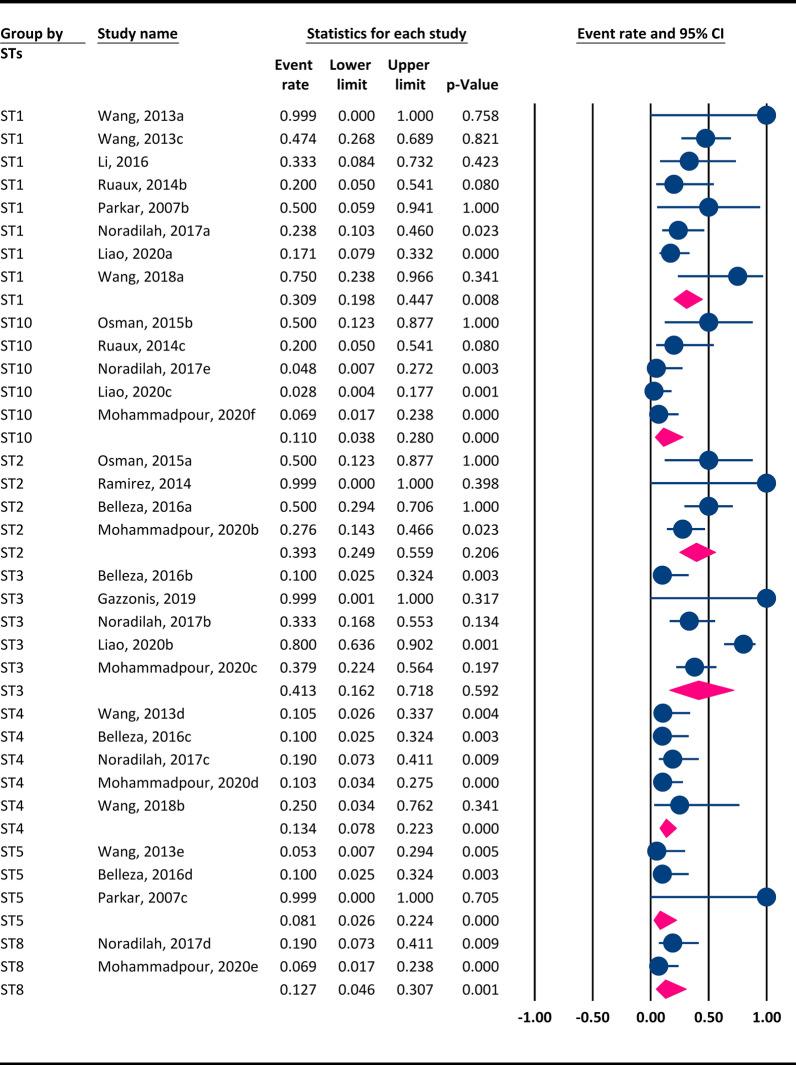
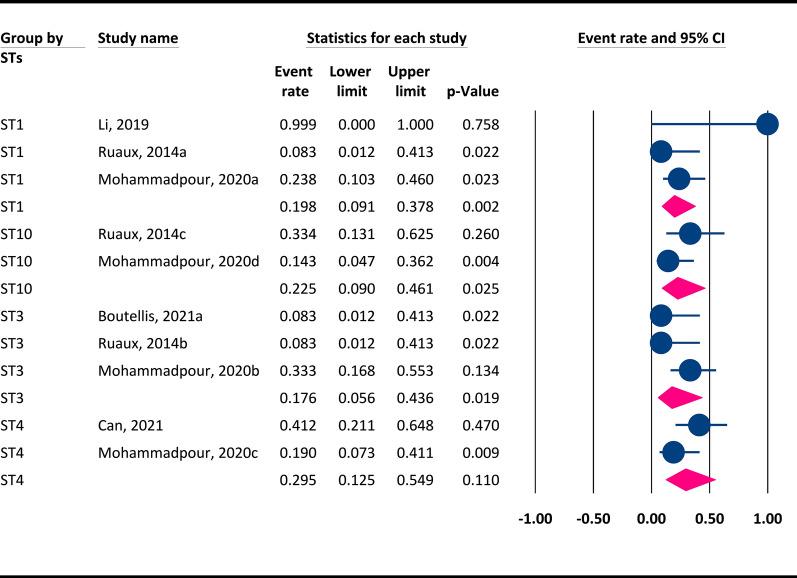
In total, we identified 49 publications that met our inclusion criteria and subsequently analyzed the 65 datasets in these articles, of which 23 and 42 datasets were on cats and dogs, respectively. Among the 2934 cats included in the 23 datasets, which involved 16 countries, the prevalence rate of Blastocystis infection was 9.3% (95% CI 5.3-15.9%). The prevalence of Blastocystis infection was slightly lower [7%, 95% CI 4.7-10.4%) among the 7946 dogs included in the 42 datasets, involving 23 countries. The sensitivity analysis showed that no remarkable variation in the estimates upon the stepwise removal of each dataset. Higher ST diversity was found among the examined dogs (ST1-8, ST10, ST23, ST24) than among cats (ST1-4, ST10, ST14). Among dogs, ST3 was the most frequent ST (41.3%), followed by ST2 (39.3%), ST1 (30.9%), ST4 (13.4%), ST8 (12.7%), ST10 (11%) and ST5 (8.1%). Also among dogs, each of ST6, ST7, ST23 and ST24 was observed in only one study. Of the ST found in the cats examined, ST4 (29.5%), followed by ST10 (22.5%), ST1 (19.8%) and ST3 (17.6%) were the most common. A single study also reported the presence of both ST2 and ST14 in cats. With respect to zoonotic Blastocystis STs (ST1-ST9 and ST12), eight were reported from dogs (ST1-ST8) and four were isolated from cats (ST1-ST4), showing the implication of dog and cats in zoonotic transmission.
CONCLUSIONS
Taken together, our results show that elucidation of the true epidemiology and ST distribution of Blastocystis in dogs and cats demands more comprehensive studies, particularly in the negelected regions of the world.
背景
芽囊原虫是一种常见的肠道原生动物,存在于动物和人类粪便样本中,全世界有超过 10 亿人感染。自驯化以来,狗和猫与人类关系密切。然而,它们的密切接触带来了潜在的健康风险,因为它们可能携带几种人畜共患病原体。因此,对狗和猫中芽囊原虫感染和亚型(ST)分布进行全球估计对人类健康具有重要意义。
方法
我们对四个英文数据库(PubMed、Scopus、Google Scholar、Web of Science)进行了全面的系统检索,以获取截至 2021 年 11 月 8 日的相关文章。使用随机效应模型进行置信区间(CI)的汇总估计。
结果
共确定了 49 篇符合纳入标准的文献,并随后分析了这些文献中 65 个数据集,其中 23 个和 42 个数据集分别来自猫和狗。在纳入的 2934 只猫中,涉及 16 个国家,芽囊原虫感染的患病率为 9.3%(95%CI 5.3-15.9%)。在纳入的 7946 只狗中,涉及 23 个国家,芽囊原虫感染的患病率略低[7%,95%CI 4.7-10.4%]。敏感性分析表明,在逐步删除每个数据集时,估计值没有明显变化。在检查的狗中发现了更高的 ST 多样性(ST1-8、ST10、ST23、ST24),而在猫中发现了更低的 ST 多样性(ST1-4、ST10、ST14)。在狗中,ST3 是最常见的 ST(41.3%),其次是 ST2(39.3%)、ST1(30.9%)、ST4(13.4%)、ST8(12.7%)、ST10(11%)和 ST5(8.1%)。同样在狗中,每个 ST6、ST7、ST23 和 ST24 仅在一项研究中观察到。在所检查的猫中,ST4(29.5%)、ST10(22.5%)、ST1(19.8%)和 ST3(17.6%)是最常见的。一项研究还报告了猫中同时存在 ST2 和 ST14。关于人畜共患芽囊原虫 ST(ST1-ST9 和 ST12),有 8 种来自狗(ST1-ST8),4 种来自猫(ST1-ST4),表明狗和猫在人畜共患传播中的作用。
结论
综上所述,我们的结果表明,阐明狗和猫中芽囊原虫的真实流行病学和 ST 分布需要更全面的研究,特别是在世界上被忽视的地区。
 Zotero 插件