
采用离子印迹聚合物和多壁碳纳米管修饰碳糊电极电化学定量测定天然水样中的甲基汞。
Using Carbon Paste Electrode Modified with Ion Imprinted Polymer and MWCNT for Electrochemical Quantification of Methylmercury in Natural Water Samples.
机构信息
Laboratory of Physical Chemistry Research, Faculty of Sciences, National University of Engineering, Av. Tupac Amaru 210, Lima 15333, Peru.
Institute of Chemistry, São Paulo State University (UNESP), São Paulo P.O. Box 14801-970, Brazil.
出版信息
Biosensors (Basel). 2022 May 30;12(6):376. doi: 10.3390/bios12060376.
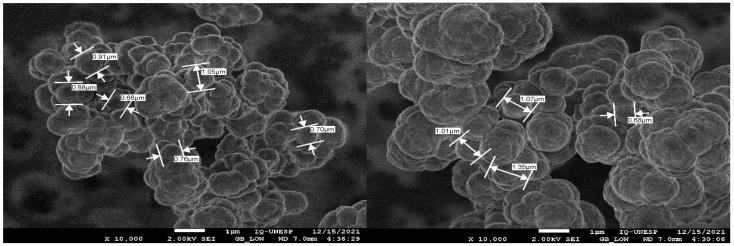
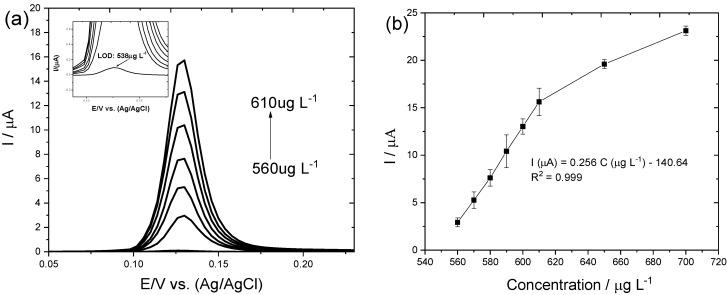
Methylmercury (MeHg) is one of the most toxic organic mercury compounds found in the environment. The continuous exposure of human beings to this highly toxic compound may damage their nervous system. The present work reports the development and application of a novel electrochemical sensing technique for the quantification of MeHg using a modified carbon paste electrode with multi-walled carbon nanotubes (MWCNTs) combined with ion imprinted polymer, which is highly selective toward MeHg (CPE/MWCNTs/IIP-MeHg) detection. The ion imprinted polymer was synthesized using 2-mercaptobenzothiazole (MBT), acrylic acid (AA) and MeHg employed as ligand, functional monomer and template ion, respectively, and the synthesized material was characterized by Raman spectroscopy and SEM-EDX. Both the proposed and control sensors were characterized by cyclic voltammetry (CV) and electrochemical impedance spectroscopy (EIS). The electrochemical measurements were carried out using differential pulse stripping voltammetry (DPSV), and a well-defined anodic peak observed at about +0.138 V (vs. Ag/AgCl) was recorded for MeHg. The application of the CPE/MWCNTs/IIP-MeHg sensor (which increased the charge transfer on the electrode surface) under the DPSV-based electrochemical method (which enhanced the signal intensity) made the detection technique highly sensitive and selective for the quantification of methylmercury. Under optimum experimental conditions, the proposed sensor exhibited a linear response range of 560-610 µg L and a detection limit of 0.538 µg L, with acceptable relative error values ≤1% when applied for the detection of MeHg in real water samples.
甲基汞(MeHg)是环境中发现的最具毒性的有机汞化合物之一。人类持续暴露于这种高毒性化合物中可能会损害神经系统。本工作报道了一种新型电化学传感技术的开发和应用,该技术使用修饰后的碳糊电极与多壁碳纳米管(MWCNTs)结合离子印迹聚合物,对甲基汞进行定量检测(CPE/MWCNTs/IIP-MeHg)。该离子印迹聚合物是使用 2-巯基苯并噻唑(MBT)、丙烯酸(AA)和 MeHg 作为配体、功能单体和模板离子合成的,合成材料通过拉曼光谱和 SEM-EDX 进行了表征。对所提出的和对照传感器均通过循环伏安法(CV)和电化学阻抗谱(EIS)进行了表征。使用差分脉冲溶出伏安法(DPSV)进行了电化学测量,并记录了在约+0.138 V(相对于 Ag/AgCl)处的明显阳极峰,用于 MeHg。在 DPSV 基电化学方法下(增强了信号强度),CPE/MWCNTs/IIP-MeHg 传感器的应用(增加了电极表面的电荷转移)使检测技术对甲基汞的定量检测具有高度的灵敏性和选择性。在最佳实验条件下,所提出的传感器具有 560-610 µg L 的线性响应范围和 0.538 µg L 的检测限,当用于检测实际水样中的 MeHg 时,可接受的相对误差值≤1%。

 Zotero 插件