
载有地瑞那韦的黏膜黏附原位凝胶的鼻腔给药:实验设计、体外评价及药代动力学研究
Intranasal Delivery of Darunavir-Loaded Mucoadhesive In Situ Gel: Experimental Design, In Vitro Evaluation, and Pharmacokinetic Studies.
作者信息
Nair Anroop B, Chaudhary Sunita, Shah Hiral, Jacob Shery, Mewada Vivek, Shinu Pottathil, Aldhubiab Bandar, Sreeharsha Nagaraja, Venugopala Katharigatta N, Attimarad Mahesh, Shah Jigar
机构信息
Department of Pharmaceutical Sciences, College of Clinical Pharmacy, King Faisal University, Al-Ahsa 31982, Saudi Arabia.
Department of Pharmaceutics, Arihant School of Pharmacy & BRI, Adalaj, Gandhinagar 382421, India.
出版信息
Gels. 2022 May 30;8(6):342. doi: 10.3390/gels8060342.
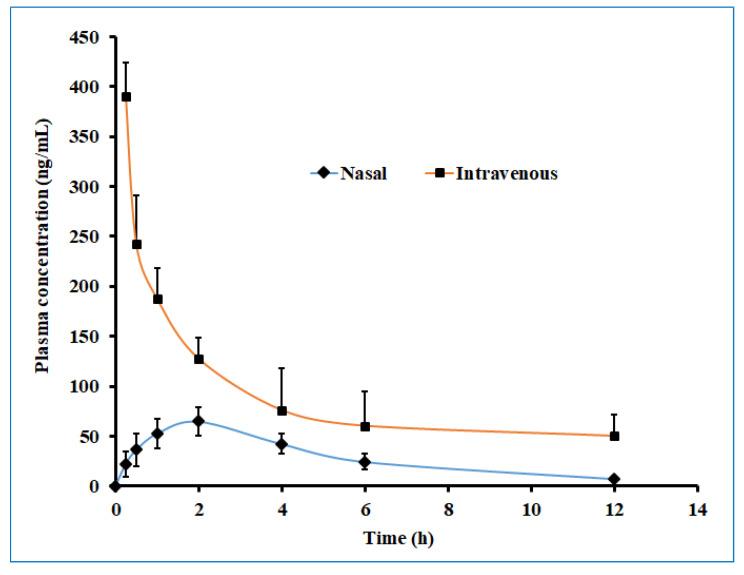
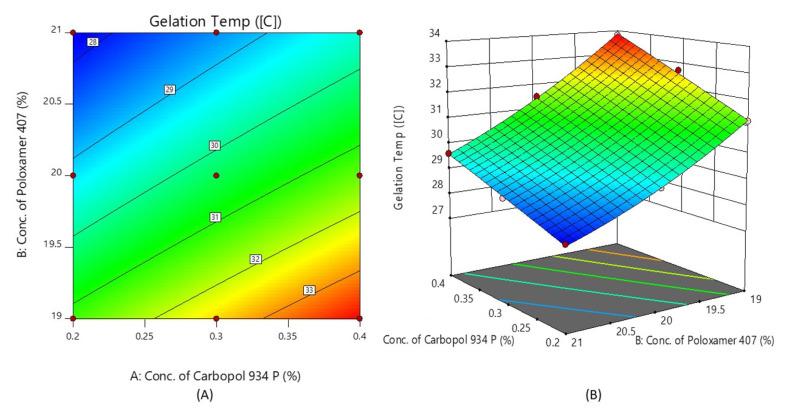
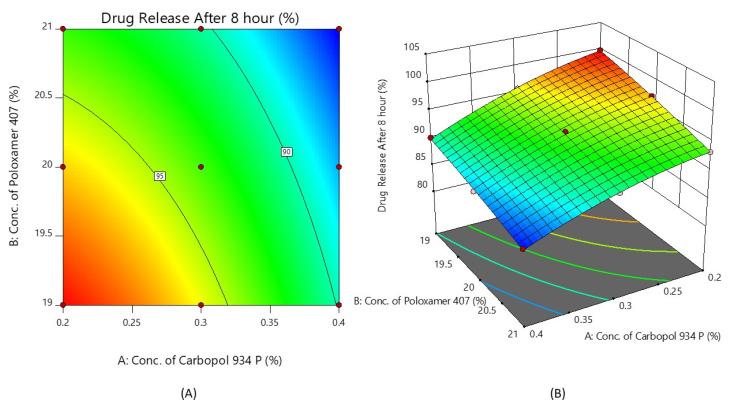
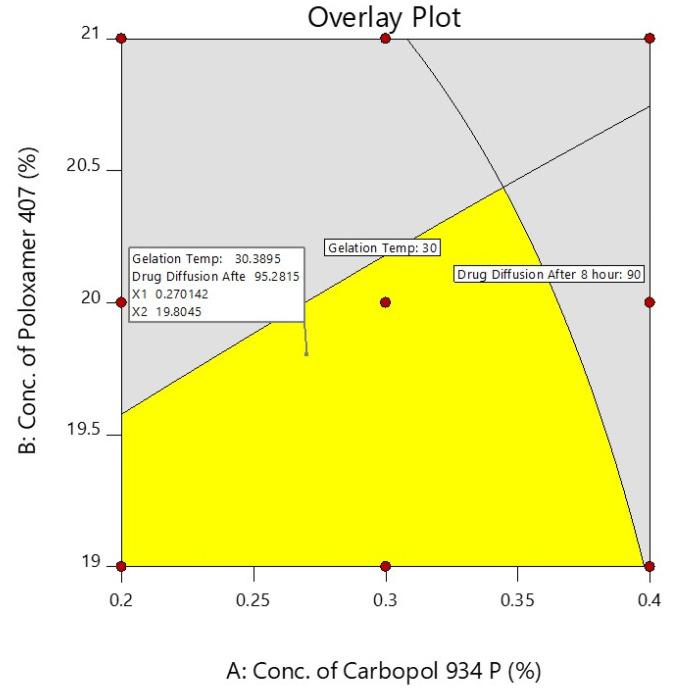
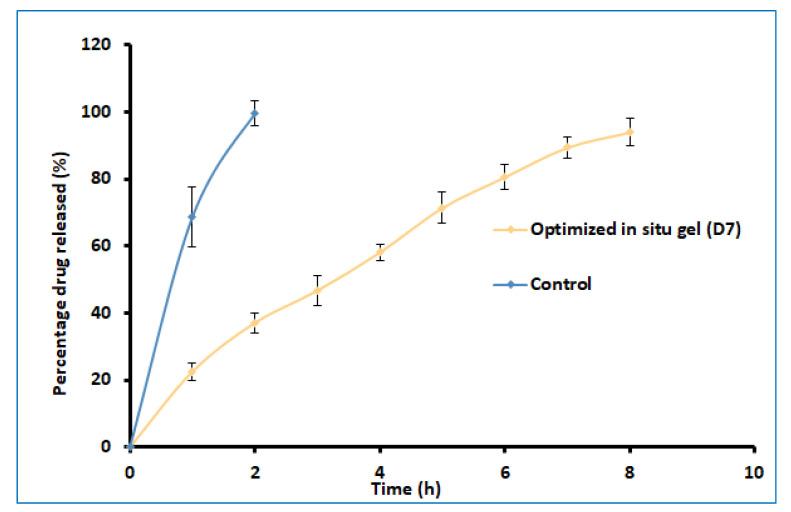
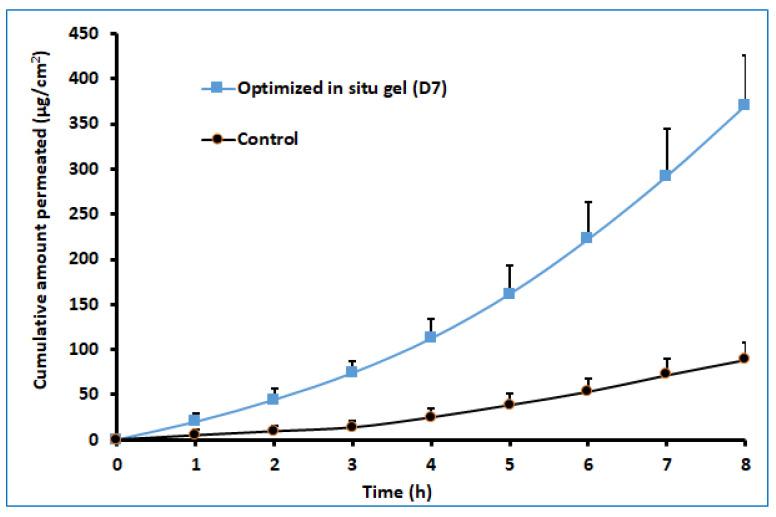
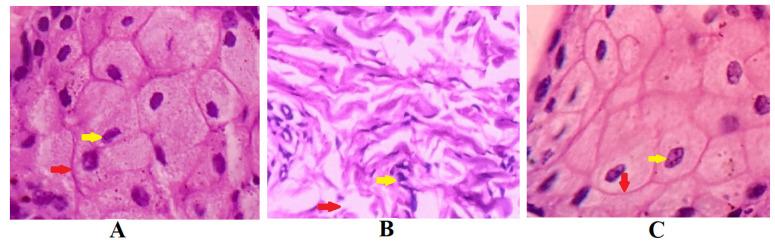
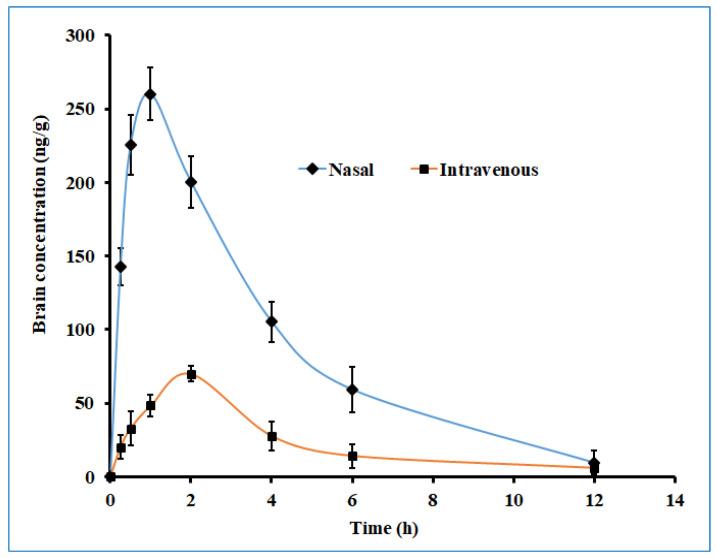
The clinical efficacy of antiretroviral therapy in NeuroAIDS is primarily limited by the low perfusion of the drug to the brain. The objective of the current investigation was to design and develop an in situ mucoadhesive gel loaded with darunavir to assess the feasibility of brain targeting through the intranasal route. Preliminary batches (F1−F9) were prepared and evaluated for various pharmaceutical characteristics. A full factorial design of the experiment was applied to optimize and assess the effect of two influencing variables (Carbopol 934P (X1) and Poloxamer 407 (X2)) on the response effects (gelation temperature (Y1) and % drug release (Y2) at 8 h). The data demonstrate that both influencing variables affect the response variables significantly (p < 0.05). The optimized formulation (F7) exhibited favorable rheological properties, adequate mucoadhesion, sustained drug release, and greater permeation across the nasal mucosa. An in vitro ciliotoxicity study confirms the nontoxicity of the optimized in situ gel (D7) on the nasal mucosa. An in vivo pharmacokinetic study in rats was performed to assess drug targeting to the brain following the nasal application of the selected in situ gel (D7). Significantly higher (p < 0.0001) Cmax (4-fold) and AUC0-α (3.5-fold) values were noticed in the brain after nasal application, as compared to the intravenous route. However, less systemic exposure to darunavir was noticed with nasal therapy, which confirms the low absorption of the drug into the central compartment. Overall, the data here demonstrate that the optimized in situ mucoadhesive nasal gel is effective in targeting darunavir to the brain by the nasal route and could be a viable option for the treatment of NeuroAIDS.
抗逆转录病毒疗法在神经艾滋病中的临床疗效主要受药物向脑内低灌注的限制。本研究的目的是设计并开发一种载有达芦那韦的原位粘膜粘附凝胶,以评估经鼻途径实现脑靶向的可行性。制备了初步批次(F1 - F9)并对其各种药学特性进行了评估。应用全因子实验设计来优化和评估两个影响变量(卡波姆934P(X1)和泊洛沙姆407(X2))对响应效应(凝胶化温度(Y1)和8小时时的药物释放百分比(Y2))的影响。数据表明,两个影响变量均对响应变量有显著影响(p < 0.05)。优化后的制剂(F7)表现出良好的流变学性质、足够的粘膜粘附性、持续的药物释放以及在鼻黏膜上的更大渗透。体外纤毛毒性研究证实了优化后的原位凝胶(D7)对鼻黏膜无毒。在大鼠中进行了体内药代动力学研究,以评估经鼻应用所选原位凝胶(D7)后药物向脑内的靶向性。与静脉途径相比,经鼻给药后脑中的Cmax(约4倍)和AUC0-α(约3.5倍)值显著更高(p < 0.0001)。然而,经鼻治疗时达芦那韦的全身暴露较少,这证实了药物向中央腔室的低吸收。总体而言,此处的数据表明,优化后的原位粘膜粘附鼻凝胶通过鼻途径将达芦那韦有效靶向至脑内,可能是治疗神经艾滋病的一个可行选择。


 Zotero 插件