
3D打印浸片将细菌鉴定和抗生素敏感性测试小型化,可直接对乳腺炎样本进行分析。
3D-Printed Dip Slides Miniaturize Bacterial Identification and Antibiotic Susceptibility Tests Allowing Direct Mastitis Sample Analysis.
作者信息
Diep Tai The, Bizley Samuel, Edwards Alexander Daniel
机构信息
Department of Pharmacy, Reading School of Pharmacy, University of Reading, Reading RG6 6UR, Berkshire, UK.
出版信息
Micromachines (Basel). 2022 Jun 14;13(6):941. doi: 10.3390/mi13060941.
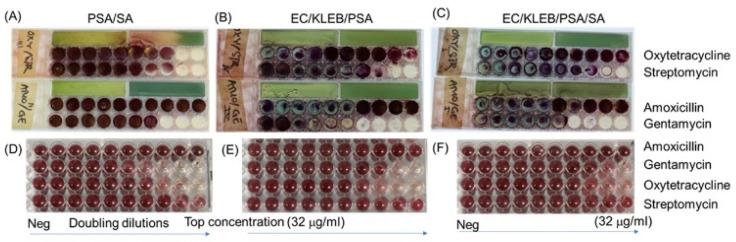
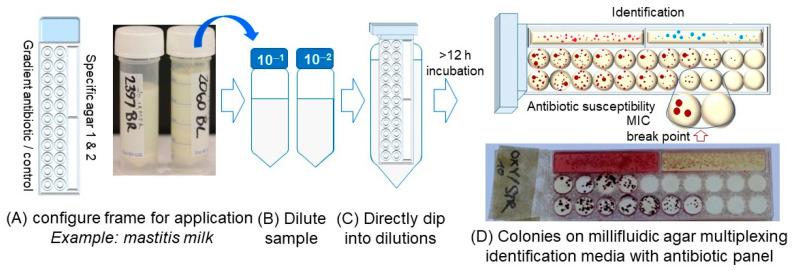
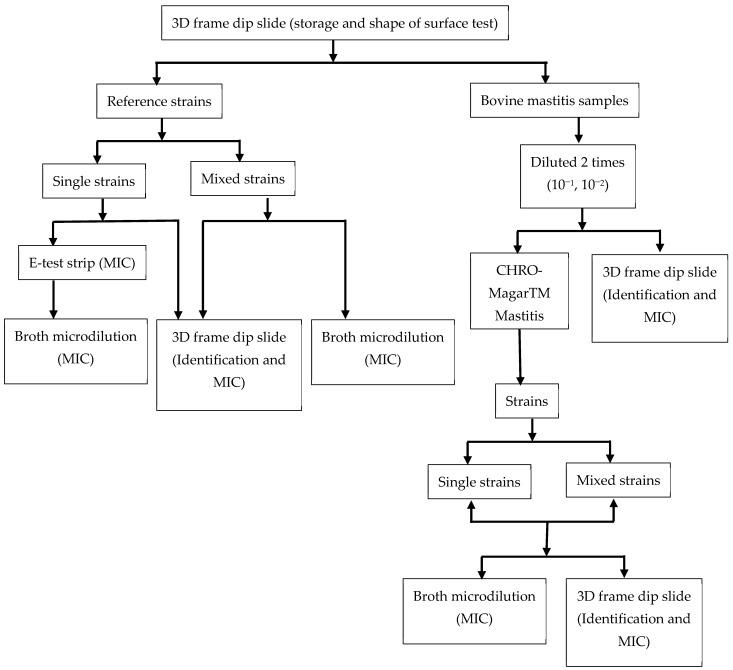
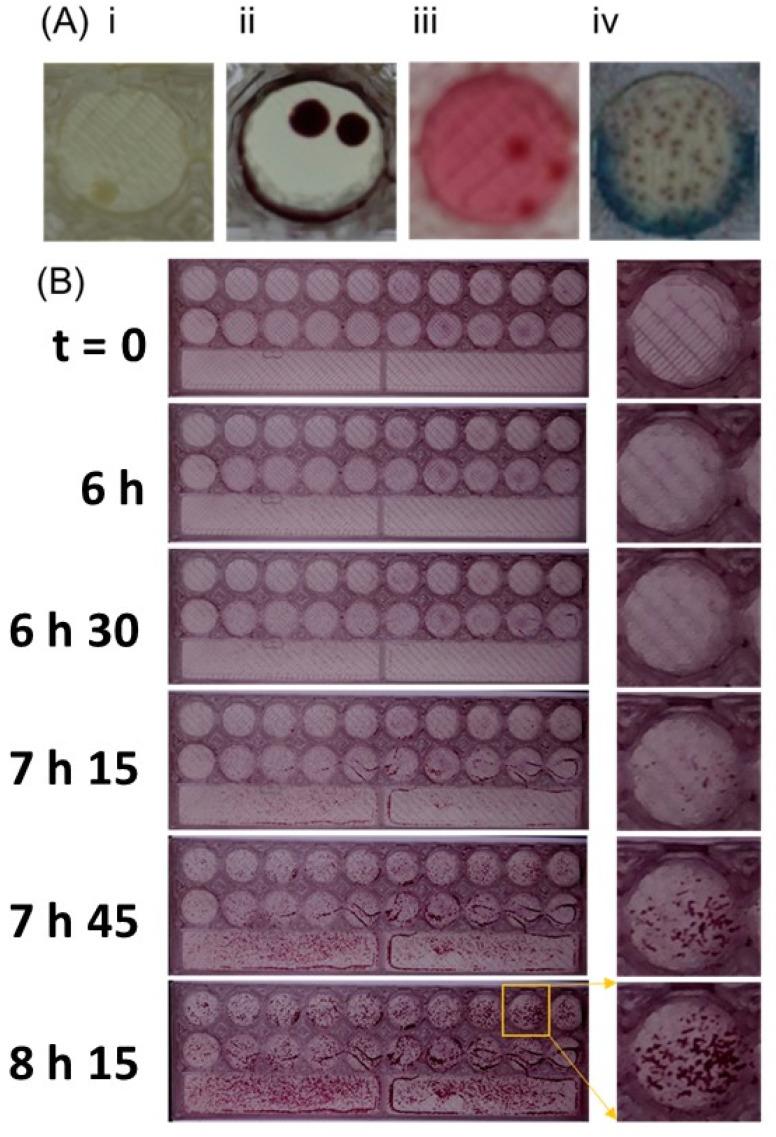
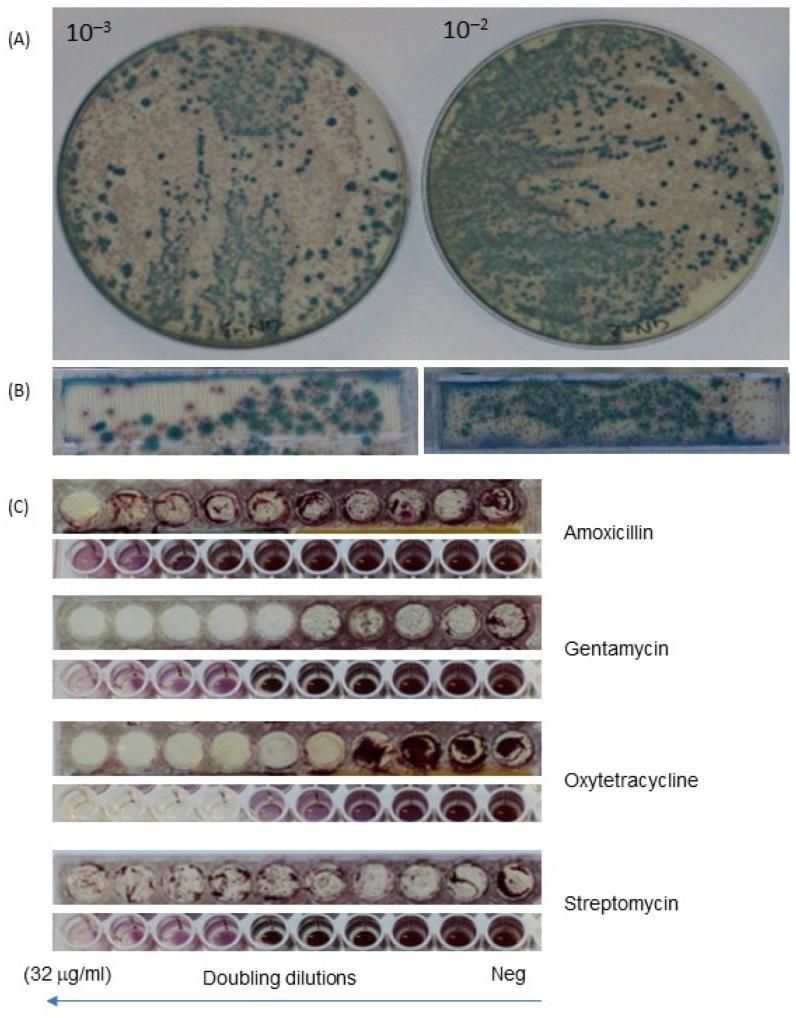
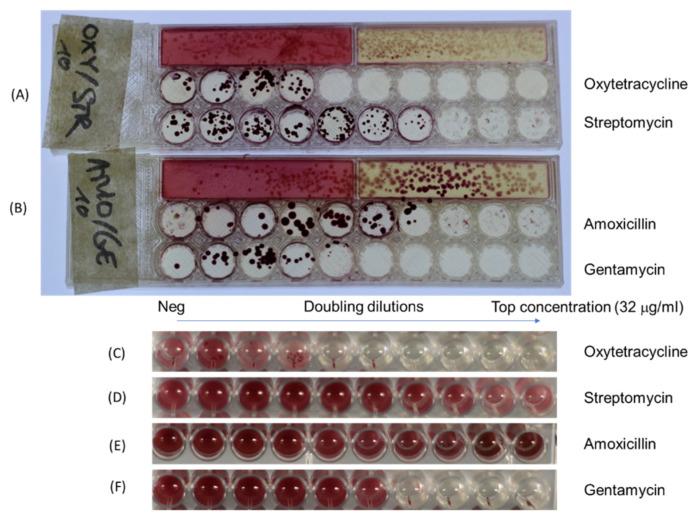
The early detection of antimicrobial resistance remains an essential step in the selection and optimization of antibiotic treatments. Phenotypic antibiotic susceptibility testing including the measurement of minimum inhibitory concentration (MIC) remains critical for surveillance and diagnostic testing. Limitations to current testing methods include bulky labware and laborious methods. Furthermore, the requirement of a single strain of bacteria to be isolated from samples prior to antibiotic susceptibility testing delays results. The mixture of bacteria present in a sample may also have an altered resistance profile to the individual strains, and so measuring the susceptibility of the mixtures of organisms found in some samples may be desirable. To enable simultaneous MIC and bacterial species detection in a simple and rapid miniaturized format, a 3D-printed frame was designed for a multi-sample millifluidic dip-slide device that combines panels of identification culture media with a range of antibiotics (Ampicillin, Amoxicillin, Amikacin, Ceftazidime, Cefotaxime, Ofloxacin, Oxytetracycline, Streptomycin, Gentamycin and Imipenem) diluted in Muëller-Hinton Agar. Our proof-of-concept evaluation confirmed that the direct detection of more than one bacterium parallel to measuring MIC in samples is possible, which is validated using reference strains ATCC 25922, ATCC 13883, ATCC 10145, and ATCC 12600 and with mastitis milk samples collected from Reading University Farm. When mixtures were tested, a MIC value was obtained that reflected the most resistant organism present (i.e., highest MIC), suggesting it may be possible to estimate a minimum effective antibiotic concentration for mixtures directly from samples containing multiple pathogens. We conclude that this simple miniaturized approach to the rapid simultaneous identification and antibiotic susceptibility testing may be suitable for directly testing agricultural samples, which is achieved through shrinking conventional tests into a simple "dip-and-incubate" device that can be 3D printed anywhere.
抗菌药物耐药性的早期检测仍然是选择和优化抗生素治疗的关键步骤。包括最低抑菌浓度(MIC)测量在内的表型抗生素敏感性测试对于监测和诊断测试仍然至关重要。当前测试方法的局限性包括实验器具笨重和方法繁琐。此外,在进行抗生素敏感性测试之前需要从样本中分离出单一菌株,这会延迟结果。样本中存在的细菌混合物对各个菌株的耐药性也可能有所改变,因此测量某些样本中发现的生物体混合物的敏感性可能是有必要的。为了以简单快速的小型化形式同时进行MIC和细菌种类检测,设计了一种3D打印框架,用于一种多样品微流控浸片装置,该装置将鉴定培养基板与一系列稀释在Mueller-Hinton琼脂中的抗生素(氨苄青霉素、阿莫西林、阿米卡星、头孢他啶、头孢噻肟、氧氟沙星、土霉素、链霉素、庆大霉素和亚胺培南)相结合。我们的概念验证评估证实,在样本中平行于测量MIC直接检测多种细菌是可行的,这通过使用参考菌株ATCC 25922、ATCC 13883、ATCC 10145和ATCC 12600以及从雷丁大学农场采集的乳腺炎牛奶样本进行了验证。当测试混合物时,获得了反映存在的最耐药生物体(即最高MIC)的MIC值,这表明可能直接从含有多种病原体的样本中估计混合物的最低有效抗生素浓度。我们得出结论,这种简单的小型化方法用于快速同时鉴定和抗生素敏感性测试可能适用于直接检测农业样本,这是通过将传统测试缩小到一个简单的“浸入并培养”装置来实现的,该装置可以在任何地方进行3D打印。

 Zotero 插件