
持续食用脱咖啡因绿咖啡豆营养保健品对超重/肥胖受试者的酚类代谢和生物利用度的影响有限。
Sustained Consumption of a Decaffeinated Green Coffee Nutraceutical Has Limited Effects on Phenolic Metabolism and Bioavailability in Overweight/Obese Subjects.
机构信息
Department of Metabolism and Nutrition, Institute of Food Science, Technology and Nutrition (ICTAN-CSIC), Spanish National Research Council (CSIC), José Antonio Nováis 10, 28040 Madrid, Spain.
出版信息
Nutrients. 2022 Jun 13;14(12):2445. doi: 10.3390/nu14122445.
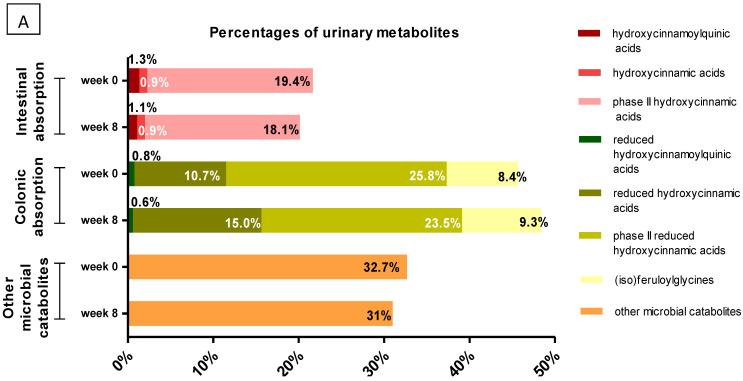
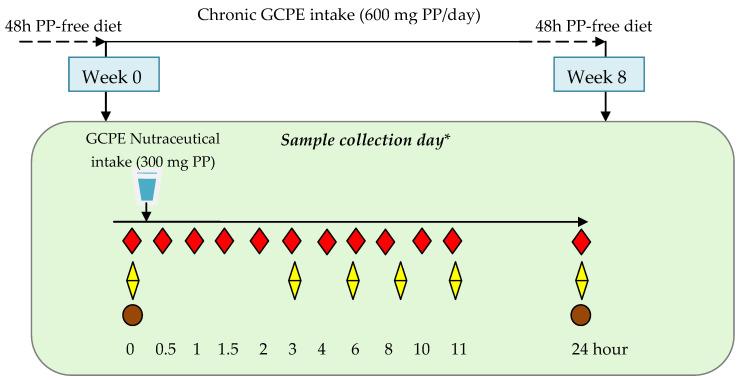
Knowledge on the bioavailability of coffee (poly)phenols mostly come from single dose postprandial studies. This study aimed at investigating the effects of regularly consuming a green coffee phenolic extract (GCPE) on the bioavailability and metabolism of (poly)phenols. Volunteers with overweight/obesity consumed a decaffeinated GCPE nutraceutical containing 300 mg hydroxycinnamates twice daily for two months. Plasma and urinary pharmacokinetics, and fecal excretion of phenolic metabolites were characterized by LC-MS-QToF at weeks 0 and 8. Fifty-four metabolites were identified in biological fluids. Regular consumption of the nutraceutical produced certain changes: reduced forms of caffeic, ferulic and coumaric acids in urine or 3-(3′-hydroxypenyl)propanoic, and 3,4-dihydroxybenzoic acids in feces significantly increased (p < 0.05) after 8 weeks; in contrast, coumaroylquinic and dihydrocoumaroylquinic acids in urine decreased (p < 0.05) compared to baseline excretion. The sum of intestinal and colonic metabolites increased after sustained consumption of GCPE, without reaching statistical significance, suggesting a small overall effect on (poly)phenols’ bioavailability.
关于咖啡(多)酚生物利用度的知识主要来自于单次餐后研究。本研究旨在调查定期摄入绿原酸咖啡提取物(GCPE)对(多)酚生物利用度和代谢的影响。超重/肥胖志愿者每天两次摄入含有 300 毫克羟基肉桂酸的脱咖啡因 GCPE 营养保健品,持续两个月。在第 0 周和第 8 周,通过 LC-MS-QToF 分析了血浆和尿液药代动力学以及粪便酚类代谢产物的排泄情况。在生物体液中鉴定出 54 种代谢物。营养保健品的定期摄入产生了某些变化:尿液中咖啡酸、阿魏酸和香豆酸的还原形式,以及粪便中 3-(3′-羟基苯基)丙酸和 3,4-二羟基苯甲酸的含量在 8 周后显著增加(p<0.05);相反,与基线排泄相比,尿液中的香豆酰奎宁酸和二氢香豆酰奎宁酸减少(p<0.05)。持续摄入 GCPE 后,肠道和结肠代谢物的总和增加,但没有达到统计学意义,这表明(多)酚生物利用度的整体影响较小。

 Zotero 插件