
中国分离的传染性喉气管炎病毒的生物学特性。
Biological Characteristics of Infectious Laryngotracheitis Viruses Isolated in China.
机构信息
College of Veterinary Medicine, Inner Mongolia Agricultural University, Hohhot 010010, China.
Department of Avian Infectious Diseases, Shanghai Veterinary Research Institute, Chinese Academy of Agricultural Sciences, Shanghai 200241, China.
出版信息
Viruses. 2022 May 31;14(6):1200. doi: 10.3390/v14061200.
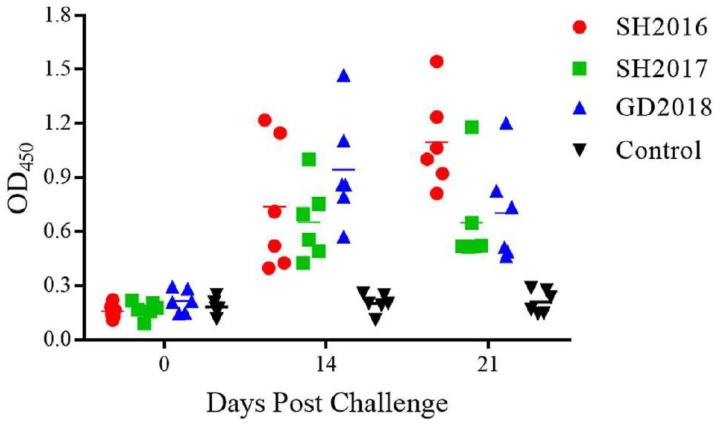
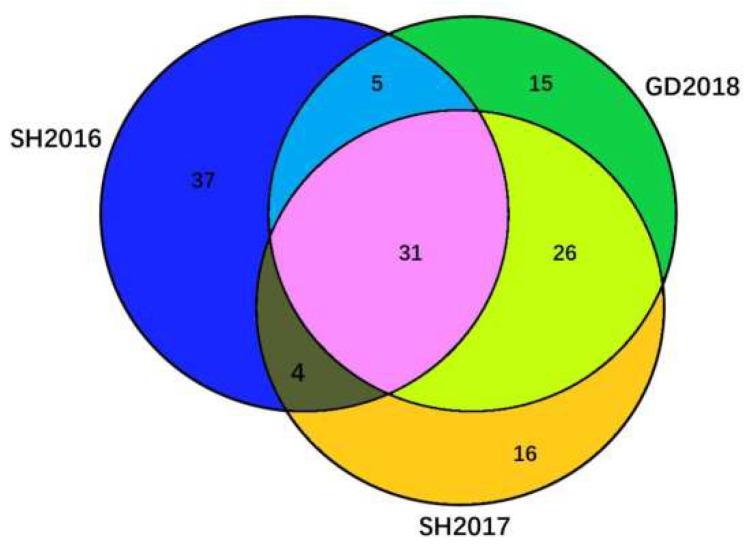
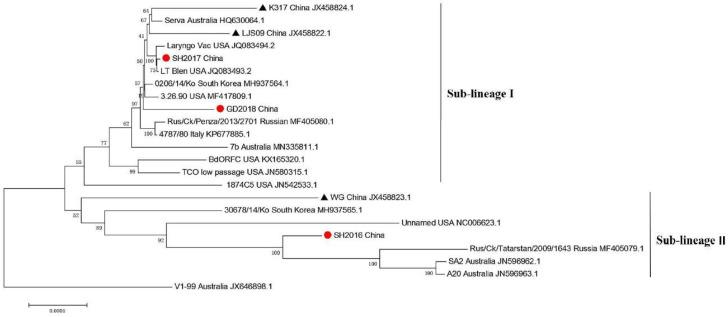
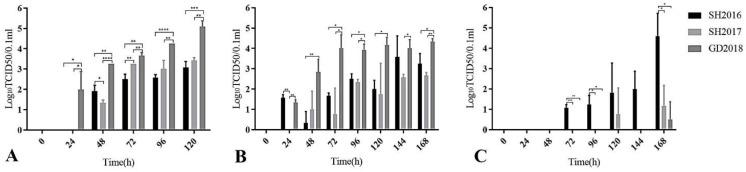
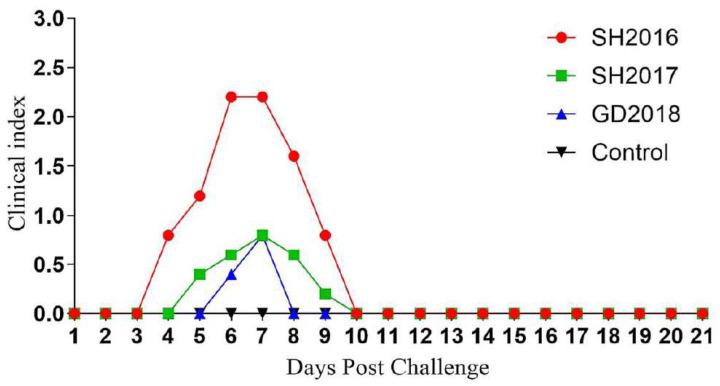
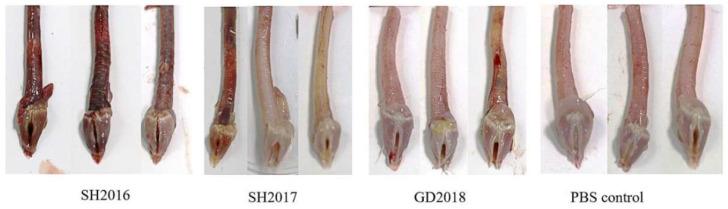
Infectious laryngotracheitis virus (ILTV) causes severe respiratory disease in chickens and results in huge economic losses in the poultry industry worldwide. To correlate the genomic difference with the replication and pathogenicity, phenotypes of three ILTVs isolated from chickens in China from 2016 to 2018 were sequenced by high-throughput sequencing. Based on the entire genome, the isolates GD2018 and SH2017 shared 99.9% nucleotide homology, while the isolate SH2016 shared 99.7% nucleotide homology with GD2018 and SH2017, respectively. Each virus genome contained 82 ORFs encoding 77 kinds of protein, 31 of which share the same amino acid sequence in the three viruses. GD2018 and SH2017 shared 57 proteins with the same amino acid sequence, while SH2016 shared 42 and 41 proteins with the amino acid sequences of GD2018 and SH2017, respectively. SH2016 propagated efficiently in allantoic fluid and on chorioallantoic membranes (CAMs) of SPF chicken embryo eggs, while GD2018 and SH2017 proliferated well only on CAMs. GD2018 propagated most efficiently on CAMs and LMH cells among three isolates. SH2016 caused serious clinical symptoms, while GD2018 and SH2017 caused mild and moderate clinical symptoms in chickens, although the sero of the chickens infected with those three isolates were all positive for anti-ILTV antibody at 14 and 21 days after challenge. Three ILTVs with high genetic homology showed significant differences in the replication in different culture systems and the pathogenicity of chickens, providing basic materials for studying the key determinants of pathogenicity of ILTV.
传染性喉气管炎病毒(ILTV)可引起鸡的严重呼吸道疾病,给全球家禽业造成巨大经济损失。为了将基因组差异与复制和致病性相关联,我们对 2016 年至 2018 年期间从中国鸡中分离到的三种 ILTV 进行了高通量测序。基于整个基因组,分离株 GD2018 和 SH2017 共享 99.9%的核苷酸同源性,而分离株 SH2016 分别与 GD2018 和 SH2017 共享 99.7%的核苷酸同源性。每个病毒基因组包含 82 个 ORF 编码 77 种蛋白质,其中 31 种在三种病毒中具有相同的氨基酸序列。GD2018 和 SH2017 共享 57 种具有相同氨基酸序列的蛋白质,而 SH2016 与 GD2018 和 SH2017 的氨基酸序列分别共享 42 种和 41 种蛋白质。SH2016 在 SPF 鸡胚卵的尿囊液和绒毛尿囊膜(CAM)中高效繁殖,而 GD2018 和 SH2017 仅在 CAM 上繁殖良好。GD2018 在三种分离株中在 CAM 和 LMH 细胞上的繁殖效率最高。SH2016 可引起鸡严重的临床症状,而 GD2018 和 SH2017 可引起鸡的轻度和中度临床症状,尽管感染这三种分离株的鸡的血清在攻毒后 14 天和 21 天都对 ILTV 抗体呈阳性。具有高遗传同源性的三种 ILTV 在不同培养系统中的复制和鸡的致病性方面表现出显著差异,为研究 ILTV 致病性的关键决定因素提供了基础材料。
 Zotero 插件