
新型噬菌体特异性针对 并具有抗生物膜活性。
Novel Bacteriophage Specific against and with Antibiofilm Activity.
机构信息
Charité-Universitätsmedizin Berlin, Corporate Member of Freie Universität Berlin, Humboldt-Universität zu Berlin, Center for Musculoskeletal Surgery, Augustenburger Platz 1, 13353 Berlin, Germany.
Berlin Institute of Health at Charité, Universitätsmedizin Berlin, BIH Center for Regenerative Therapies (BCRT), Charitéplatz 1, 10117 Berlin, Germany.
出版信息
Viruses. 2022 Jun 20;14(6):1340. doi: 10.3390/v14061340.
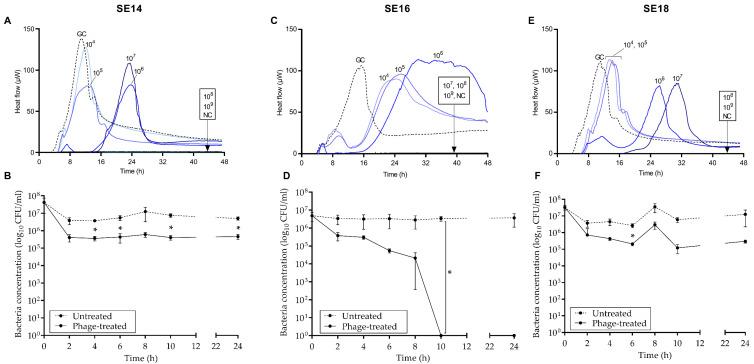
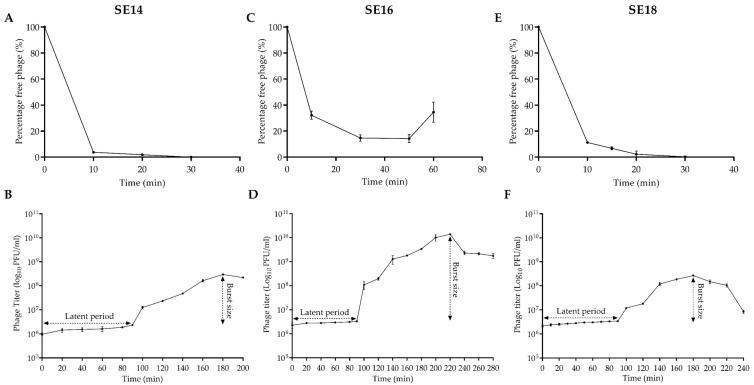
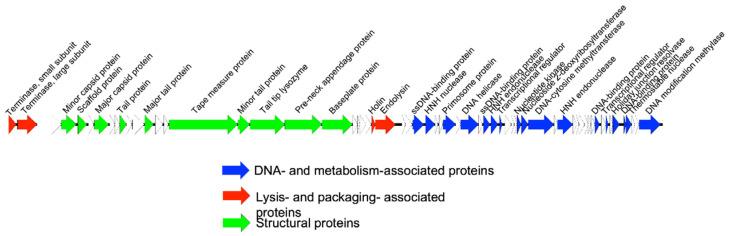
has emerged as the most important pathogen in infections related to indwelling medical devices, and although these infections are not life-threatening, their frequency and the fact that they are extremely difficult to treat represent a serious burden on the public health system. Treatment is complicated by specific antibiotic resistance genes and the formation of biofilms. Hence, novel therapeutic strategies are needed to fight these infections. A novel bacteriophage CUB-EPI_14 specific to the bacterial species was isolated from sewage and characterized genomically and phenotypically. Its genome contains a total of 46,098 bp and 63 predicted genes, among which some have been associated with packaging and lysis-associated proteins, structural proteins, or DNA- and metabolism-associated proteins. No lysogeny-associated proteins or known virulence proteins were identified in the phage genome. CUB-EPI_14 showed stability over a wide range of temperatures (from -20 °C to 50 °C) and pH values (pH 3-pH 12) and a narrow host range against . Potent antimicrobial and antibiofilm activities were observed when the phage was tested against a highly susceptible bacterial isolate. These encouraging results open the door to new therapeutic opportunities in the fight against resilient biofilm-associated infections caused by .
已经成为与留置医疗设备相关感染的最重要病原体,尽管这些感染不会危及生命,但它们的频率以及极难治疗的事实给公共卫生系统带来了严重负担。治疗的复杂性在于特定的抗生素耐药基因和生物膜的形成。因此,需要新的治疗策略来对抗这些感染。从污水中分离出一种针对 细菌的新型噬菌体 CUB-EPI_14,并对其进行了基因组和表型特征分析。其基因组共包含 46098bp 和 63 个预测基因,其中一些与包装和裂解相关蛋白、结构蛋白或 DNA 和代谢相关蛋白有关。噬菌体基因组中未发现溶原相关蛋白或已知的毒力蛋白。CUB-EPI_14 在较宽的温度范围(-20°C 至 50°C)和 pH 值范围(pH 3-pH 12)下表现稳定,对 具有较窄的宿主范围。当噬菌体针对高度敏感的细菌分离株进行测试时,观察到了强大的抗菌和抗生物膜活性。这些令人鼓舞的结果为对抗由 引起的具有弹性的生物膜相关感染开辟了新的治疗机会。


 Zotero 插件