
利用带有方向滤波器的深度学习技术全自动确定颈椎成熟度阶段。
Fully automated determination of the cervical vertebrae maturation stages using deep learning with directional filters.
机构信息
Department of Electrical and Computer Engineering, University of Illinois at Chicago, Chicago, Illinois, United States of America.
Department of Orthodontics, College of Dentistry, University of Illinois at Chicago, Chicago, Illinois, United States of America.
出版信息
PLoS One. 2022 Jul 1;17(7):e0269198. doi: 10.1371/journal.pone.0269198. eCollection 2022.
INTRODUCTION
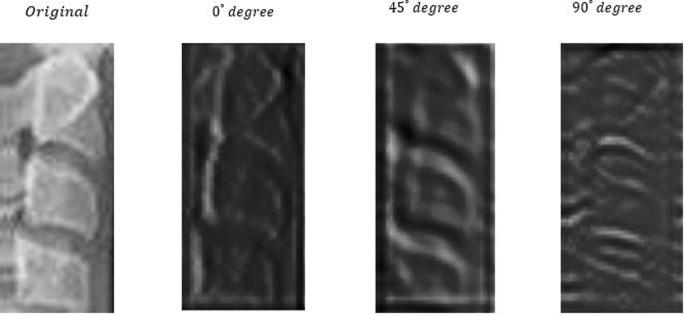
We aim to apply deep learning to achieve fully automated detection and classification of the Cervical Vertebrae Maturation (CVM) stages. We propose an innovative custom-designed deep Convolutional Neural Network (CNN) with a built-in set of novel directional filters that highlight the edges of the Cervical Vertebrae in X-ray images.
METHODS
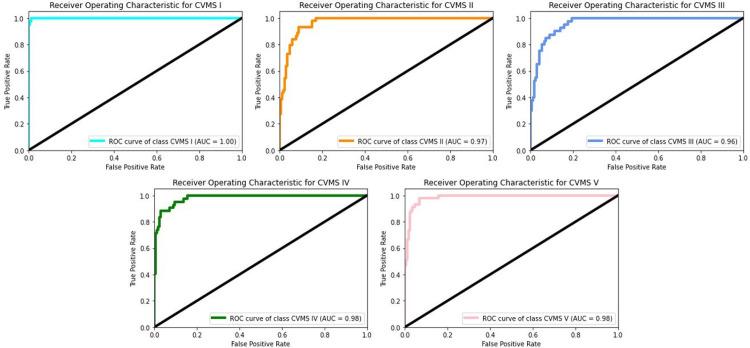
A total of 1018 Cephalometric radiographs were labeled and classified according to the Cervical Vertebrae Maturation (CVM) stages. The images were cropped to extract the cervical vertebrae using an Aggregate Channel Features (ACF) object detector. The resulting images were used to train four different Deep Learning (DL) models: our proposed CNN, MobileNetV2, ResNet101, and Xception, together with a set of tunable directional edge enhancers. When using MobileNetV2, ResNet101 and Xception, data augmentation is adopted to allow adequate network complexity while avoiding overfitting. The performance of our CNN model was compared with that of MobileNetV2, ResNet101 and Xception with and without the use of directional filters. For validation and performance assessment, k-fold cross-validation, ROC curves, and p-values were used.
RESULTS
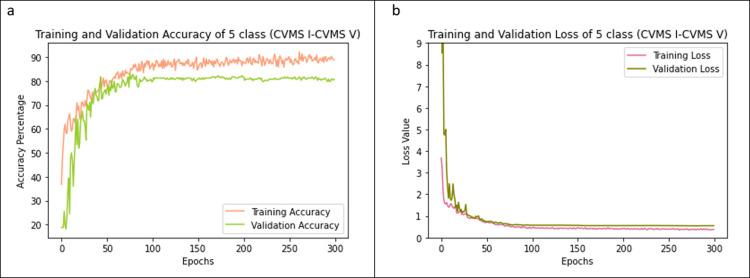
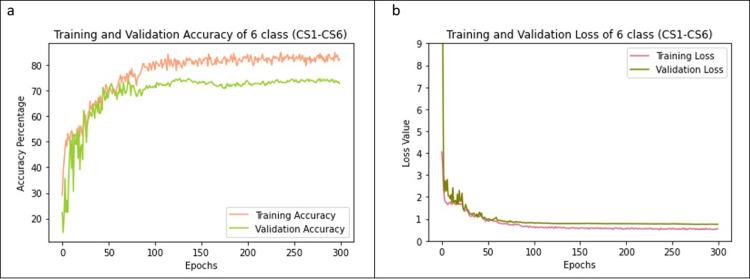
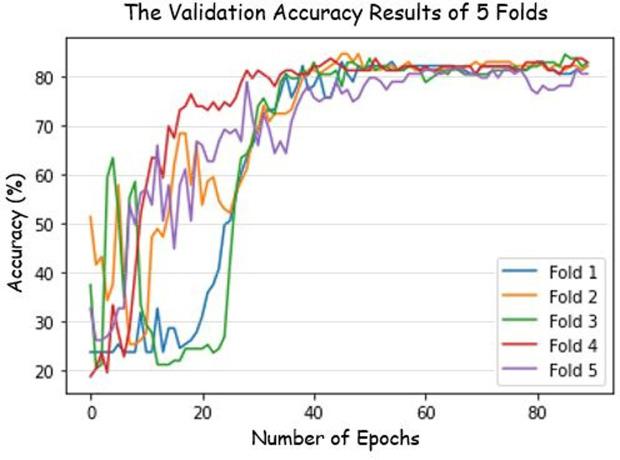
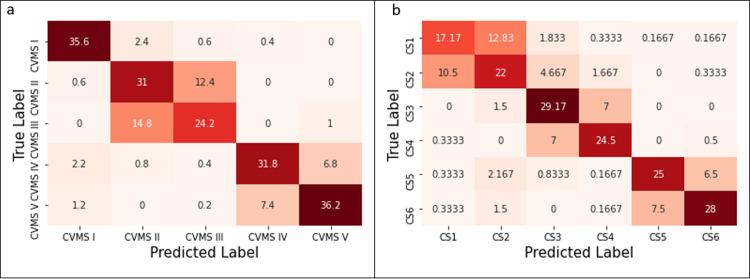
The proposed innovative model that uses a CNN preceded with a layer of tunable directional filters achieved a validation accuracy of 84.63%84.63% in CVM stage classification into five classes, exceeding the accuracy achieved with the other DL models investigated. MobileNetV2, ResNet101 and Xception used with directional filters attained accuracies of 78.54%, 74.10%, and 80.86%, respectively. The custom-designed CNN method also achieves 75.11% in six-class CVM stage classification. The effectiveness of the directional filters is reflected in the improved performance attained in the results. If the custom-designed CNN is used without the directional filters, the test accuracy decreases to 80.75%. In the Xception model without the directional filters, the testing accuracy drops slightly to 79.42% in the five-class CVM stage classification.
CONCLUSION
The proposed model of a custom-designed CNN together with the tunable Directional Filters (CNNDF) is observed to provide higher accuracy than the commonly used pre-trained network models that we investigated in the fully automated determination of the CVM stages.
简介
我们旨在应用深度学习来实现对颈椎成熟度(CVM)阶段的全自动检测和分类。我们提出了一种创新的定制深度卷积神经网络(CNN),其中内置了一组新颖的定向滤波器,可以突出 X 射线图像中颈椎的边缘。
方法
共对 1018 张头颅侧位片进行了标记和分类,根据颈椎成熟度(CVM)阶段进行分类。使用聚合通道特征(ACF)对象检测器对图像进行裁剪,以提取颈椎。使用四个不同的深度学习(DL)模型对所得图像进行训练:我们提出的 CNN、MobileNetV2、ResNet101 和 Xception,以及一组可调定向边缘增强器。在使用 MobileNetV2、ResNet101 和 Xception 时,采用数据增强方法,允许网络具有足够的复杂性,同时避免过拟合。将我们的 CNN 模型的性能与使用和不使用定向滤波器的 MobileNetV2、ResNet101 和 Xception 的性能进行了比较。使用 K 折交叉验证、ROC 曲线和 p 值进行验证和性能评估。
结果
使用带有可调定向滤波器的 CNN 层的创新模型在将 CVM 阶段分为五类时,验证准确度达到 84.63%,优于所研究的其他 DL 模型的准确度。使用定向滤波器的 MobileNetV2、ResNet101 和 Xception 的准确度分别为 78.54%、74.10%和 80.86%。定制的 CNN 方法在六类 CVM 阶段分类中也达到了 75.11%的准确度。定向滤波器的有效性反映在结果中性能的提高上。如果不使用定向滤波器,自定义 CNN 的测试精度会下降到 80.75%。在没有定向滤波器的 Xception 模型中,五分类 CVM 阶段分类的测试精度略有下降至 79.42%。
结论
与我们研究的全自动 CVM 阶段确定中常用的预训练网络模型相比,观察到定制 CNN 与可调定向滤波器(CNNDF)的组合模型提供了更高的准确性。


 Zotero 插件