
常见的心电图测量指标与端粒长度无关。
Common electrocardiogram measures are not associated with telomere length.
机构信息
Department of Cardiology, University Hospital, LMU Munich, Munich, Germany.
German Centre for Cardiovascular Research (DZHK), Partner Site Munich Heart Alliance, Munich, Germany.
出版信息
Aging (Albany NY). 2022 Jul 5;14(14):5620-5627. doi: 10.18632/aging.204149.
AIMS
Aging is accompanied by telomere shortening. Increased telomere shortening is considered a marker of premature aging. Cardiac aging results in the development of cardiac pathologies. Electrocardiogram (ECG) measures reflect cardiac excitation, conduction, and repolarization. ECG measures also prolong with aging and are associated with cardiac pathologies including atrial fibrillation. As premature prolongation of ECG measures is observed, we hypothesized that such prolongation may be associated with telomere length.
METHODS AND RESULTS
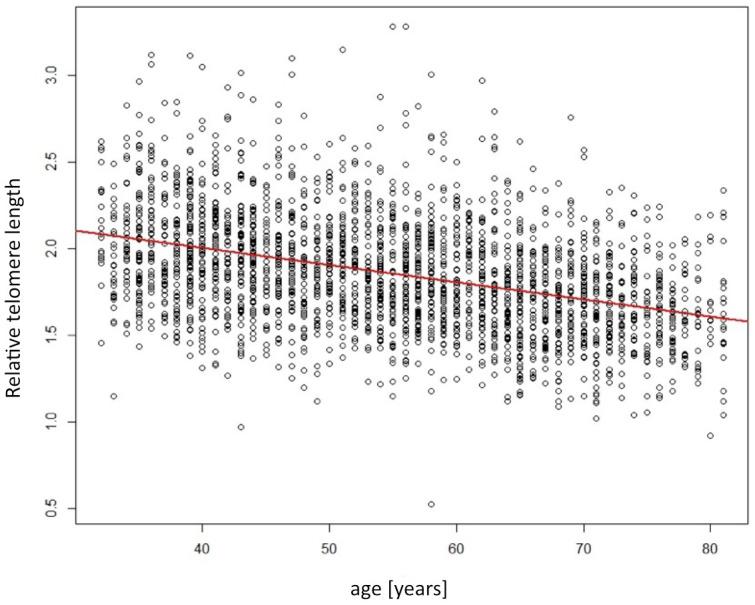
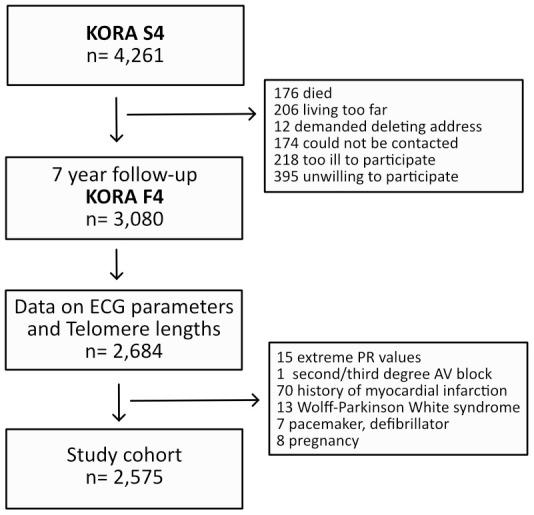
We studied the large, community-based KORA F4 Study. Of 3,080 participants enrolled between 2006 and 2007 with detailed information on demographic, anthropometric, clinical, and ECG characteristics, 2,575 presented with available data on leukocyte telomere length. Telomere length was determined by real-time quantitative PCR and expressed relative to a single copy gene. We fitted multivariable adjusted linear regression models to associate the ECG measures RR-interval, PR-interval, QRS-duration, and heart rate corrected QTc with telomere length. In our cohort, the mean age was 54.9±12.9 years and 46.6% were men. Increased age was associated with shorter telomere length (p<0.01), and men had shorter telomere length than women (p<0.05). In unadjusted models, heart rate (p=0.023), PR-interval (p<0.01), and QTc-interval (p<0.01) were significantly associated with shorter telomere length. However, no significant associations remained after accounting for age, sex, and covariates.
CONCLUSIONS
ECG measures are age-dependent, but not associated with shortened telomere length as a marker of biological aging. Further research is warranted to clarify if shortened telomeres are associated with clinical cardiac pathologies including atrial fibrillation.
目的
衰老伴随着端粒缩短。端粒缩短增加被认为是早衰的标志。心脏衰老导致心脏病理的发展。心电图(ECG)测量反映了心脏的兴奋、传导和复极。ECG 测量也随年龄增长而延长,与包括心房颤动在内的心脏病理有关。由于观察到 ECG 测量的过早延长,我们假设这种延长可能与端粒长度有关。
方法和结果
我们研究了大型社区基础的 KORA F4 研究。在 2006 年至 2007 年间招募的 3080 名参与者中,有详细的人口统计学、人体测量学、临床和 ECG 特征信息,其中 2575 名参与者提供了白细胞端粒长度的可用数据。端粒长度通过实时定量 PCR 确定,并相对于单拷贝基因进行表达。我们拟合了多变量调整线性回归模型,将 ECG 测量 RR 间期、PR 间期、QRS 持续时间和心率校正 QTc 与端粒长度相关联。在我们的队列中,平均年龄为 54.9±12.9 岁,46.6%为男性。年龄增长与端粒长度缩短相关(p<0.01),男性的端粒长度比女性短(p<0.05)。在未调整模型中,心率(p=0.023)、PR 间期(p<0.01)和 QTc 间期(p<0.01)与端粒长度缩短显著相关。然而,在考虑年龄、性别和协变量后,没有显著的关联仍然存在。
结论
ECG 测量与年龄有关,但与作为生物衰老标志的端粒缩短无关。需要进一步的研究来阐明缩短的端粒是否与包括心房颤动在内的临床心脏病理有关。
 Zotero 插件