
腐殖酸-膨润土聚合物复合材料的制备:一种重金属离子吸附剂。
Preparation of humic acid-bentonite polymer composite: A heavy metal ion adsorbent.
作者信息
Amutenya Evelina L M, Zhou Fengshan, Liu Jinliang, Long Wenjun, Ma Liang, Liu Meng, Lv Guocheng
机构信息
Beijing Key Laboratory of Materials Utilization of Nonmetallic Minerals and Solid Wastes, National Laboratory of Mineral Materials, School of Materials Science and Technology, China University of Geosciences (Beijing), No. 29 Xueyuan Road, Haidian District, Beijing, 100083, PR China.
出版信息
Heliyon. 2022 Jun 20;8(6):e09720. doi: 10.1016/j.heliyon.2022.e09720. eCollection 2022 Jun.
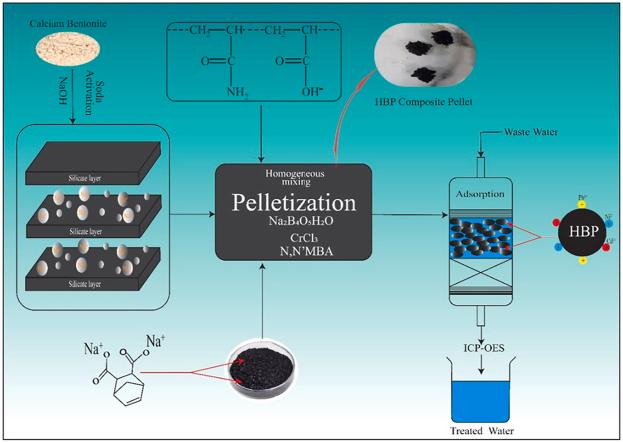
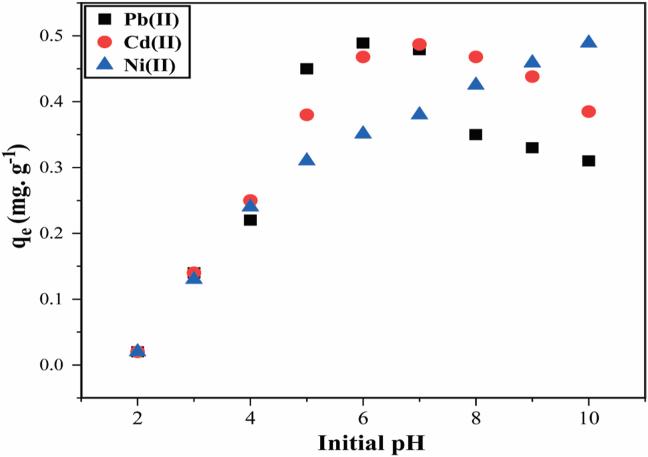
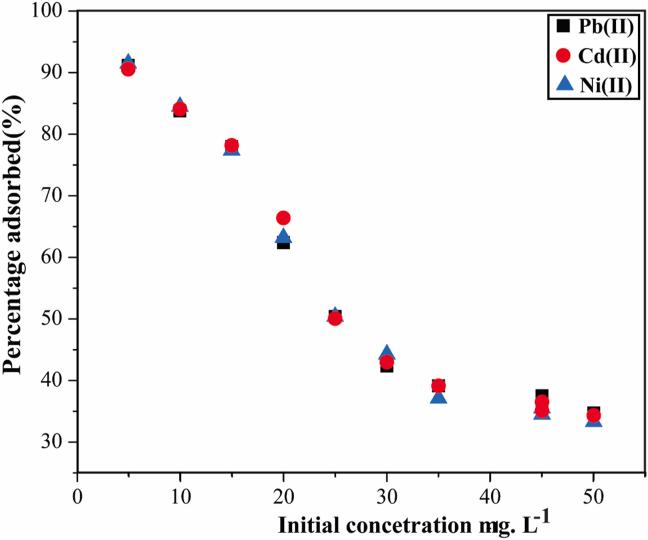
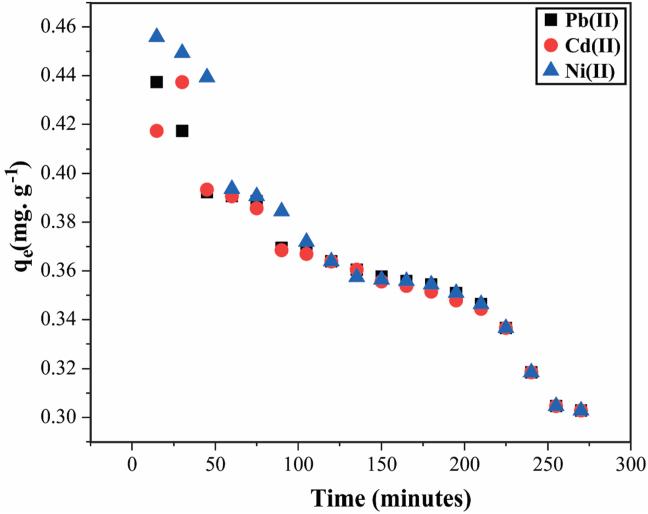
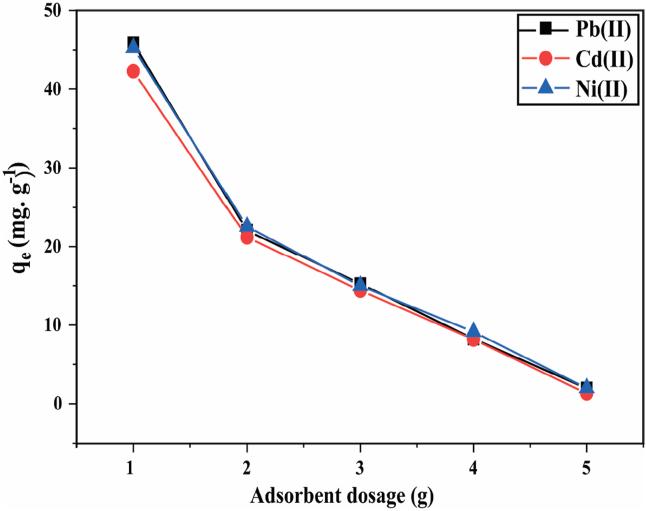
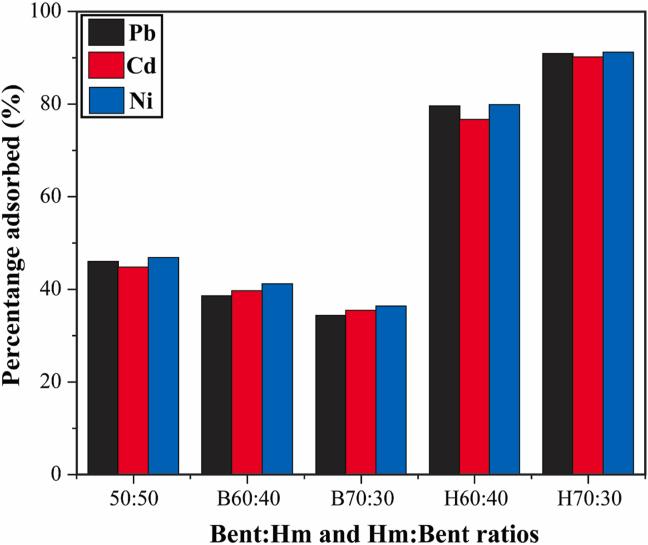
Adsorbents for wastewater treatment have evolved from scientific adsorbents to natural adsorbents. In this study, a humic acid-bentonite polymer (HBP) composite comprising humic acid, bentonite, and anionic polyacrylamide was integrated into an anionic polyacrylamide (aPAM) polymer matrix as an adsorbent pellet with N, N-methylene-bis-acrylamide (MBA), sodium tetraborate pentahydrate and chromium chloride is used as a novel adsorbent to remove Ni, Cd and Pb ions from aqueous solution. Sorption of these ions onto HBP is studied as a function of pH, adsorbent dosage, initial metal ion concentration, humic acid, and bentonite properties to evaluate adsorption efficiency. The results showed that adsorption sharply depends on pH, metal ion concentration, and contact time, but is complemented by humic acid and bentonite properties. The adsorption increased from 8% to 94.7% in the first 30 min at respective pH values of 5.6 and 9 for (Ni, Cd, and Pb). The HBP sorption power decreased with increasing adsorbent dosage, while the adsorption efficiency increased in ascending order for the cations Pb, Ni and Cd with efficiencies up to 94.7%, 90.9%, and 90.2%. The experimental data for Ni, Pb adsorption fits the Langmuir isotherm, while that for Cd adsorption fits the Freundlich isotherm. HBP showed modest adsorption performance at low and high concentrations, this is attributed in large part to the humic acid and bentonite properties that affect HBP's unique performance.
用于废水处理的吸附剂已从科学吸附剂发展到天然吸附剂。在本研究中,一种由腐殖酸、膨润土和阴离子聚丙烯酰胺组成的腐殖酸 - 膨润土聚合物(HBP)复合材料被整合到阴离子聚丙烯酰胺(aPAM)聚合物基质中,制成吸附剂颗粒,其中使用N,N - 亚甲基双丙烯酰胺(MBA)、五水合四硼酸钠和氯化铬作为新型吸附剂,用于从水溶液中去除镍、镉和铅离子。研究了这些离子在HBP上的吸附情况,考察了pH值、吸附剂用量、初始金属离子浓度、腐殖酸和膨润土性质对吸附效率的影响。结果表明,吸附强烈依赖于pH值、金属离子浓度和接触时间,但腐殖酸和膨润土性质也起到补充作用。在5.6和9的各自pH值下,(镍、镉和铅)在前30分钟内的吸附率从8%增加到94.7%。HBP的吸附能力随吸附剂用量增加而降低,而阳离子铅、镍和镉的吸附效率则按升序增加,分别高达94.7%、90.9%和90.2%。镍、铅吸附的实验数据符合朗缪尔等温线,而镉吸附的实验数据符合弗伦德里希等温线。HBP在低浓度和高浓度下均表现出适度的吸附性能,这在很大程度上归因于影响HBP独特性能的腐殖酸和膨润土性质。



 Zotero 插件