
三阴性乳腺癌免疫治疗的进展与展望
Progress and Prospect of Immunotherapy for Triple-Negative Breast Cancer.
作者信息
Luo Chenyi, Wang Peipei, He Siqi, Zhu Jingjing, Shi Yuanyuan, Wang Jianxun
机构信息
School of Life Sciences, Beijing University of Chinese Medicine, Beijing, China.
Shenzhen Research Institute of Beijing University of Chinese Medicine, Shenzhen, China.
出版信息
Front Oncol. 2022 Jun 20;12:919072. doi: 10.3389/fonc.2022.919072. eCollection 2022.
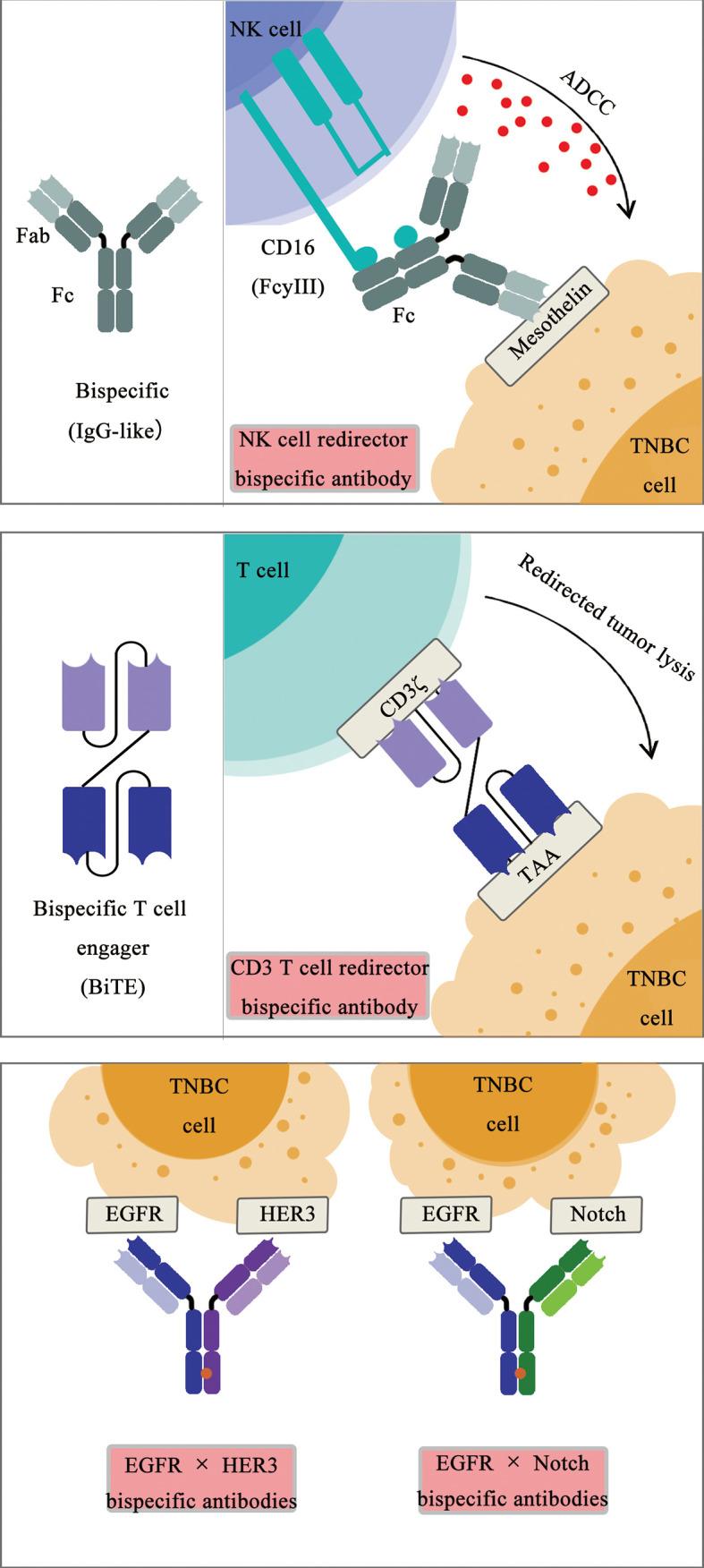
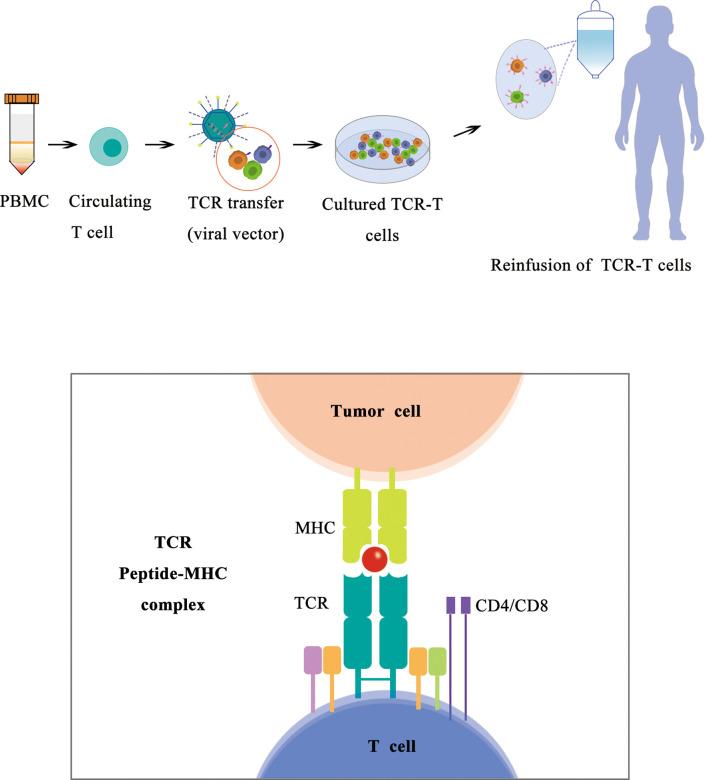
Breast cancer is the most commonly diagnosed cancer (estimated 2.3 million new cases in 2020) and the leading cause of cancer death (estimated 685,000 deaths in 2020) in women globally. Breast cancers have been categorized into four major molecular subtypes based on the immunohistochemistry (IHC) expression of classic hormone and growth factor receptors including the estrogen receptor (ER), progesterone receptor (PR), and human epidermal growth factor receptor 2 (HER2), as well as a proliferation marker Ki-67 protein expression. Triple-negative breast cancer (TNBC), a breast cancer subtype lacking ER, PR, and HER2 expression, is associated with a high metastatic potential and poor prognosis. TNBC accounts for approximately only 15%-20% of new breast cancer diagnoses; it is responsible for most breast cancer-related deaths due to the lack of targeted treatment options for this patient population, and currently, systemic chemotherapy, radiation, and surgical excision remain the major treatment modalities for these patients with TNBC. Although breast cancer patients in general do not have a robust response to the immunotherapy, a subset of TNBC has been demonstrated to have high tumor mutation burden and high tumor-infiltrating lymphocytes, resembling the features observed on melanoma or lung cancers, which can benefit from the treatment of immune checkpoint inhibitors (ICIs). Therefore, the immunogenic nature of this aggressive disease has presented an opportunity for the development of TNBC-targeting immunotherapies. The recent US Food and Drug Administration approval of atezolizumab in combination with the chemotherapeutic agent nab-paclitaxel for the treatment of PD-L1-positive unresectable, locally advanced, or metastatic TNBC has led to a new era of immunotherapy in TNBC treatment. In addition, immunotherapy becomes an active research area, both in the cancer biology field and in the oncology field. In this review, we will extend our coverage on recent discoveries in preclinical research and early results in clinical trials from immune molecule-based therapy including cytokines, monoclonal antibodies, antibody-drug conjugates, bi-specific or tri-specific antibodies, ICIs, and neoantigen cancer vaccines; oncolytic virus-based therapies and adoptive immune cell transfer-based therapies including TIL, chimeric antigen receptor-T (CAR-T), CAR-NK, CAR-M, and T-cell receptor-T. In the end, we will list a series of the challenges and opportunities in immunotherapy prospectively and reveal novel technologies such as high-throughput single-cell sequencing and CRISPR gene editing-based screening to generate new knowledges of immunotherapy.
乳腺癌是全球女性中最常被诊断出的癌症(2020年估计有230万新发病例),也是癌症死亡的主要原因(2020年估计有68.5万人死亡)。根据经典激素和生长因子受体的免疫组织化学(IHC)表达,包括雌激素受体(ER)、孕激素受体(PR)和人表皮生长因子受体2(HER2),以及增殖标志物Ki-67蛋白表达,乳腺癌已被分为四种主要分子亚型。三阴性乳腺癌(TNBC)是一种缺乏ER、PR和HER2表达的乳腺癌亚型,具有高转移潜能和不良预后。TNBC约仅占新诊断乳腺癌的15%-20%;由于该患者群体缺乏靶向治疗选择,它导致了大多数与乳腺癌相关的死亡,目前,全身化疗、放疗和手术切除仍然是这些TNBC患者的主要治疗方式。尽管乳腺癌患者总体上对免疫疗法反应不强,但已证明一部分TNBC具有高肿瘤突变负荷和高肿瘤浸润淋巴细胞,类似于在黑色素瘤或肺癌中观察到的特征,这可以从免疫检查点抑制剂(ICI)治疗中获益。因此,这种侵袭性疾病的免疫原性为开发针对TNBC的免疫疗法提供了机会。美国食品药品监督管理局最近批准阿特珠单抗与化疗药物纳武单抗联合用于治疗PD-L1阳性不可切除、局部晚期或转移性TNBC,这开启了TNBC治疗免疫疗法的新时代。此外,免疫疗法在癌症生物学领域和肿瘤学领域都成为一个活跃的研究领域。在这篇综述中,我们将扩展我们的覆盖范围,涵盖基于免疫分子的疗法(包括细胞因子、单克隆抗体、抗体药物偶联物、双特异性或三特异性抗体、ICI和新抗原癌症疫苗)的临床前研究的最新发现和临床试验的早期结果;基于溶瘤病毒的疗法和基于过继性免疫细胞转移的疗法(包括肿瘤浸润淋巴细胞、嵌合抗原受体T细胞(CAR-T)、CAR-NK、CAR-M和T细胞受体T)。最后,我们将前瞻性地列出免疫疗法中的一系列挑战和机遇,并揭示高通量单细胞测序和基于CRISPR基因编辑的筛选等新技术,以产生免疫疗法的新知识。



 Zotero 插件