
吸入丹酚酸 B 可通过下调 LTR4/MyD88/NLRP3 通路预防细颗粒物诱导的急性气道炎症和氧化应激。
Inhalation of Salvianolic Acid B Prevents Fine Particulate Matter-Induced Acute Airway Inflammation and Oxidative Stress by Downregulating the LTR4/MyD88/NLRP3 Pathway.
机构信息
Affiliated Sir Run Run Shaw Hospital, Zhejiang University School of Medicine, Hangzhou 310020, China.
Zhejiang Respiratory Drugs Research Laboratory of State Food and Drug Administration of China, Zhejiang University School of Medicine, Hangzhou 310058, China.
出版信息
Oxid Med Cell Longev. 2022 Jun 27;2022:5044356. doi: 10.1155/2022/5044356. eCollection 2022.
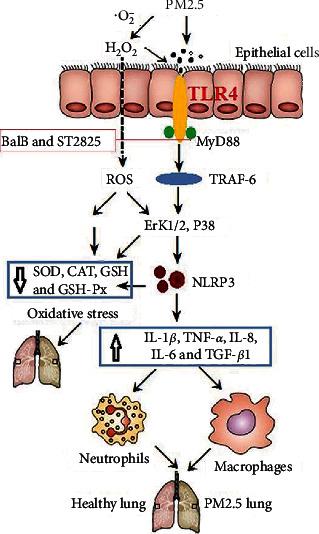
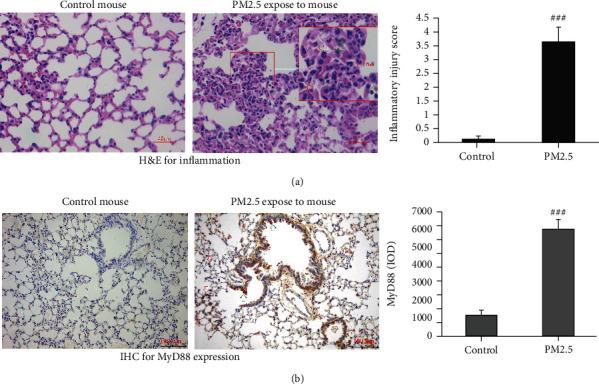
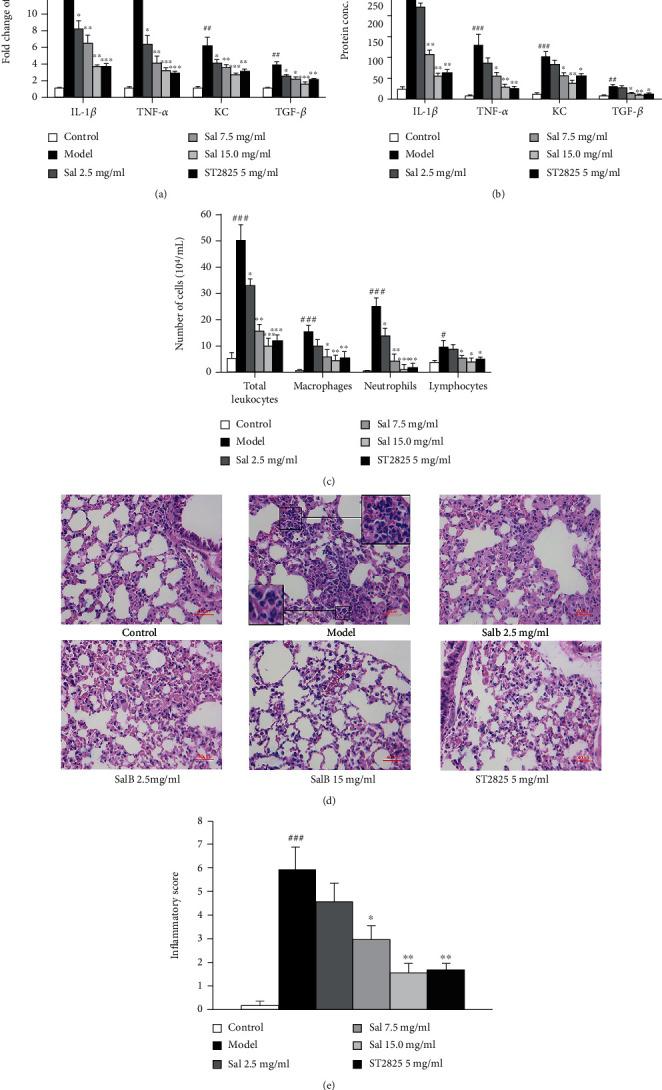
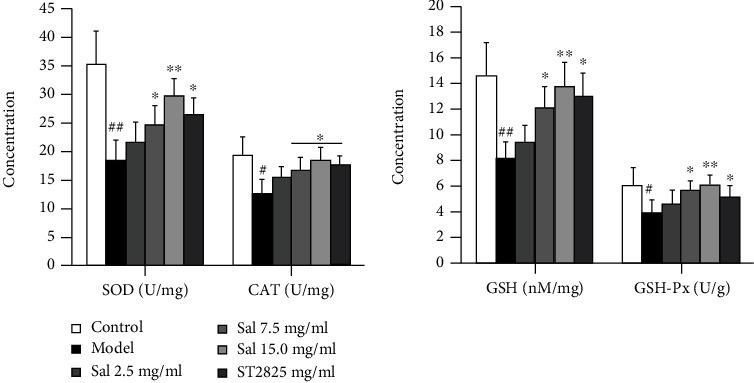
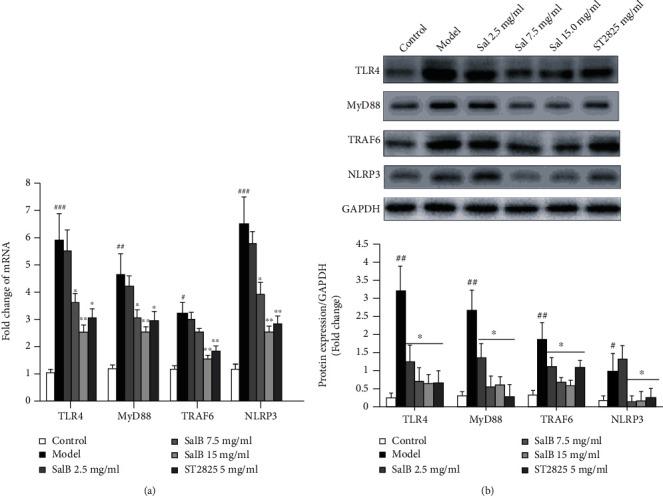
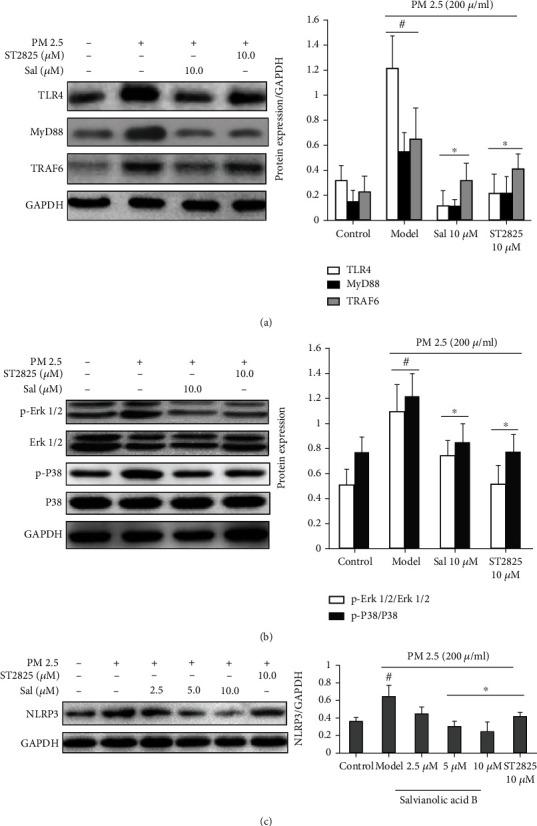
Air pollution is a serious threat to human health. Inhaled fine particulate matter (PM2.5) can cause inflammation and oxidative stress in the airway; however, the mechanisms responsible for this effect have yet to be elucidated and there are no specific drugs that can prevent and treat this condition. In the present study, we investigated the effects and mechanisms underlying the inhalation of salvianolic acid B (SalB) on PM2.5-induced airway inflammation and oxidative stress. We used a PM2.5-induced mouse model of airway inflammation and oxidative stress, along with a human epithelial cell model, to study the action and mechanisms of SalB by histopathology, real-time PCR, enzyme-linked immunosorbent assays, flow cytometry, and western blotting. SalB treatment markedly inhibited the PM2.5-induced increase in the number of neutrophils and macrophages in bronchoalveolar lavage fluid, improved the infiltration of inflammatory cells in lung tissue, and reduced injury in the alveolar septum. Furthermore, SalB reduced the mRNA and protein levels of interleukin- (IL-) 1, tumor necrosis factor- (TNF-) , keratinocyte (KC), and transforming growth factor- (TGF-) 1 in lung tissues and the protein levels of IL-1, TNF-, IL-8, IL-6, and TGF-1 in human epithelial cells. SalB treatment also significantly prevented the reduction of levels of superoxide dismutase, catalase, glutathione, and glutathione peroxidase in lung tissue and reduced the levels of reactive oxygen species in human epithelial cells induced by PM2.5. Furthermore, SalB and the myeloid differentiation primary response 88 (MyD88) inhibitor ST2825 inhibited the expression levels of toll-like receptor 4 (TLR4), MyD88, tumor necrosis factor receptor associated factor 6 (TRAF-6), and NOD-like receptor protein 3 (NLRP3), as well as the phosphorylation of downstream Erk1/2 and P38 in lung tissue and epithelial cells. SalB protects against PM2.5-induced airway inflammation and oxidative stress in a manner that is associated with the inhibition of the TLR4/MyD88/TRAF-6/NLRP3 pathway and downstream signals ERK1/2 and P38.
空气污染对人类健康构成严重威胁。吸入的细颗粒物(PM2.5)可引起气道炎症和氧化应激;然而,其作用机制尚不清楚,也没有专门用于预防和治疗这种情况的药物。在本研究中,我们研究了丹酚酸 B(SalB)吸入对 PM2.5 诱导的气道炎症和氧化应激的影响及其机制。我们使用 PM2.5 诱导的小鼠气道炎症和氧化应激模型以及人上皮细胞模型,通过组织病理学、实时 PCR、酶联免疫吸附试验、流式细胞术和 Western blot 研究 SalB 的作用和机制。SalB 治疗显著抑制了 PM2.5 诱导的支气管肺泡灌洗液中性粒细胞和巨噬细胞数量的增加,改善了肺组织中炎症细胞的浸润,并减轻了肺泡间隔的损伤。此外,SalB 降低了肺组织中白细胞介素-1(IL-1)、肿瘤坏死因子-(TNF-)、角质细胞(KC)和转化生长因子-(TGF-)1 的 mRNA 和蛋白水平,以及人上皮细胞中 IL-1、TNF-、IL-8、IL-6 和 TGF-1 的蛋白水平。SalB 治疗还显著防止了 PM2.5 诱导的肺组织中超氧化物歧化酶、过氧化氢酶、谷胱甘肽和谷胱甘肽过氧化物酶水平的降低,并降低了人上皮细胞中活性氧的水平。此外,SalB 和髓样分化初级反应 88(MyD88)抑制剂 ST2825 抑制了 Toll 样受体 4(TLR4)、MyD88、肿瘤坏死因子受体相关因子 6(TRAF-6)和 NOD 样受体蛋白 3(NLRP3)的表达水平,以及下游 Erk1/2 和 P38 在肺组织和上皮细胞中的磷酸化。SalB 通过抑制 TLR4/MyD88/TRAF-6/NLRP3 通路及其下游信号 Erk1/2 和 P38,对 PM2.5 诱导的气道炎症和氧化应激起到保护作用。

 Zotero 插件