
VDAC1 的部分还原增强了转 Tau 小鼠模型中的线粒体自噬、自噬和突触活性。
A partial reduction of VDAC1 enhances mitophagy, autophagy, synaptic activities in a transgenic Tau mouse model.
机构信息
Department of Internal Medicine, Texas Tech University Health Sciences Center, Lubbock, Texas, USA.
Department of Pharmacology and Neuroscience, Texas Tech University Health Sciences Center, Lubbock, Texas, USA.
出版信息
Aging Cell. 2022 Aug;21(8):e13663. doi: 10.1111/acel.13663. Epub 2022 Jul 7.
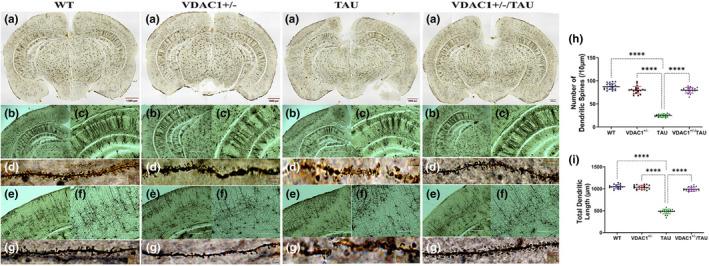
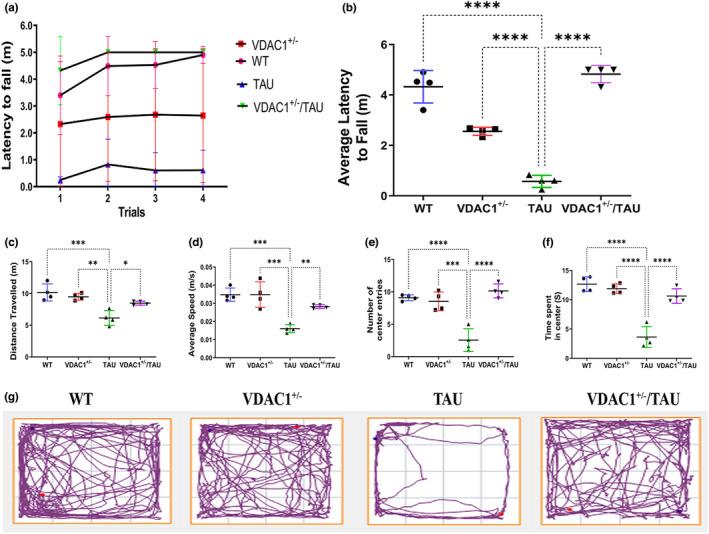
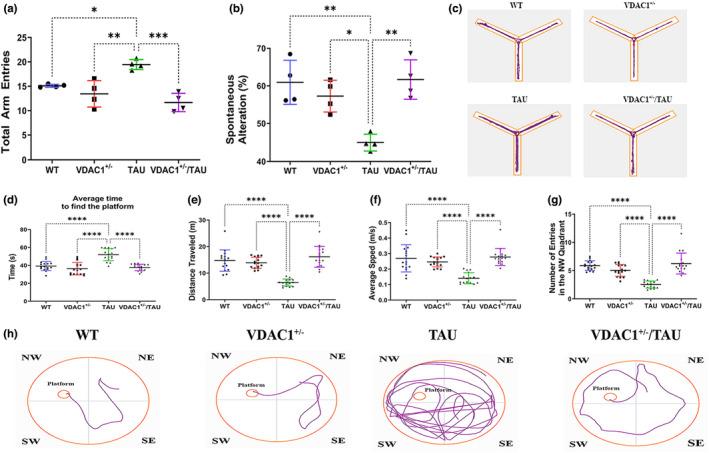
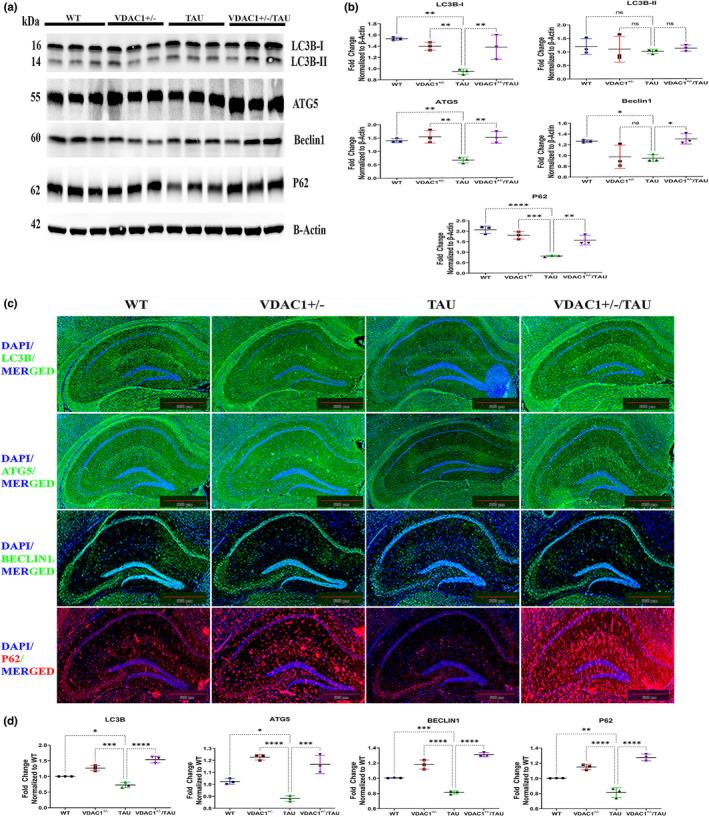
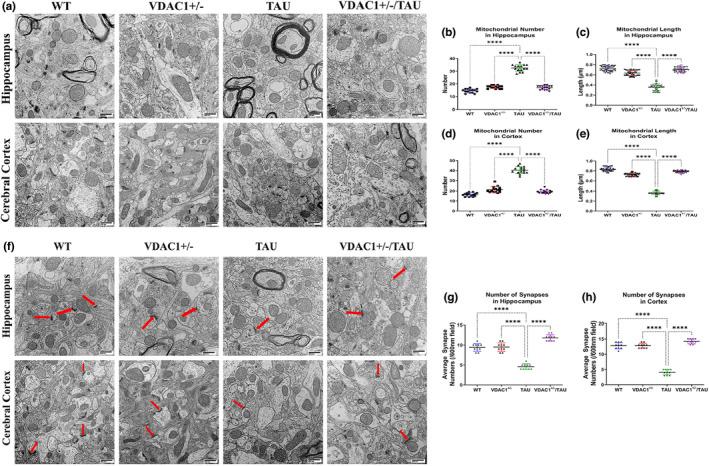
Alzheimer's disease (AD) is the most common cause of mental dementia in the aged population. AD is characterized by the progressive decline of memory and multiple cognitive functions, and changes in behavior and personality. Recent research has revealed age-dependent increased levels of VDAC1 in postmortem AD brains and cerebral cortices of APP, APPxPS1, and 3xAD.Tg mice. Further, we found abnormal interaction between VDAC1 and P-Tau in the AD brains, leading to mitochondrial structural and functional defects. Our current study aimed to understand the impact of a partial reduction of voltage-dependent anion channel 1 (VDAC1) protein on mitophagy/autophagy, mitochondrial and synaptic activities, and behavior changes in transgenic TAU mice in Alzheimer's disease. To determine if a partial reduction of VDAC1 reduces mitochondrial and synaptic toxicities in transgenic Tau (P301L) mice, we crossed heterozygote VDAC1 knockout (VDAC1 ) mice with TAU mice and generated double mutant (VDAC1 /TAU) mice. We assessed phenotypic behavior, protein levels of mitophagy, autophagy, synaptic, other key proteins, mitochondrial morphology, and dendritic spines in TAU mice relative to double mutant mice. Partial reduction of VDAC1 rescued the TAU-induced behavioral impairments such as motor coordination and exploratory behavioral changes, and learning and spatial memory impairments in VDAC1 /TAU mice. Protein levels of mitophagy, autophagy, and synaptic proteins were significantly increased in double mutant mice compared with TAU mice. In addition, dendritic spines were significantly increased; the mitochondrial number was significantly reduced, and mitochondrial length was increased in double mutant mice. Based on these observations, we conclude that reduced VDAC1 is beneficial in symptomatic-transgenic TAU mice.
阿尔茨海默病(AD)是老年人群中最常见的精神痴呆症病因。AD 的特征是记忆和多种认知功能逐渐下降,以及行为和人格的变化。最近的研究表明,AD 大脑和 APP、APPxPS1 和 3xAD.Tg 小鼠的大脑皮质中,与年龄相关的 VDAC1 水平升高。此外,我们发现 AD 大脑中 VDAC1 与 P-Tau 之间存在异常相互作用,导致线粒体结构和功能缺陷。我们目前的研究旨在了解电压依赖性阴离子通道 1(VDAC1)蛋白部分减少对转 AD tau 小鼠的噬线粒体/自噬、线粒体和突触活性以及行为变化的影响。为了确定 VDAC1 的部分减少是否减轻转 AD tau(P301L)小鼠的线粒体和突触毒性,我们将杂合子 VDAC1 敲除(VDAC1-/-)小鼠与 TAU 小鼠杂交,并生成双突变(VDAC1/TAU)小鼠。我们评估了 TAU 小鼠相对于双突变小鼠的表型行为、噬线粒体、自噬、突触和其他关键蛋白的水平、线粒体形态和树突棘。VDAC1 的部分减少挽救了 TAU 诱导的行为损伤,如运动协调和探索性行为变化,以及 VDAC1/TAU 小鼠的学习和空间记忆损伤。与 TAU 小鼠相比,双突变小鼠中噬线粒体、自噬和突触蛋白的水平显著增加。此外,树突棘显著增加;双突变小鼠中线粒体数量显著减少,线粒体长度增加。基于这些观察结果,我们得出结论,减少 VDAC1 对有症状的转 AD tau 小鼠有益。



 Zotero 插件