
根据新生犬种的体型细化阿氏评分临界值和生存能力类别
Refining the APGAR Score Cutoff Values and Viability Classes According to Breed Body Size in Newborn Dogs.
作者信息
Veronesi Maria Cristina, Faustini Massimo, Probo Monica, Rota Alessandro, Fusi Jasmine
机构信息
Department of Veterinary Medicine and Animal Sciences, Università degli Studi di Milano, Via dell'Università 6, 26900 Lodi (LO), Italy.
Practitioner, DVM, Ambulatorio Veterinario Associato Pellegrini e Rota, Via Ungaretti, 69, 24030 Almenno San Bartolomeo (BG), Italy.
出版信息
Animals (Basel). 2022 Jun 28;12(13):1664. doi: 10.3390/ani12131664.
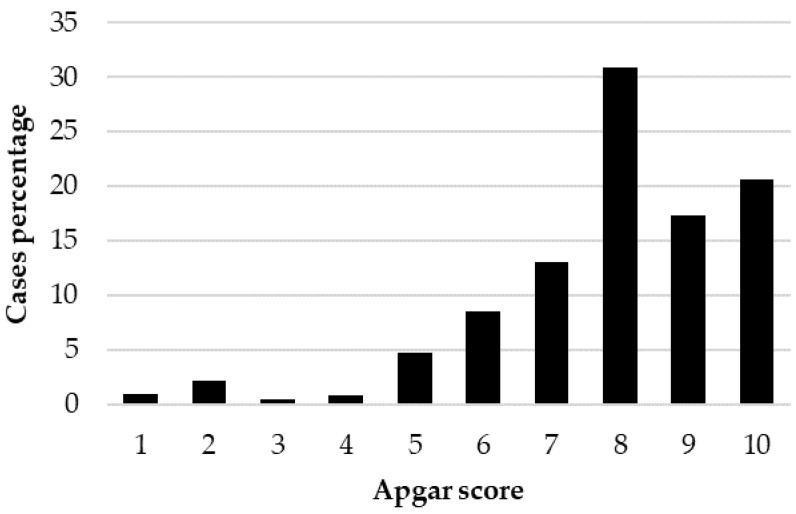
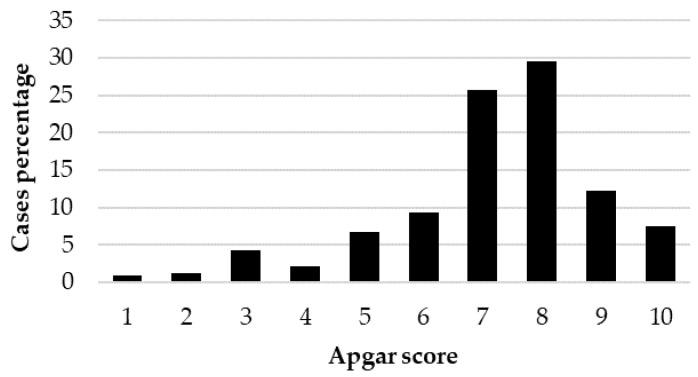
The Apgar score (AS) represents a key tool for neonate assessment, but the possible breed effect on AS in newborn puppies has never been investigated. Therefore, data from 234 dog litters born by caesarean section, grouped according to breed body size (BBS) (small, medium, large), were evaluated. Live-birth puppies were assessed through AS within 5 min of delivery, and classified in viability classes: 0−3 severely distressed, 4−6 moderately distressed, 7−10 not distressed. Statistical analysis evaluated possible differences of AS and viability class according to BBS, and between BBS and puppies’ mortality. Results showed no differences in the distribution of mortalities among BBSs. However, an effect of BBS on the AS was found, with small-sized puppies being the most represented in the severely distressed class, but having the best survival chance compared to large-sized newborns. Through receiver-operating-characteristics analysis, the AS new cutoff values for survival and for death <24 h and 24 h−7 days of age were identified, and the viability classes were redefined, with a narrower class of moderately distressed puppy specific for each BBS. In conclusion, the refining of the AS in dog species is imperative, with cutoff values and viability classifications that must be adapted to the BBS.
阿氏评分(AS)是新生儿评估的关键工具,但从未有人研究过品种对新生幼犬阿氏评分的可能影响。因此,我们评估了234窝通过剖腹产出生的幼犬数据,这些幼犬根据品种体型(BBS)(小、中、大)进行分组。对活产幼犬在分娩后5分钟内通过阿氏评分进行评估,并将其分为生存能力类别:0 - 3分为严重窘迫,4 - 6分为中度窘迫,7 - 10分为无窘迫。统计分析评估了根据BBS的阿氏评分和生存能力类别的可能差异,以及BBS与幼犬死亡率之间的差异。结果显示,不同BBS之间的死亡率分布没有差异。然而,发现BBS对阿氏评分有影响,小型幼犬在严重窘迫类别中占比最高,但与大型新生幼犬相比,其生存机会最佳。通过受试者工作特征分析,确定了24小时内及出生后24小时至7天存活和死亡的阿氏评分新临界值,并重新定义了生存能力类别,为每个BBS专门划分了更窄的中度窘迫幼犬类别。总之,必须对犬种的阿氏评分进行细化,临界值和生存能力分类必须根据BBS进行调整。


 Zotero 插件