
唐氏综合征患者的克隆性骨髓增殖性疾病——阿根廷一家机构的治疗及结果
Clonal Myeloproliferative Disorders in Patients with Down Syndrome-Treatment and Outcome Results from an Institution in Argentina.
作者信息
Pennella Carla L, Cassina Tamara Muñoz, Rossi Jorge G, Baialardo Edgardo M, Rubio Patricia, Deu María A, Peruzzo Luisina, Guitter Myriam R, Sanchez de La Rosa Cristian G, Alfaro Elizabeth M, Felice María S
机构信息
Department of Hematology-Oncology, Hospital de Pediatría S.A.M.IC. "Prof. Dr. Juan P. Garrahan", Combate de los Pozos 1881, Buenos Aires C 1245 AAM, Argentina.
Department of Immunology and Rheumatology, Hospital de Pediatría S.A.M.I.C. "Prof. Dr. Juan P. Garrahan", Combate de los Pozos 1881, Buenos Aires C 1245 AAM, Argentina.
出版信息
Cancers (Basel). 2022 Jul 5;14(13):3286. doi: 10.3390/cancers14133286.
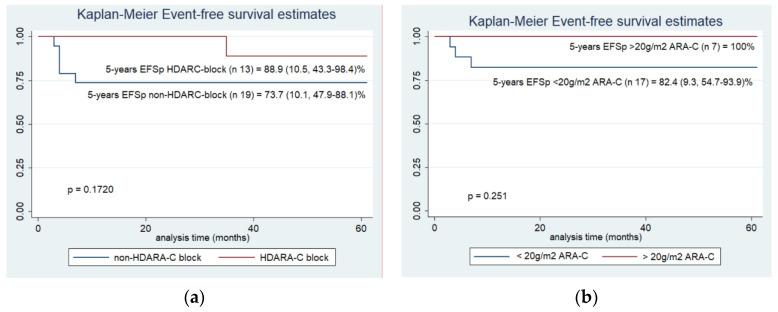
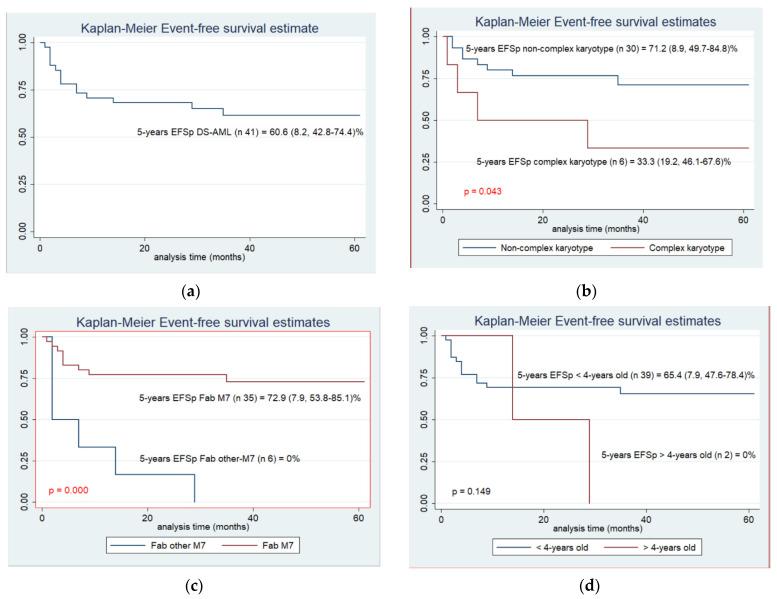
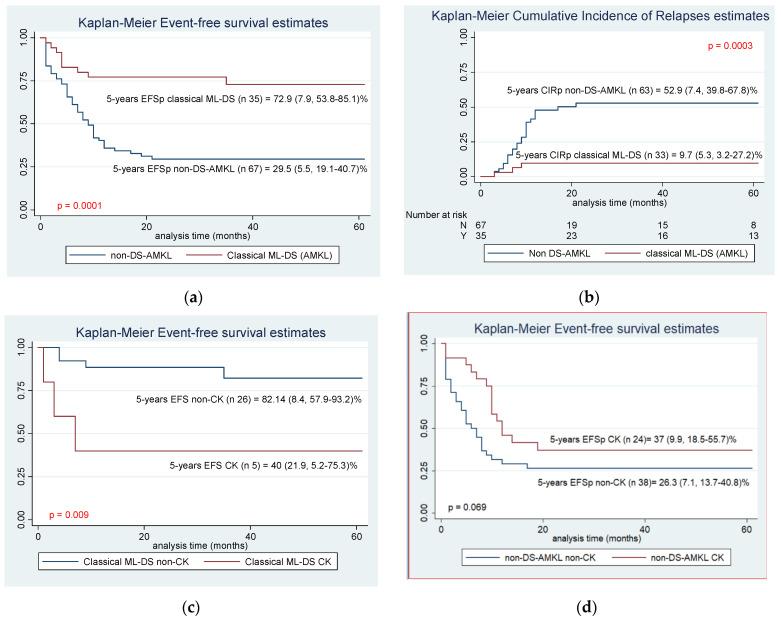
Children with Down syndrome (DS) are at an increased risk of developing clonal myeloproliferative disorders. The balance between treatment intensity and treatment-related toxicity has not yet been defined. We analyzed this population to identify risk factors and optimal treatment. This single-center retrospective study included 78 DS patients <16 years-old with Transient Abnormal Myelopoiesis (TAM, n = 25), Acute Myeloblastic Leukemia (DS-AML, n = 41) of which 35 had classical Myeloid Leukemia associated with DS (ML-DS) with megakaryoblastic immunophenotype (AMKL) and 6 sporadic DS-AML (non-AMKL). Patients with DS-AML were treated according to four BFM-based protocols. Classical ML-DS vs. non-DS-AMKL were compared and the outcome of ML-DS was analyzed according to treatment intensity. Only four patients with TAM required cytoreduction with a 5-year Event-Free Survival probability (EFSp) of 74.4 (±9.1)%. DS-AML treatment-related deaths were due to infections, with a 5-year EFSp of 60.6 (±8.2)%. Megakaryoblastic immunophenotype was the strongest good-prognostic factor in univariate and multivariate analysis (p = 0.000). When compared ML-DS with non-DS-AMKL, a better outcome was associated with a lower relapse rate (p = 0.0002). Analysis of administered treatment was done on 32/33 ML-DS patients who achieved CR according to receiving or not high-dose ARA-C block (HDARA-C), and no difference in 5-year EFSp was observed (p = 0.172). TAM rarely required treatment and when severe manifestations occurred, early intervention was effective. DS-AML good outcome was associated with AMKL with a low relapse-rate. Even if treatment-related mortality is still high, our data do not support the omission of HDARA-C in ML-DS since we observed a trend to detect a higher relapse rate in the arm without HDARA-C.
唐氏综合征(DS)患儿发生克隆性骨髓增殖性疾病的风险增加。治疗强度与治疗相关毒性之间的平衡尚未明确。我们对这一人群进行了分析,以确定风险因素和最佳治疗方法。这项单中心回顾性研究纳入了78例16岁以下的DS患者,其中包括短暂异常骨髓造血(TAM,n = 25例)、急性髓系白血病(DS-AML,n = 41例),其中35例为与DS相关的经典髓系白血病(ML-DS)伴巨核细胞免疫表型(AMKL),6例为散发性DS-AML(非AMKL)。DS-AML患者根据四种基于柏林-法兰克福-明斯特(BFM)方案进行治疗。比较经典ML-DS与非DS-AMKL,并根据治疗强度分析ML-DS的预后。只有4例TAM患者需要进行细胞减灭治疗,5年无事件生存率(EFSp)为74.4(±9.1)%。DS-AML治疗相关死亡原因是感染,5年EFSp为60.6(±8.2)%。在单因素和多因素分析中,巨核细胞免疫表型是最强的良好预后因素(p = 0.000)。将ML-DS与非DS-AMKL进行比较时,较好的预后与较低的复发率相关(p = 0.0002)。对32/33例根据是否接受大剂量阿糖胞苷强化治疗(HDARA-C)达到完全缓解(CR)的ML-DS患者进行了所接受治疗的分析,未观察到5年EFSp有差异(p = 0.172)。TAM很少需要治疗,当出现严重表现时,早期干预有效。DS-AML的良好预后与AMKL及低复发率相关。即使治疗相关死亡率仍然很高,但我们的数据不支持在ML-DS中省略HDARA-C,因为我们观察到在未接受HDARA-C的组中有更高复发率的趋势。

 Zotero 插件