
宗教信仰和宗教参与在老年印度成年人抑郁症状与认知障碍关系中的作用。
The role of religiosity and religious participation in the relationship between depressive symptoms and cognitive impairment among older Indian adults.
机构信息
Department of Family & Generations, International Institute for Population Sciences, Mumbai, India, 400088.
出版信息
Sci Rep. 2022 Jul 13;12(1):11915. doi: 10.1038/s41598-022-14744-3.
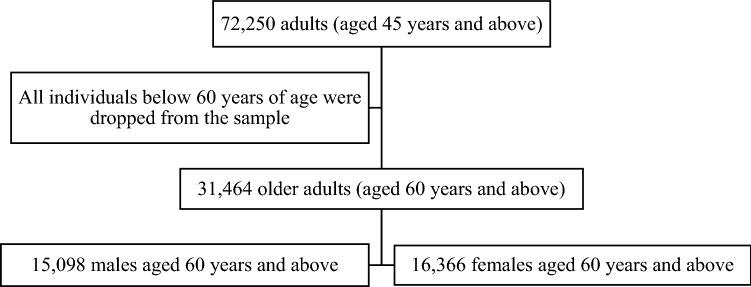
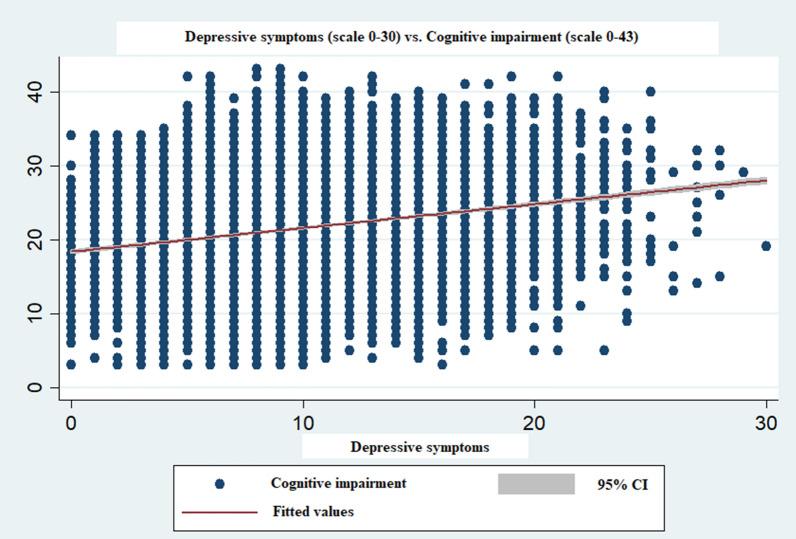
Due to different nature of social engagements of older adults in South Asian countries specially attributed to the traditional family-based care and support, beneficial effects of religiosity and religious involvement on mental health and cognitive function in older age might be different than those in the Western world. Yet, there is a paucity of research in these countries on the role of religion in moderating the relationship between late life depression and cognition. This study explored the association of depressive symptoms with cognitive impairment and the moderating effects of religiosity and religious participation in those associations among older Indian adults. A cross-sectional study was conducted on data that were drawn from the Longitudinal Ageing Study in India wave-1, collected during 2017-2018. The sample size comprised of 31,464 older adults aged 60 years and above. Shortened 10-item Centre for Epidemiologic Studies Depression Scale was used to measure depressive symptoms. Items from the Mini-Mental State Examination and the cognitive module of the China Health and Retirement Longitudinal Study and the Mexican Health and Aging Study were adapted for measuring cognitive impairment. Moderated multiple linear regression models were used to test the research hypotheses of the study. The proportion of older adults who reported religion as less important to them was 21.24%, whereas, only 19.31% of the respondents participated in religious activities. The mean score of cognitive impairment (on a scale of 0-43) in the current sample was 19.43 [confidence interval (CI): 19.32-19.53] among men and 23.55 [CI: 23.44-23.66] among women. Older adults with depressive symptoms had significantly higher likelihood of cognitive impairment [aCoef: 0.18, CI: 0.16-0.20] in comparison to older adults with no depressive symptoms. Older individuals who were religious were significantly less likely to have cognitive impairment [aCoef: - 0.43, CI: - 0.61 to - 0.25] than their non-religious counterparts. Compared to older adults who did not participate in religious activities, those who participated in religious activities were less likely [aCoef: - 0.52, CI: - 0.69 to - 0.34] to have cognitive impairment. Further, significant moderating effects of religiosity and religious participation in the relationship between depressive symptoms and cognitive impairment were observed. The current study contributes to advancing knowledge about the mental health benefits of religiosity and religious participation by focusing on older adults in India who culturally have limited chances to participate in social activities. The findings suggest that older adults with depressive symptoms may participate in religious activities which may reduce their chances of cognitive impairment. This protective effect of religiosity and religious participation on late life cognitive health has important implications for promoting alternative social support mechanisms for older adults in terms of enhancing their mental wellbeing and contributing to active aging.
由于南亚国家老年人的社会交往性质不同,特别是由于传统的家庭护理和支持,宗教信仰和宗教参与对老年人心理健康和认知功能的有益影响可能与西方世界不同。然而,这些国家在宗教在调节晚年抑郁与认知关系方面的作用方面的研究很少。本研究探讨了抑郁症状与认知障碍的关系,以及在印度老年人口中,宗教信仰和宗教参与对这些关系的调节作用。这项横断面研究是基于 2017-2018 年期间收集的印度纵向老龄化研究第一波的数据进行的。样本量由 31464 名 60 岁及以上的老年人组成。使用简化的 10 项中心流行病学研究抑郁量表来衡量抑郁症状。来自中国健康与退休纵向研究和墨西哥健康与老龄化研究的认知模块的认知模块和认知模块的项目被改编用于衡量认知障碍。使用调节多元线性回归模型检验了研究的假设。报告宗教对他们来说不太重要的老年人比例为 21.24%,而只有 19.31%的受访者参加宗教活动。在当前样本中,认知障碍的平均得分(在 0-43 的范围内)为男性 19.43[置信区间(CI):19.32-19.53],女性 23.55[CI:23.44-23.66]。与没有抑郁症状的老年人相比,有抑郁症状的老年人认知障碍的可能性明显更高[aCoef:0.18,CI:0.16-0.20]。宗教信仰的老年人认知障碍的可能性明显较低[aCoef:-0.43,CI:-0.61 至-0.25],而非宗教信仰的老年人。与不参加宗教活动的老年人相比,参加宗教活动的老年人认知障碍的可能性较低[aCoef:-0.52,CI:-0.69 至-0.34]。此外,还观察到宗教信仰和宗教参与对抑郁症状与认知障碍之间关系的调节作用具有显著意义。本研究通过关注在文化上参与社交活动机会有限的印度老年人,为了解宗教信仰和宗教参与对心理健康的益处做出了贡献。研究结果表明,有抑郁症状的老年人可能会参加宗教活动,这可能会降低他们认知障碍的几率。宗教信仰和宗教参与对晚年认知健康的这种保护作用,对于促进老年人的替代社会支持机制具有重要意义,可增强他们的心理健康并促进积极老龄化。


 Zotero 插件