
左卡尼汀补充对透析相关低血压的影响:系统评价、荟萃分析和试验序贯分析。
The effect of levocarnitine supplementation on dialysis-related hypotension: A systematic review, meta-analysis, and trial sequential analysis.
机构信息
Department of Medicine, Mount Auburn Hospital, Harvard Medical School, Cambridge, MA, United States of America.
Department of Epidemiology, Harvard T.H. Chan School of Public Health, Boston, MA, United States of America.
出版信息
PLoS One. 2022 Jul 14;17(7):e0271307. doi: 10.1371/journal.pone.0271307. eCollection 2022.
BACKGROUND
Dialysis patients have been shown to have low serum carnitine due to poor nutrition, deprivation of endogenous synthesis from kidneys, and removal by hemodialysis. Carnitine deficiency leads to impaired cardiac function and dialysis-related hypotension which are associated with increased mortality. Supplementing with levocarnitine among hemodialysis patients may diminish incidence of intradialytic hypotension. Data on this topic, however, lacks consensus.
METHODS
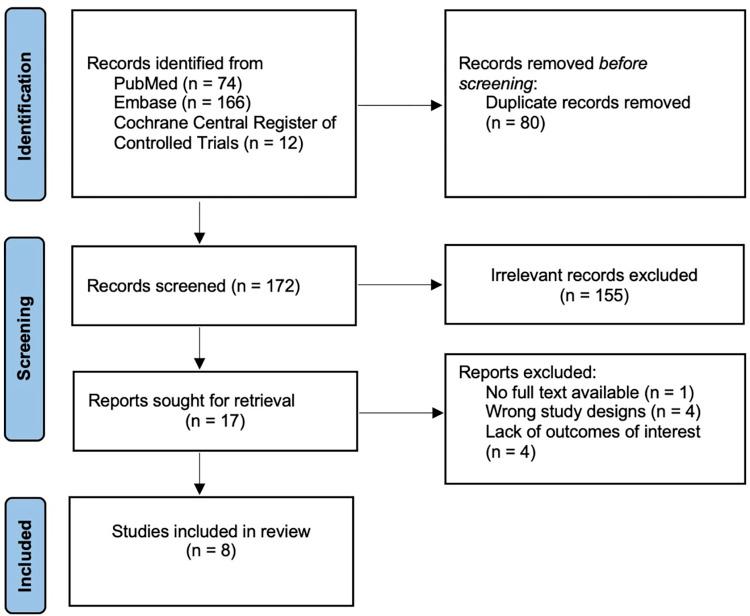
We conducted electronic searches in PubMed, Embase and Cochrane Central Register of Controlled Trials from January 1960 to 19th November 2021 to identify randomized controlled studies (RCTs), which examined the effects of oral or intravenous levocarnitine (L-carnitine) on dialysis-related hypotension among hemodialysis patients. The secondary outcome was muscle cramps. Study results were pooled and analyzed utilizing the random-effects model. Trial sequential analysis (TSA) was performed to assess the strength of current evidence.
RESULTS
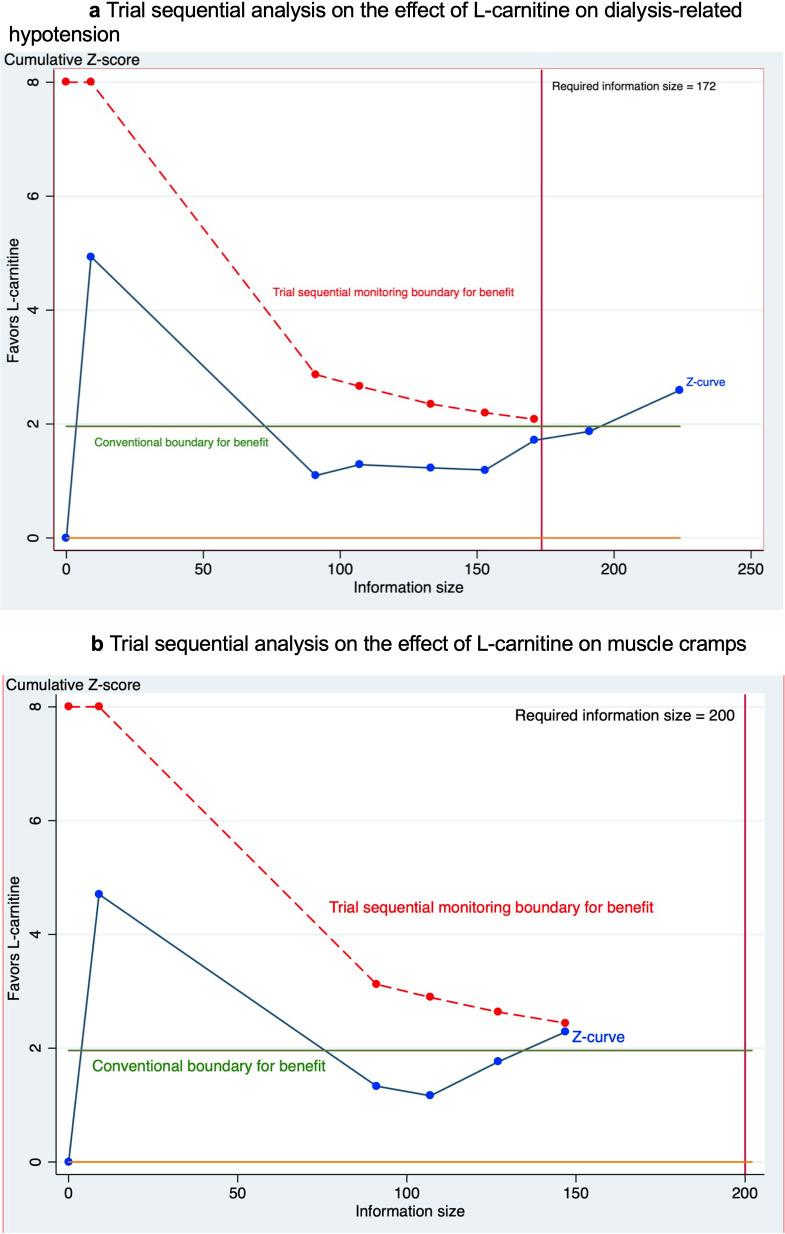
Eight trials with 224 participants were included in our meta-analysis. Compared to control group, L-carnitine reduced the incidence of dialysis-related hypotension among hemodialysis patients (pooled OR = 0.26, 95% CI [0.10-0.72], p = 0.01, I2 = 76.0%). TSA demonstrated that the evidence was sufficient to conclude the finding. Five studies with 147 participants showed a reduction in the incidence of muscle cramps with L-carnitine group (pooled OR = 0.22, 95% CI [0.06-0.81], p = 0.02, I2 = 74.7%). However, TSA suggested that further high-quality studies were required. Subgroup analysis on the route of supplementation revealed that only oral but not intravenous L-carnitine significantly reduced dialysis-related hypotension. Regarding dose and duration of L-carnitine supplementation, the dose > 4,200 mg/week and duration of at least 12 weeks appeared to prevent dialysis-related hypotension.
CONCLUSION
Supplementing oral L-carnitine for at least three months above 4,200 mg/week helps prevent dialysis-related hypotension. L-carnitine supplementation may ameliorate muscle cramps. Further well-powered studies are required to conclude this benefit.
背景
透析患者由于营养状况不佳、肾脏内源性合成减少以及血液透析清除,血清肉毒碱水平较低。肉毒碱缺乏可导致心脏功能受损和透析相关低血压,从而增加死亡率。在血液透析患者中补充左卡尼汀可能会降低透析中低血压的发生率。然而,关于这个主题的数据缺乏共识。
方法
我们在 PubMed、Embase 和 Cochrane 对照试验中心注册库中进行了电子检索,检索时间从 1960 年 1 月至 2021 年 11 月 19 日,以确定观察口服或静脉内左卡尼汀(L-肉毒碱)对血液透析患者透析相关低血压影响的随机对照试验(RCT)。次要结果是肌肉痉挛。使用随机效应模型对研究结果进行汇总和分析。进行试验序贯分析(TSA)以评估当前证据的强度。
结果
纳入了我们的荟萃分析的八项试验共 224 名参与者。与对照组相比,左卡尼汀可降低血液透析患者透析相关低血压的发生率(汇总 OR = 0.26,95%CI [0.10-0.72],p = 0.01,I2 = 76.0%)。TSA 表明证据足以得出该结论。五项研究共 147 名参与者显示左卡尼汀组肌肉痉挛发生率降低(汇总 OR = 0.22,95%CI [0.06-0.81],p = 0.02,I2 = 74.7%)。然而,TSA 表明需要进一步进行高质量的研究。补充途径的亚组分析表明,只有口服而非静脉内左卡尼汀可显著降低透析相关低血压。关于左卡尼汀补充的剂量和持续时间,每周 > 4200mg 和至少 12 周的持续时间似乎可预防透析相关低血压。
结论
每周补充至少 4200mg 口服左卡尼汀超过三个月有助于预防透析相关低血压。补充左卡尼汀可能改善肌肉痉挛。需要进一步进行大型研究以得出该获益的结论。
 Zotero 插件