
未经处理的原代小鼠CD8 T细胞在基于电穿孔的CRISPR/Cas9基因工程后仍保留免疫反应性。
Naïve Primary Mouse CD8 T Cells Retain Immune Responsiveness After Electroporation-Based CRISPR/Cas9 Genetic Engineering.
作者信息
Pfenninger Petra, Yerly Laura, Abe Jun
机构信息
Department of Oncology, Microbiology and Immunology, University of Fribourg, Fribourg, Switzerland.
出版信息
Front Immunol. 2022 Jun 30;13:777113. doi: 10.3389/fimmu.2022.777113. eCollection 2022.
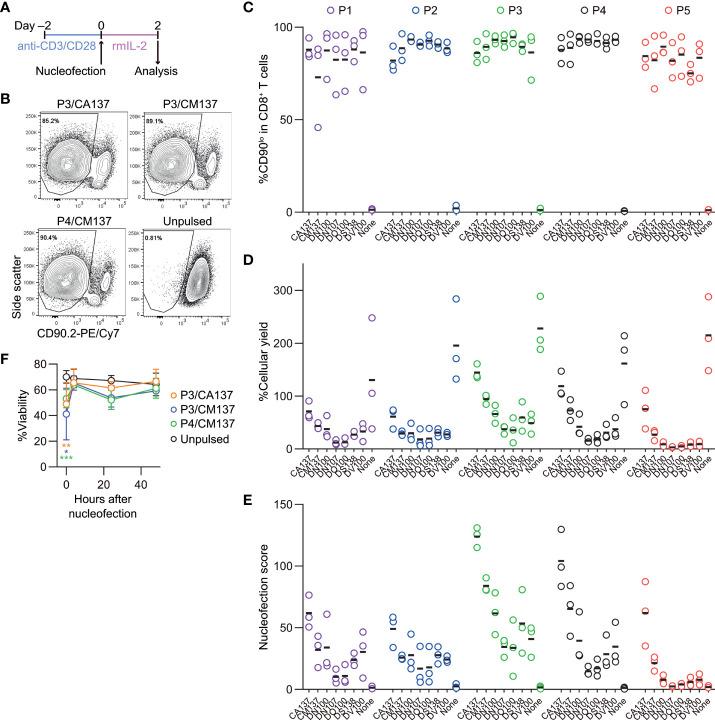
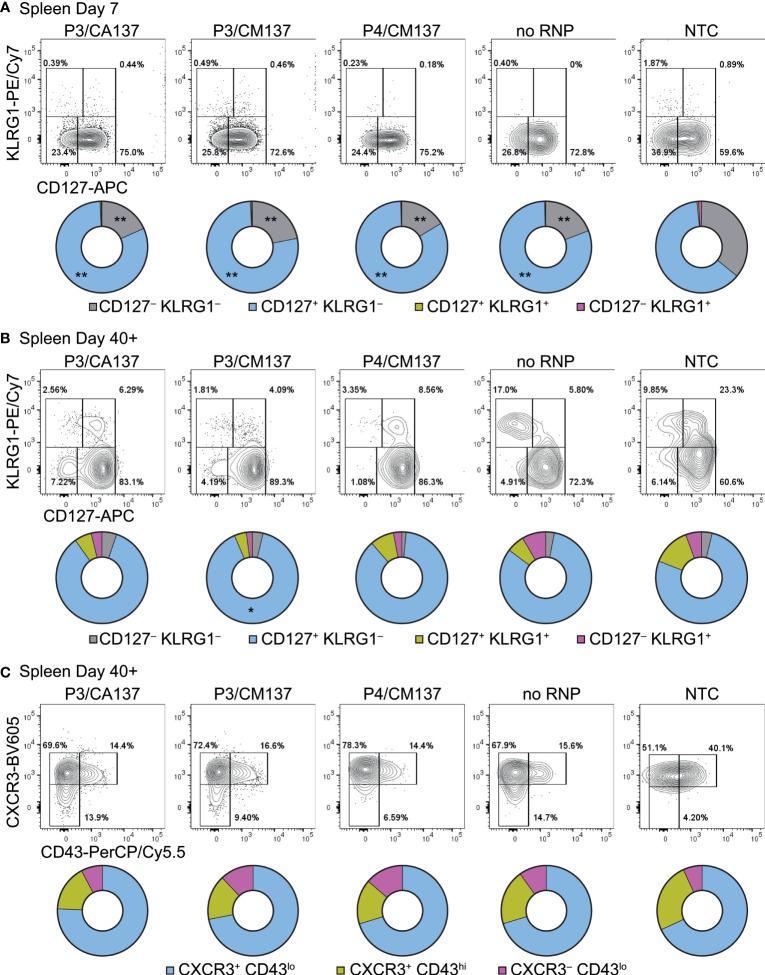
CRISPR/Cas9 technology has revolutionized genetic engineering of primary cells. Although its use is gaining momentum in studies on CD8 T cell biology, it remains elusive to what extent CRISPR/Cas9 affects function of CD8 T cells. Here, we optimized nucleofection-based CRISPR/Cas9 genetic engineering of naïve and -activated primary mouse CD8 T cells and tested their immune responses. Nucleofection of naïve CD8 T cells preserved their antiviral immune responsiveness to an extent that is indistinguishable from non-nucleofected cells, whereas nucleofection of -activated CD8 T cells led to slightly impaired expansion/survival at early time point after adoptive transfer and more pronounced contraction. Of note, different target proteins displayed distinct decay rates after gene editing. This is in stark contrast to a comparable period of time required to complete gene inactivation. Thus, for optimal experimental design, it is crucial to determine the kinetics of the loss of target gene product to adapt incubation period after gene editing. In sum, nucleofection-based CRISPR/Cas9 genome editing achieves efficient and rapid generation of mutant CD8 T cells without imposing detrimental constraints on their functions.
CRISPR/Cas9技术彻底改变了原代细胞的基因工程。尽管其在CD8 T细胞生物学研究中的应用日益广泛,但CRISPR/Cas9对CD8 T细胞功能的影响程度仍不清楚。在此,我们优化了基于核转染的CRISPR/Cas9对未活化和活化的原代小鼠CD8 T细胞的基因工程,并测试了它们的免疫反应。未活化CD8 T细胞的核转染在一定程度上保留了其抗病毒免疫反应性,与未进行核转染的细胞难以区分,而活化CD8 T细胞的核转染在过继转移后的早期时间点导致其扩增/存活略有受损,且收缩更为明显。值得注意的是,不同的靶蛋白在基因编辑后显示出不同的降解速率。这与完成基因失活所需的相当时间形成鲜明对比。因此,为了进行最佳的实验设计,确定靶基因产物丧失的动力学以适应基因编辑后的孵育期至关重要。总之,基于核转染的CRISPR/Cas9基因组编辑能够高效快速地产生突变CD8 T细胞,而不会对其功能施加有害限制。



 Zotero 插件