
锌生物强化和樱桃番茄植株中的养分分布模式均受氧化锌纳米肥料施用的影响。
Both Zn biofortification and nutrient distribution pattern in cherry tomato plants are influenced by the application of ZnO nanofertilizer.
作者信息
Almendros Patricia, González Demetrio, Fernández María Dolores, García-Gomez Concepción, Obrador Ana
机构信息
Universidad Politécnica de Madrid (UPM), Chemical and Food Technology Department, CEIGRAM, Research Centre for the Management of Agricultural and Environmental Risks, Madrid, 28040, Spain.
Centro Nacional Instituto de Investigación y Tecnología Agraria y Alimentaria (INIA-CSIC), Environment and Agronomy Department, Ctra. A Coruña, km 7.5, 28040, Madrid, Spain.
出版信息
Heliyon. 2022 Mar 22;8(3):e09130. doi: 10.1016/j.heliyon.2022.e09130. eCollection 2022 Mar.
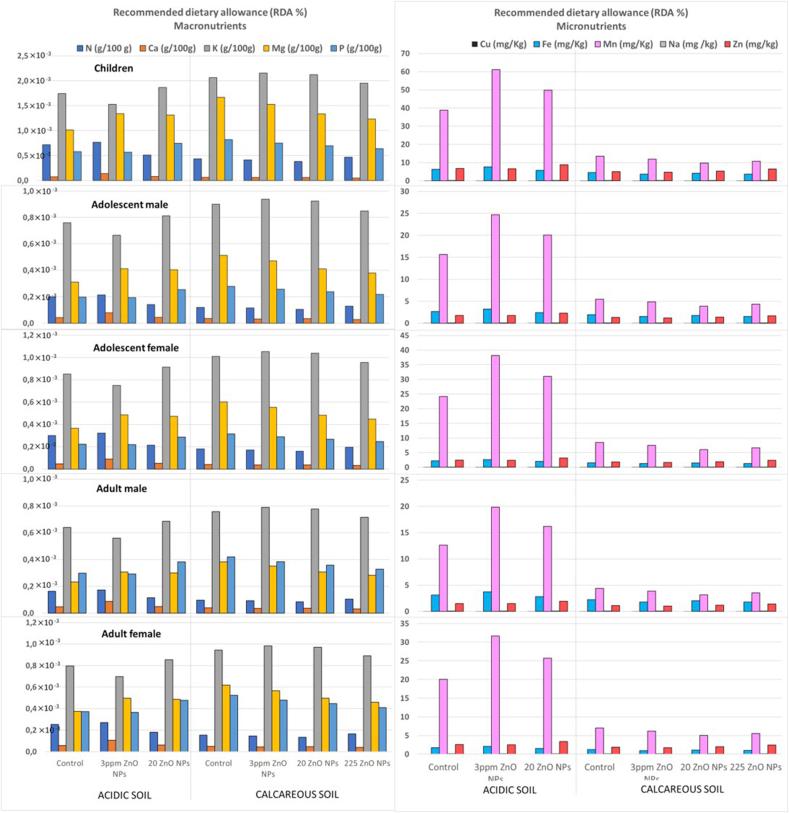
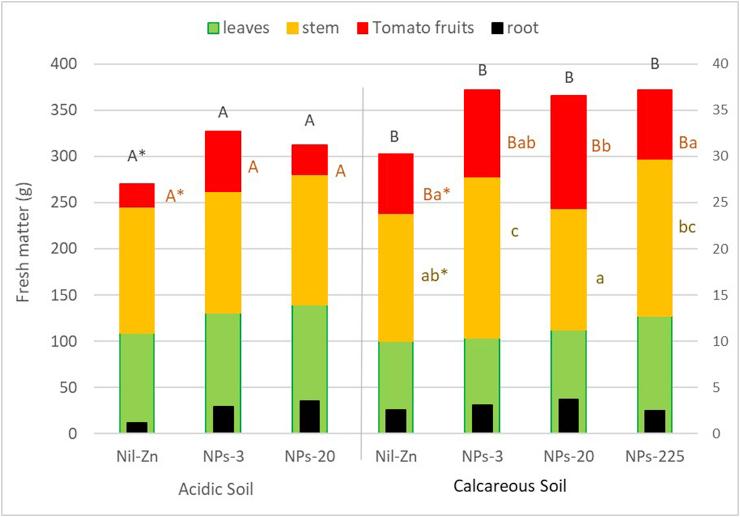
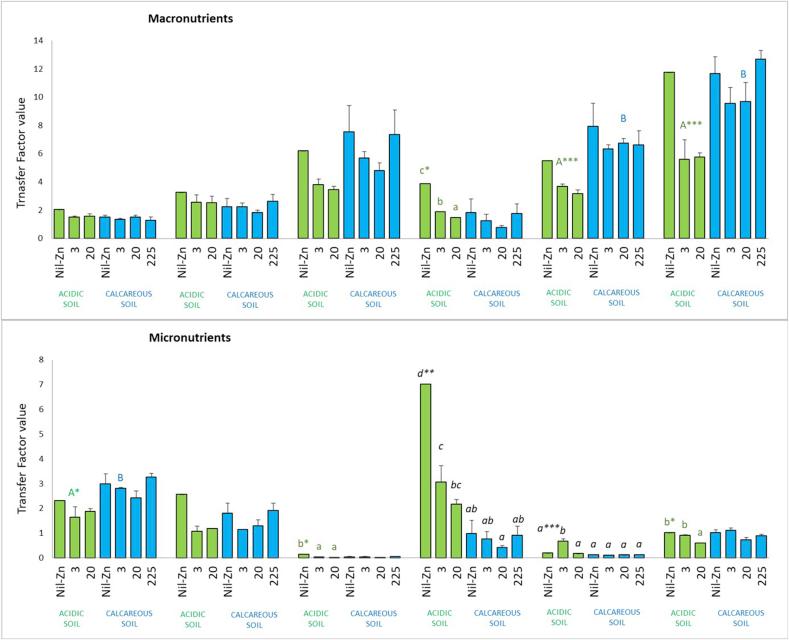
A pot experiment was conducted to determine the influence of commercial nanoparticles (ZnO-NPs) at different doses for use as nanofertilizer on nutrient uptake and its distribution in cherry tomato ( L var. cerasiforme) plants in an acidic (soil pH 5.5) and calcareous soil (soil pH 8.5) from the Mediterranean area. We determined crop yield; macro- (N, P, K, Mg, S and Ca) and micro-nutrient (B, Cu, Fe, Mn, Na and Zn) concentrations in the different parts of the crop (root, stem, leaves and tomato fruits) and the extent of nutrient translocation to the aerial part of the plant. The concentrations of macronutrients N, P, K and Mg in tomato fruits grown in both soils can be considered adequate in terms of nutritional requirements. However, the Ca concentration in tomato fruits grown in the calcareous soil did not reach the required concentration to be considered sufficient. This effect was related to the characteristics of this calcareous soil. Although different concentrations of ZnO-NPs did not affect Fe and Na concentrations in tomato fruit, B concentration in tomato fruits increased with the application of ZnO-NPs. In addition, Cu concentration decreased with the application of ZnO-NPs compared to treatments without any Zn application (Nil-ZnO NP) in the calcareous soil. Manganese concentrations decreased with ZnO-NPs application in both soils. The effect of the application of ZnO-NPs depends on soil characteristics. Zinc applied as a nanofertilizer in the form of ZnO-NPs can be used to increase the crop yield and to obtain an adequate Zn biofortification in cherry tomato crop. The Zn concentrations in tomato fruits reached ranges of 4.5-4.8 mg Zn kg in the acidic soil and 2.5-3,5 mg Zn kg in the calcareous soil. Nutrient concentrations in these fruits following biofortification are adequate for human consumption.
进行了一项盆栽试验,以确定不同剂量的商业纳米颗粒(ZnO-NPs)作为纳米肥料对地中海地区酸性土壤(土壤pH值5.5)和石灰性土壤(土壤pH值8.5)中樱桃番茄(L var. cerasiforme)植株养分吸收及其分布的影响。我们测定了作物产量;作物不同部位(根、茎、叶和番茄果实)中的大量元素(氮、磷、钾、镁、硫和钙)和微量元素(硼、铜、铁、锰、钠和锌)浓度,以及养分向植株地上部分的转运程度。就营养需求而言,在这两种土壤中种植的番茄果实中大量元素氮、磷、钾和镁的浓度可被认为是充足的。然而,在石灰性土壤中种植的番茄果实中的钙浓度未达到被认为充足的所需浓度。这种效应与该石灰性土壤的特性有关。尽管不同浓度的ZnO-NPs对番茄果实中的铁和钠浓度没有影响,但随着ZnO-NPs的施用,番茄果实中的硼浓度增加。此外,与石灰性土壤中不施用任何锌的处理(无ZnO NP)相比,随着ZnO-NPs的施用,铜浓度降低。在两种土壤中,随着ZnO-NPs的施用,锰浓度均降低。ZnO-NPs施用的效果取决于土壤特性。以ZnO-NPs形式作为纳米肥料施用的锌可用于提高作物产量,并在樱桃番茄作物中实现充足的锌生物强化。在酸性土壤中,番茄果实中的锌浓度达到4.5-4.8 mg Zn/kg的范围,在石灰性土壤中为2.5-3.5 mg Zn/kg。生物强化后这些果实中的养分浓度适合人类食用。

 Zotero 插件