
靶向肝脏微环境以改善缺血/再灌注损伤:免疫和代谢区室的新见解
Targeting the Hepatic Microenvironment to Improve Ischemia/Reperfusion Injury: New Insights into the Immune and Metabolic Compartments.
作者信息
Gao Fengqiang, Qiu Xun, Wang Kai, Shao Chuxiao, Jin Wenjian, Zhang Zhen, Xu Xiao
机构信息
1Department of Hepatobiliary and Pancreatic Surgery, The Center for Integrated Oncology and Precision Medicine, Affiliated Hangzhou First People's Hospital, Zhejiang University School of Medicine, Hangzhou, China.
6Zhejiang University School of Medicine, Hangzhou, China.
出版信息
Aging Dis. 2022 Jul 11;13(4):1196-1214. doi: 10.14336/AD.2022.0109.
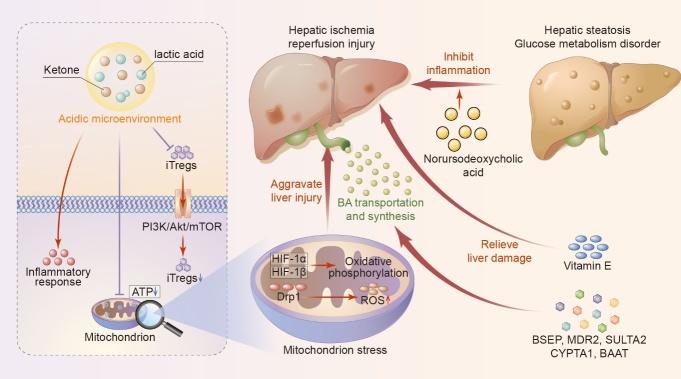
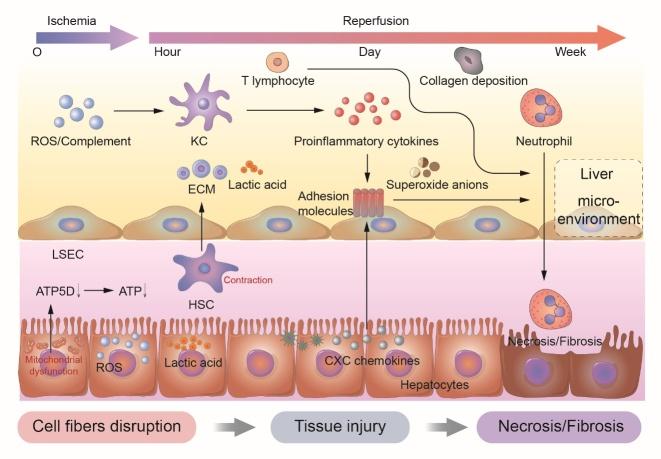
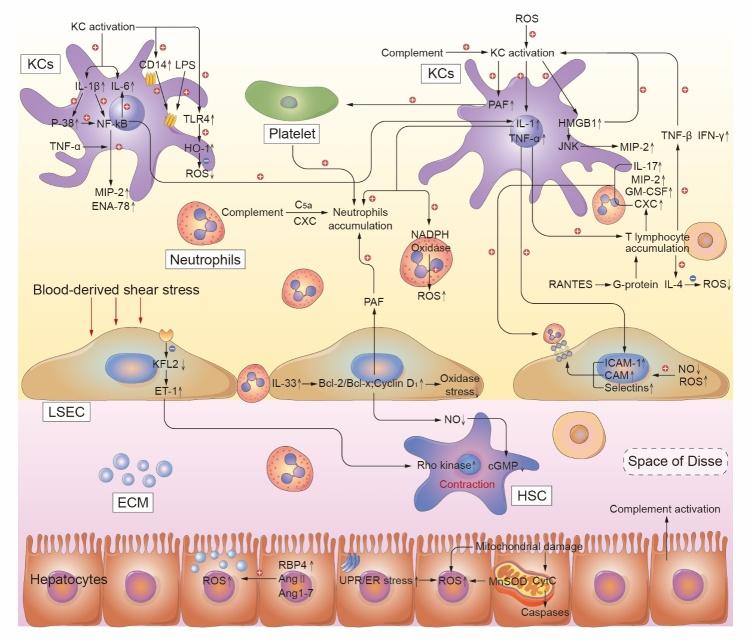
Hepatic ischemia/reperfusion injury (IRI) is mainly characterized by high activation of immune inflammatory responses and metabolic responses. Understanding the molecular and metabolic mechanisms underlying development of hepatic IRI is critical for developing effective therapies for hepatic IRI. Recent advances in research have improved our understanding of the pathogenesis of IRI. During IRI, hepatocyte injury and inflammatory responses are mediated by crosstalk between the immune cells and metabolic components. This crosstalk can be targeted to treat or reverse hepatic IRI. Thus, a deep understanding of hepatic microenvironment, especially the immune and metabolic responses, can reveal new therapeutic opportunities for hepatic IRI. In this review, we describe important cells in the liver microenvironment (especially non-parenchymal cells) that regulate immune inflammatory responses. The role of metabolic components in the diagnosis and prevention of hepatic IRI are discussed. Furthermore, recent updated therapeutic strategies based on the hepatic microenvironment, including immune cells and metabolic components, are highlighted.
肝缺血/再灌注损伤(IRI)主要表现为免疫炎症反应和代谢反应的高度激活。了解肝IRI发生发展的分子和代谢机制对于开发有效的肝IRI治疗方法至关重要。近年来的研究进展增进了我们对IRI发病机制的理解。在IRI期间,免疫细胞与代谢成分之间的相互作用介导了肝细胞损伤和炎症反应。这种相互作用可作为治疗或逆转肝IRI的靶点。因此,深入了解肝脏微环境,尤其是免疫和代谢反应,可为肝IRI揭示新的治疗机会。在本综述中,我们描述了肝脏微环境中调节免疫炎症反应的重要细胞(尤其是非实质细胞)。讨论了代谢成分在肝IRI诊断和预防中的作用。此外,还重点介绍了基于肝脏微环境(包括免疫细胞和代谢成分)的最新治疗策略。
 Zotero 插件