
叶际微生物组对宿主水稻地方品种的影响。
Impact of Phyllosphere on Host Rice Landraces.
机构信息
National Center for Biological Sciences, Tata Institute of Fundamental Research, Bangalore, India.
出版信息
Microbiol Spectr. 2022 Aug 31;10(4):e0081022. doi: 10.1128/spectrum.00810-22. Epub 2022 Jul 20.
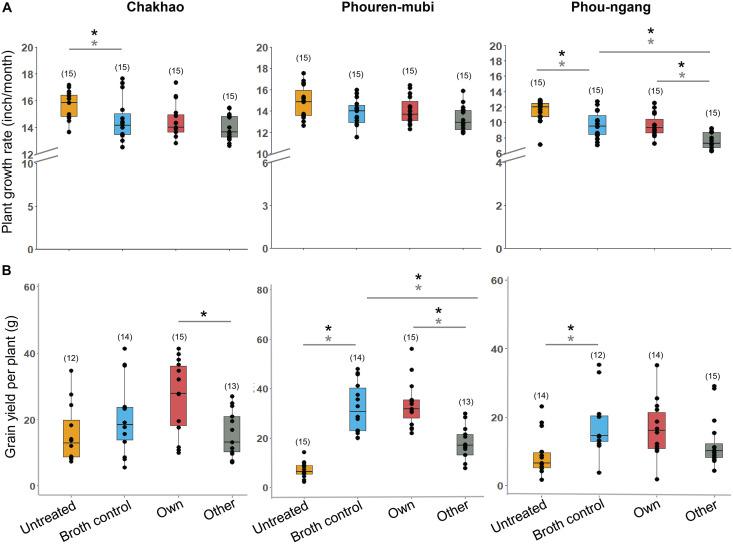
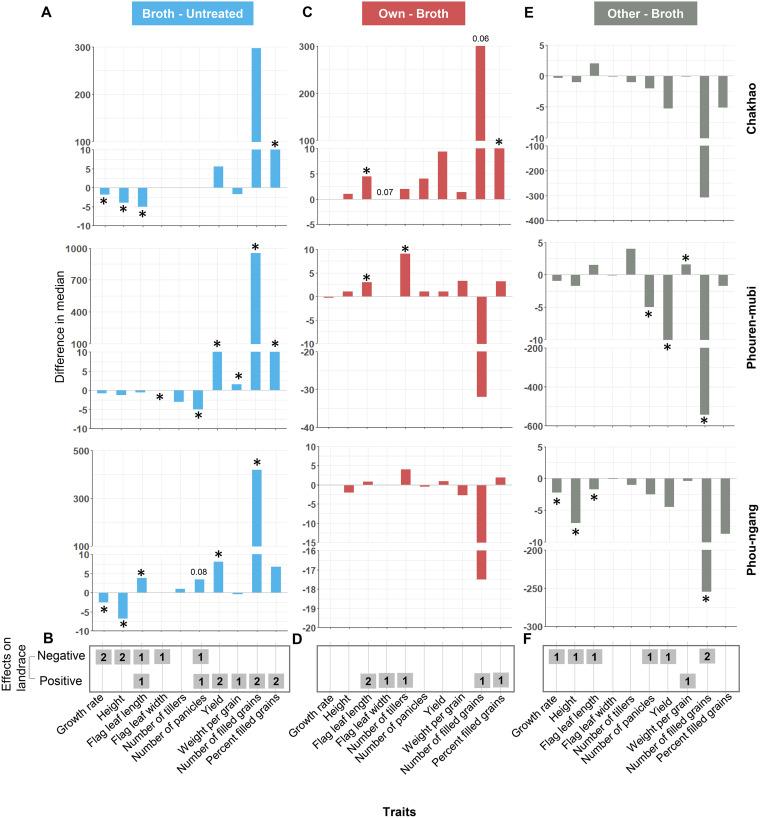
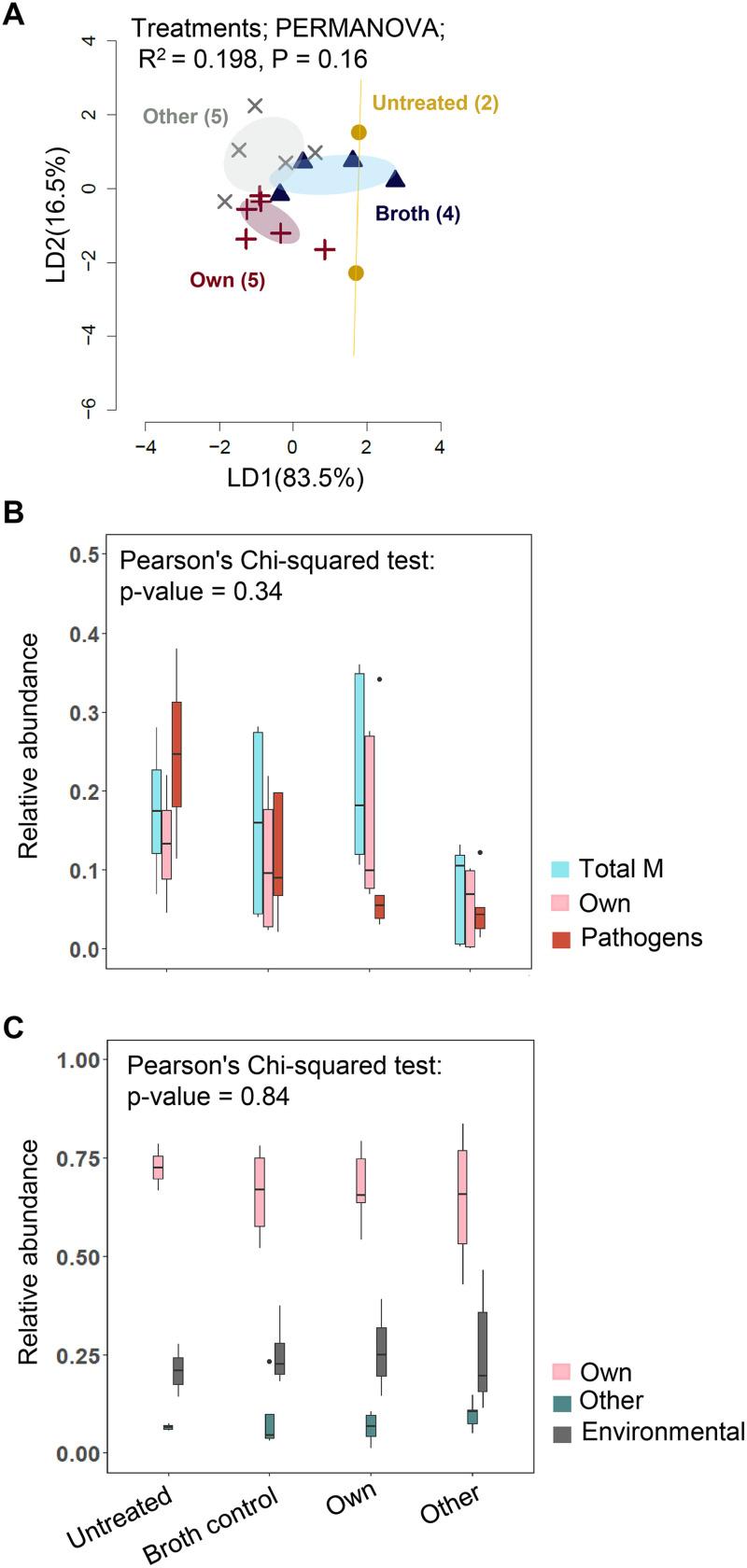
The genus includes widespread plant-associated bacteria that are abundant in the plant phyllosphere (leaf surfaces), consume plant-secreted methanol, and can produce plant growth-promoting metabolites. However, despite the potential to increase agricultural productivity, their impact on host fitness in the natural environment is relatively poorly understood. Here, we conducted field experiments with three traditionally cultivated rice landraces from northeastern India. We inoculated seedlings with native versus nonnative phyllosphere strains and found significant impacts on plant growth and grain yield. However, these effects were variable. Whereas some isolates were beneficial for their host, others had no impact or were no more beneficial than the bacterial growth medium on its own. Host plant benefits were not consistently associated with colonization and did not have altered phyllosphere microbiome composition, changes in the early expression of plant stress response pathways, or bacterial auxin production. We provide the first demonstration of the benefits of phyllosphere for rice yield under field conditions and highlight the need for further analysis to understand the mechanisms underlying these benefits. Given that the host landrace- relationship was not generalizable, future agricultural applications will require careful testing to identify coevolved host-bacterium pairs that may enhance the productivity of high-value rice varieties. Plants are associated with diverse microbes in nature. Do the microbes increase host plant health, and can they be used for agricultural applications? This is an important question that must be answered in the field rather than in the laboratory or greenhouse. We tested the effects of native, leaf-inhabiting bacteria (genus ) on traditionally cultivated rice varieties in a crop field. We found that inoculation with some bacteria increased rice grain production substantially while a nonnative bacterium reduced plant health. Overall, the effect of bacterial inoculation varied across pairs of rice varieties and their native bacteria. Thus, knowledge of evolved associations between specific bacteria hosted by specific rice varieties is necessary to develop ways to increase the yield of traditional rice landraces and preserve these important sources of cultural and genetic diversity.
该属包括广泛存在于植物叶际(叶片表面)的与植物相关的细菌,它们大量消耗植物分泌的甲醇,并能产生促进植物生长的代谢物。然而,尽管它们有可能提高农业生产力,但它们在自然环境中对宿主适应性的影响相对了解较少。在这里,我们用来自印度东北部的三种传统栽培水稻品种进行了田间实验。我们用本地和非本地叶际 菌株接种幼苗,发现对植物生长和谷物产量有显著影响。然而,这些影响是可变的。一些 分离株对其宿主有益,而另一些则没有影响,或者不如细菌生长培养基本身有益。宿主植物的益处并不总是与 定殖相关,也不会改变叶际微生物组的组成,不会改变植物应激反应途径的早期表达,也不会改变细菌生长素的产生。我们首次在田间条件下证明了叶际 对水稻产量的益处,并强调需要进一步分析以了解这些益处的机制。由于宿主地方品种的关系不是普遍的,未来的农业应用需要仔细测试,以识别可能提高高价值水稻品种生产力的共同进化的宿主-细菌对。 植物在自然界中与多种微生物共生。这些微生物是否能提高宿主植物的健康水平,它们能否用于农业应用?这是一个必须在田间而不是在实验室或温室中回答的重要问题。我们在作物田中测试了本地、叶际细菌(属 )对传统栽培水稻品种的影响。我们发现,接种某些细菌可显著增加水稻籽粒产量,而一种非本地细菌则降低了植物的健康状况。总的来说,细菌接种的效果因水稻品种及其本地细菌的不同而不同。因此,了解特定水稻品种由特定细菌进化而来的共生关系,对于开发提高传统水稻地方品种产量和保护这些重要的文化和遗传多样性来源的方法是必要的。

 Zotero 插件