
核桃中的胡桃醌对异丙肾上腺素诱导的SD大鼠心肌损伤具有心脏保护作用。
Juglone from Walnut Produces Cardioprotective Effects against Isoproterenol-Induced Myocardial Injury in SD Rats.
作者信息
Ahmad Taseer, Khan Taous, Tabassum Tahira, Alqahtani Yahya S, Mahnashi Mater H, Alyami Bandar A, Alqarni Ali O, Alasmary Mohammed Y, Almedhesh Sultan A, Shah Abdul Jabbar
机构信息
Department of Pharmacy, COMSATS University Islamabad, Abbottabad Campus, University Road, Abbottabad 22060, Pakistan.
Laboratory of Cardiovascular Research and Integrative Pharmacology, College of Pharmacy, University of Sargodha, Sargodha 40100, Pakistan.
出版信息
Curr Issues Mol Biol. 2022 Jul 16;44(7):3180-3193. doi: 10.3390/cimb44070220.
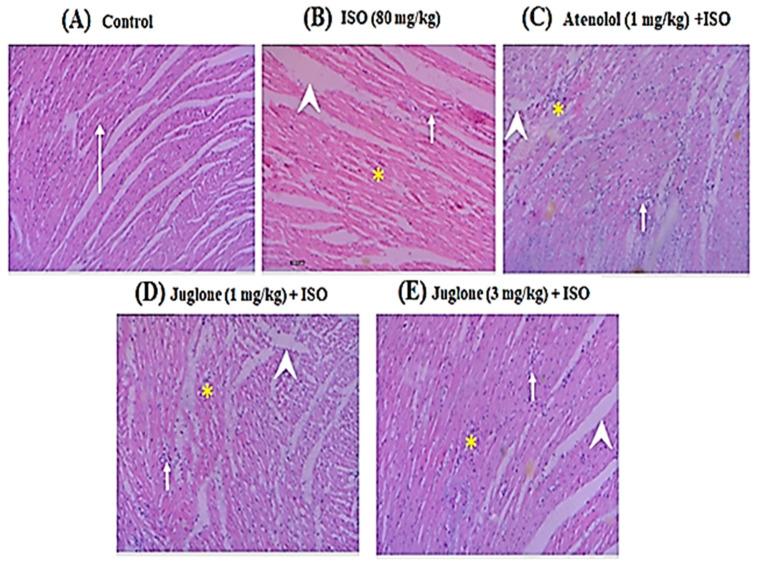
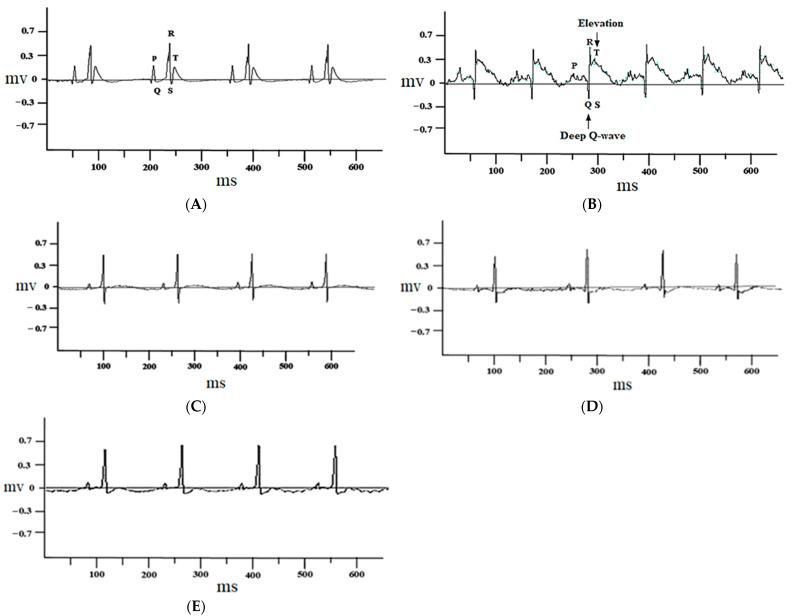
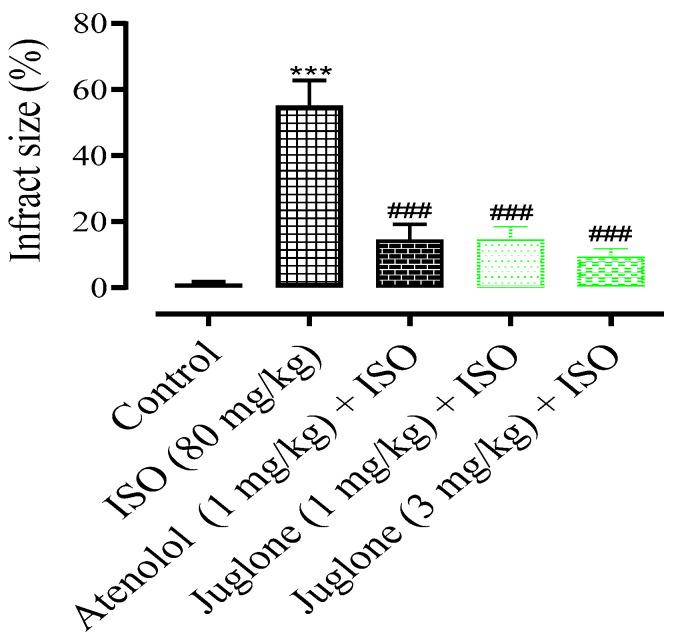
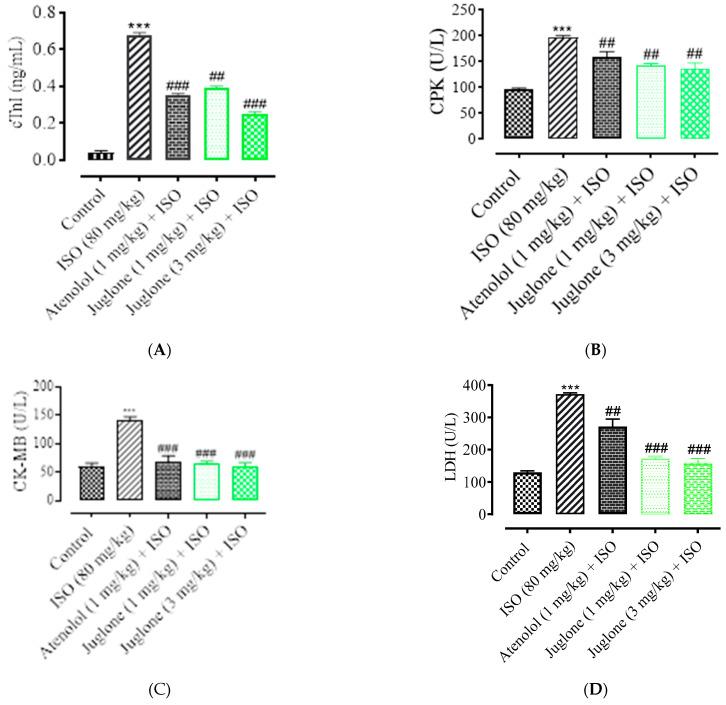
Therapeutic and/or preventive interventions using phytochemical constituents for ischemic heart disease have gained considerable attention worldwide, mainly due to their antioxidant activity. This study investigated the cardioprotective effect and possible mechanism of juglone, a major constituent of the walnut tree, using an isoproterenol (ISO)-induced myocardial infarction (MI) model in rats. Rats were pretreated for five (5) days with juglone (1, 3 mg/kg, i.p) and atenolol (1 mg/kg, i.p) in separate experiments before inducing myocardial injury by administration of ISO (80 mg/kg, s.c) at an interval of 24 h for 2 consecutive days (4th and 5th day). The cardioprotective effect of juglone was confirmed through a lead II electrocardiograph (ECG), cardiac biomarkers (cTnI, CPK, CK-MB, LDH, ALT and AST) and histopathological study. The results of our present study suggest that prior administration of juglone (1 and 3 mg/kg) proved to be effective as a cardioprotective therapeutic agent in reducing the extent of myocardial damage (induced by ISO) by fortifying the myocardial cell membrane, preventing elevated T-waves, deep Q-waves in the ECG, heart to body weight ratio, infarction and also by normalizing cardiac marker enzymes (cTnI, CPK, CK-MB, LDH, ALT and AST) and histopathological changes, such as inflammation, edema and necrosis. In conclusion, this study has identified phytochemical constituents, in particular juglone, as a potential cardioprotective agent.
使用植物化学成分对缺血性心脏病进行治疗和/或预防干预在全球范围内受到了广泛关注,主要是由于其抗氧化活性。本研究利用异丙肾上腺素(ISO)诱导的大鼠心肌梗死(MI)模型,研究了核桃树主要成分胡桃醌的心脏保护作用及其可能的机制。在连续2天(第4天和第5天)每隔24小时皮下注射ISO(80mg/kg)诱导心肌损伤之前,在单独的实验中,用胡桃醌(1、3mg/kg,腹腔注射)和阿替洛尔(1mg/kg,腹腔注射)对大鼠进行5天预处理。通过II导联心电图(ECG)、心脏生物标志物(cTnI、CPK、CK-MB、LDH、ALT和AST)以及组织病理学研究证实了胡桃醌的心脏保护作用。我们目前的研究结果表明,预先给予胡桃醌(1和3mg/kg)作为一种心脏保护治疗剂,通过强化心肌细胞膜、预防心电图中T波升高、深Q波、心脏与体重比、梗死,以及使心脏标志物酶(cTnI、CPK、CK-MB、LDH、ALT和AST)和组织病理学变化(如炎症、水肿和坏死)正常化,在减少(由ISO诱导的)心肌损伤程度方面被证明是有效的。总之,本研究已确定植物化学成分,特别是胡桃醌,为一种潜在的心脏保护剂。


 Zotero 插件