
磁处理通过诱导一氧化氮合酶合成来调节植物激素,从而提高盐胁迫下大豆种子的萌发率。
Magnetopriming Actuates Nitric Oxide Synthesis to Regulate Phytohormones for Improving Germination of Soybean Seeds under Salt Stress.
机构信息
School of Biochemistry, Devi Ahilya Vishwavidyalaya, Khandwa Road, Indore 452001, India.
Division of Plant Physiology, ICAR-Indian Agricultural Research Institute, New Delhi 110012, India.
出版信息
Cells. 2022 Jul 12;11(14):2174. doi: 10.3390/cells11142174.
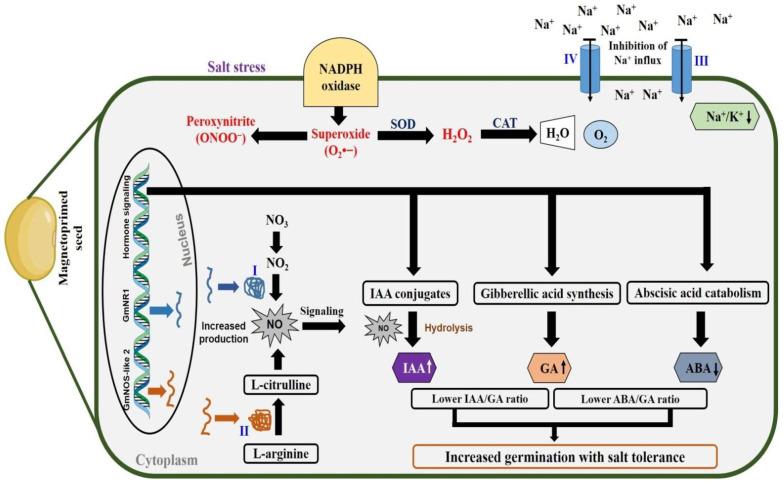
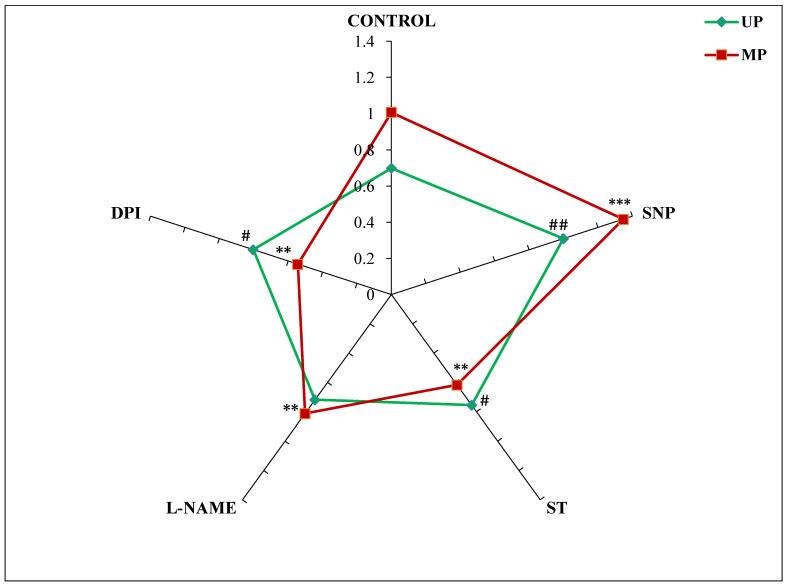
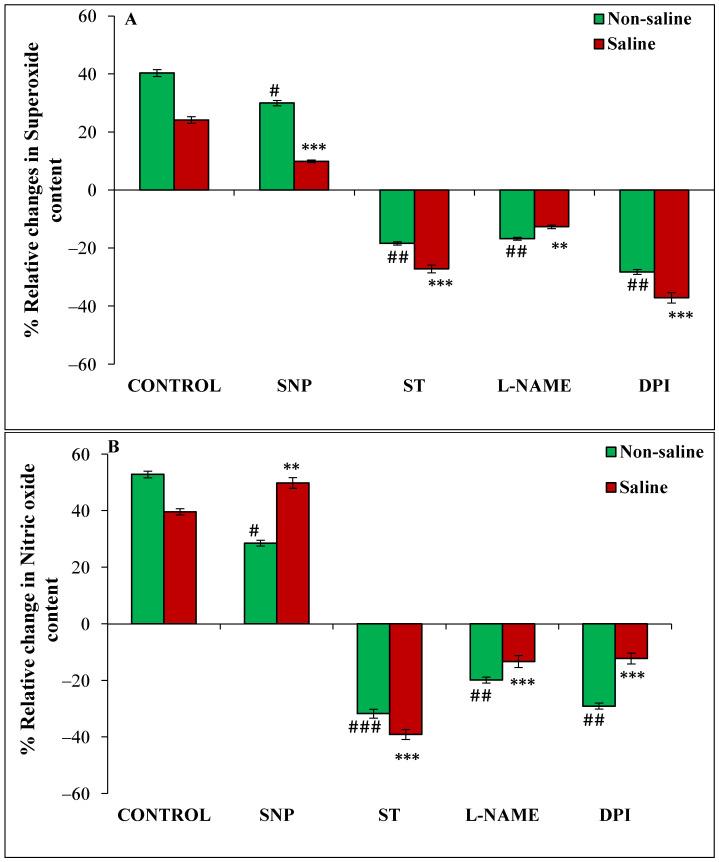
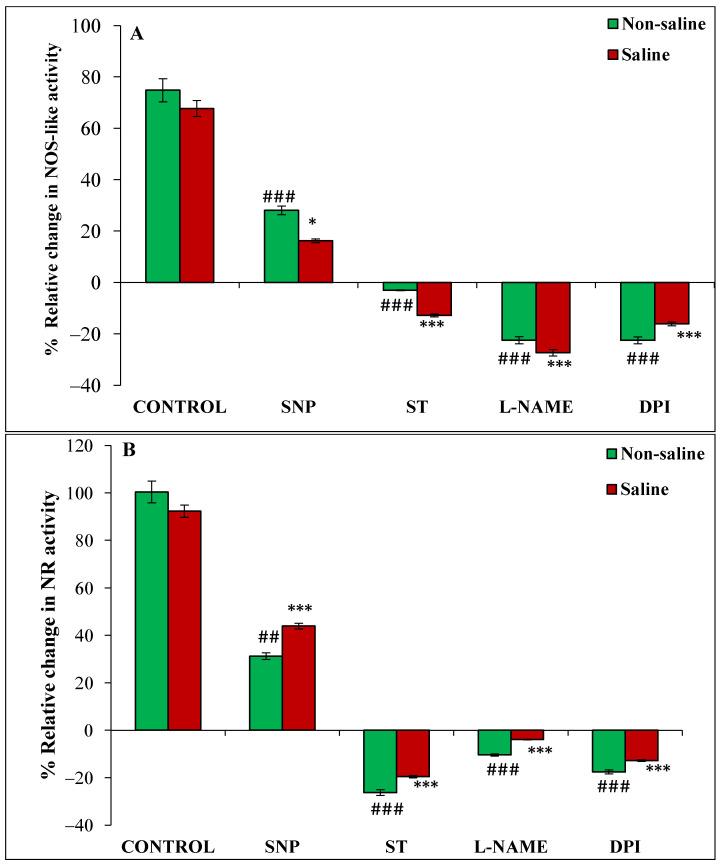
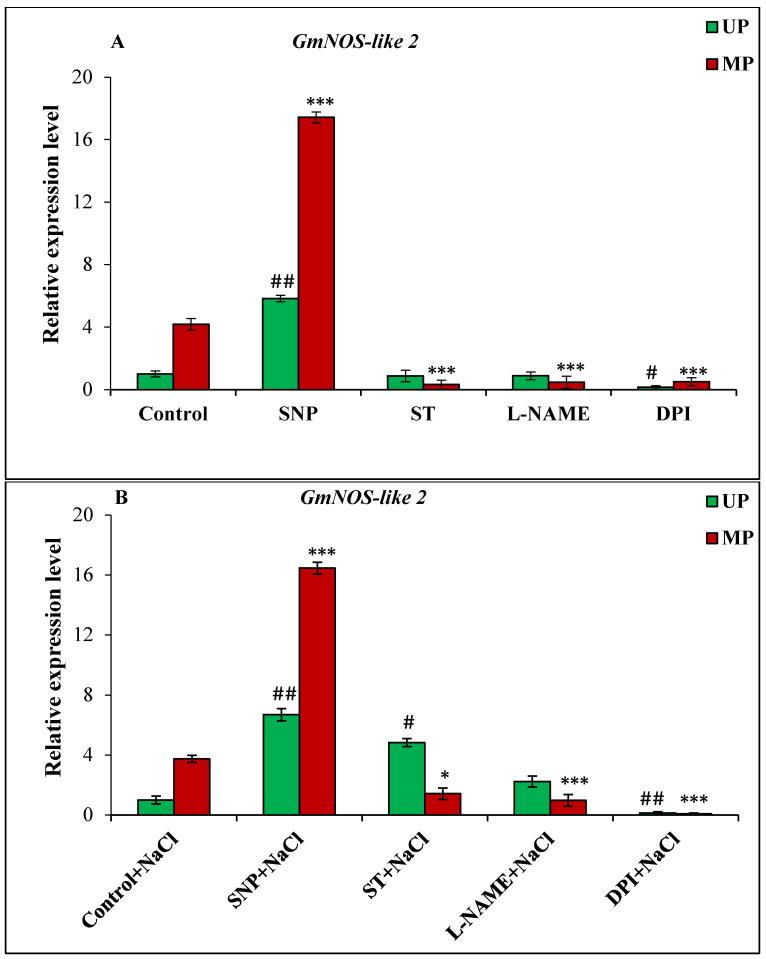
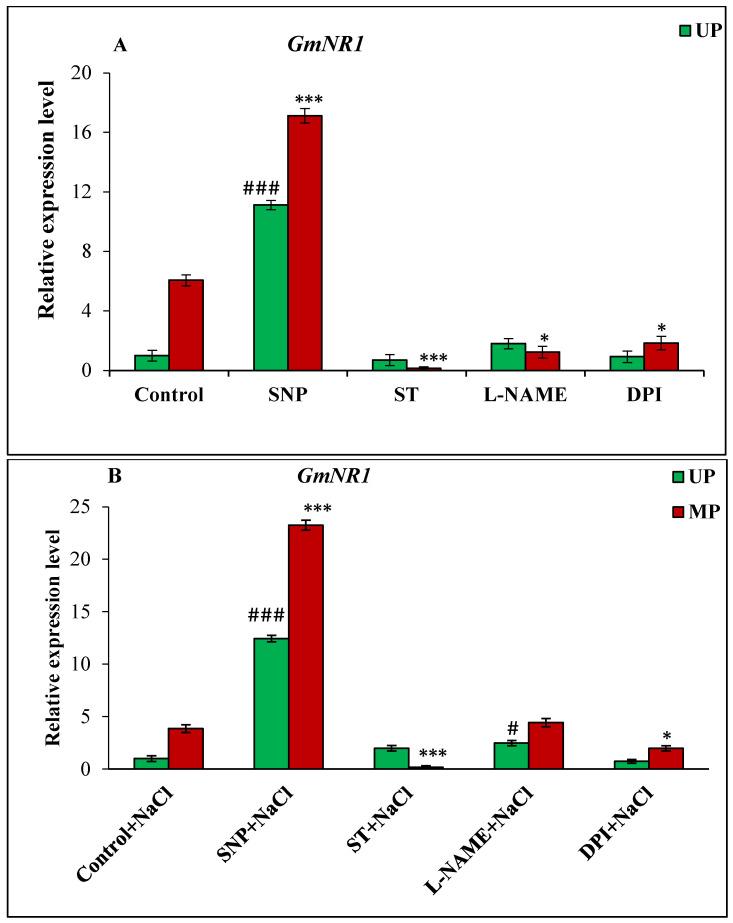
In this study, the role of the signalling molecule nitric oxide (NO) in magnetopriming-mediated induction of salinity tolerance in soybean seeds is established. The cross-talk of NO with germination-related hormones gibberellic acid (GA), abscisic acid (ABA) and auxin (IAA) for their ability to reduce the Na/K ratio in the seeds germinating under salinity is highlighted. Salt tolerance index was significantly high for seedlings emerging from magnetoprimed seeds and sodium nitroprusside (SNP, NO-donor) treatment. The NO and superoxide (O) levels were also increased in both of these treatments under non-saline and saline conditions. NO generation through nitrate reductase (NR) and nitric oxide synthase-like (NOS-like) pathways indicated the major contribution of NO from the NR-catalysed reaction. The relative expression of genes involved in the NO biosynthetic pathways reiterated the indulgence of NR in NO in magnetoprimed seeds, as a 3.86-fold increase in expression was observed over unprimed seeds under salinity. A 23.26-fold increase in relative expression of NR genes by the NO donor (SNP) was observed under salinity, while the NR inhibitor (sodium tungstate, ST) caused maximum reduction in expression of NR genes as compared to other inhibitors [L-NAME (N(G)-nitro-L-arginine methyl ester; inhibitor of nitric oxide synthase-like enzyme) and DPI (diphenylene iodonium; NADPH oxidase inhibitor)]. The ratio of ABA/GA and IAA/GA decreased in magnetoprimed and NO donor-treated seeds, suggesting homeostasis amongst hormones during germination under salinity. The magnetoprimed seeds showed low Na/K ratio in all treatments irrespective of NO inhibitors. Altogether, our results indicate that a balance of ABA, GA and IAA is maintained by the signalling molecule NO in magnetoprimed seeds which lowers the Na/K ratio to offset the adverse effects of salinity in soybean seeds.
在这项研究中,确立了信号分子一氧化氮(NO)在磁处理介导的大豆种子耐盐性诱导中的作用。强调了 NO 与萌发相关激素赤霉素(GA)、脱落酸(ABA)和生长素(IAA)之间的交叉对话,以了解它们在盐胁迫下降低种子中 Na/K 比值的能力。从磁处理种子和硝普钠(NO 供体)处理中萌发的幼苗的耐盐指数显着较高。在非盐胁迫和盐胁迫条件下,这两种处理中的 NO 和超氧阴离子(O)水平也增加。硝酸盐还原酶(NR)和一氧化氮合酶样(NOS-like)途径产生的 NO 表明,NO 主要来自 NR 催化的反应。参与 NO 生物合成途径的基因的相对表达再次强调了 NR 在磁处理种子中产生 NO 的作用,因为在盐胁迫下,相对于未处理的种子,其表达增加了 3.86 倍。NO 供体(硝普钠,SNP)在盐胁迫下观察到 NR 基因的相对表达增加了 23.26 倍,而 NR 抑制剂(钨酸钠,ST)与其他抑制剂[L-NAME(N(G)-硝基-L-精氨酸甲酯;NOS-like 酶抑制剂)和 DPI(二苯基碘,NADPH 氧化酶抑制剂)]相比,NR 基因的表达最大程度降低。在磁处理和 NO 供体处理的种子中,ABA/GA 和 IAA/GA 的比值降低,表明在盐胁迫下萌发过程中激素之间的动态平衡。在所有处理中,无论是否存在 NO 抑制剂,磁处理的种子的 Na/K 比值都较低。总之,我们的结果表明,信号分子 NO 在磁处理的种子中维持了 ABA、GA 和 IAA 的平衡,从而降低了 Na/K 比值,以抵消盐胁迫对大豆种子的不利影响。


 Zotero 插件