
阿兹海默病患者 PBMC 中司他夫定(D4T)对 MAPK 和 PI3/AKT 依赖性自噬信号的调节作用。
Modulation of MAPK- and PI3/AKT-Dependent Autophagy Signaling by Stavudine (D4T) in PBMC of Alzheimer's Disease Patients.
机构信息
IRCCS Fondazione Don Carlo Gnocchi, 20148 Milano, Italy.
Neurobiology Laboratory, School of Medicine, University of Study of Milano-Bicocca, 20900 Monza, Italy.
出版信息
Cells. 2022 Jul 12;11(14):2180. doi: 10.3390/cells11142180.
BACKGROUND
Aβ deposition plays a pivotal role in AD pathogenesis by inducing the activation of microglial cells and neuroinflammation. This process is antagonized by microglia-mediated clearance of Aβ plaques. Activation of the NLRP3 inflammasome is involved in neuroinflammation and in the impairments of Aβ-plaque clearance. On the other hand, stavudine (D4T) downregulates the NLRP3 inflammasome and stimulates autophagy-mediated Aβ-clearing in a THP-1-derived macrophages.
METHODS
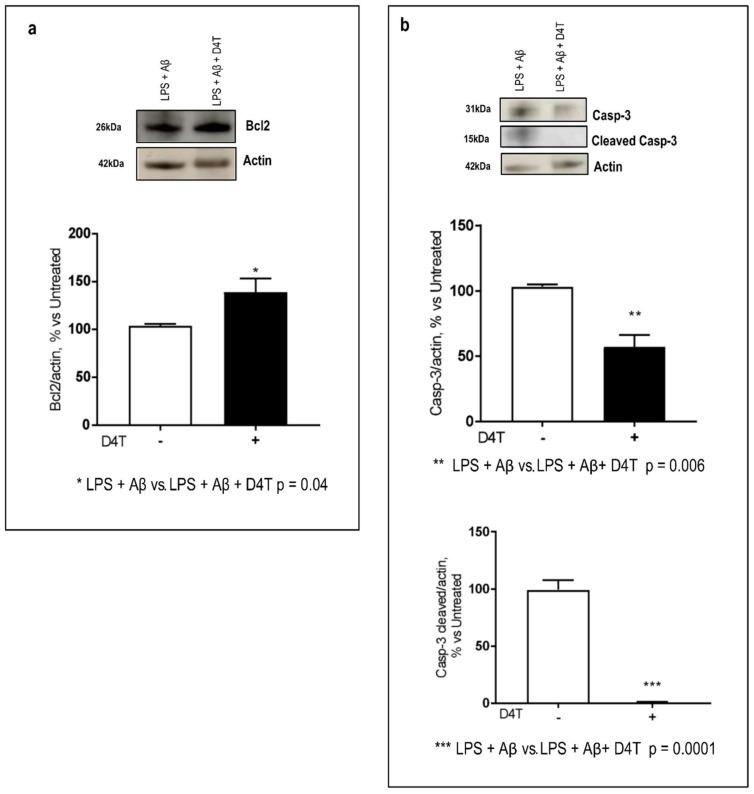
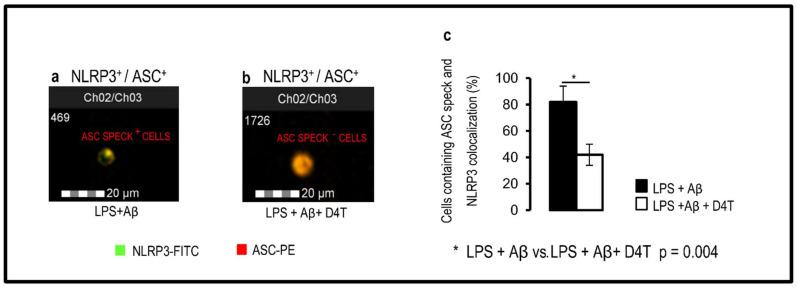
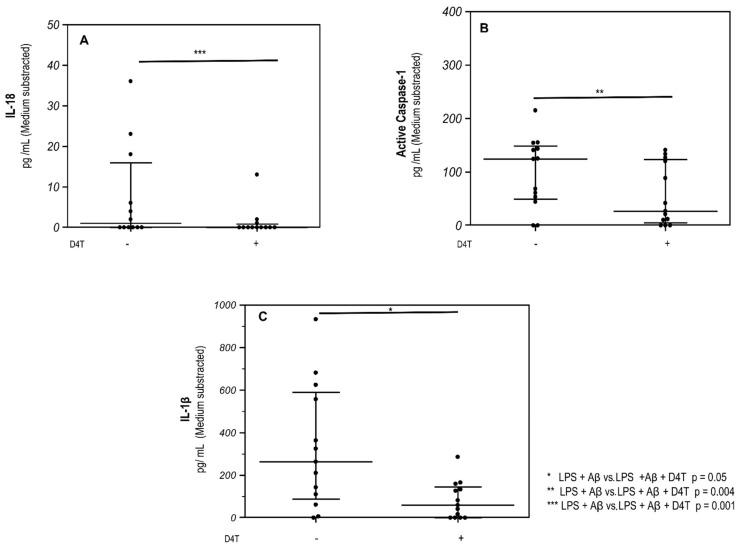
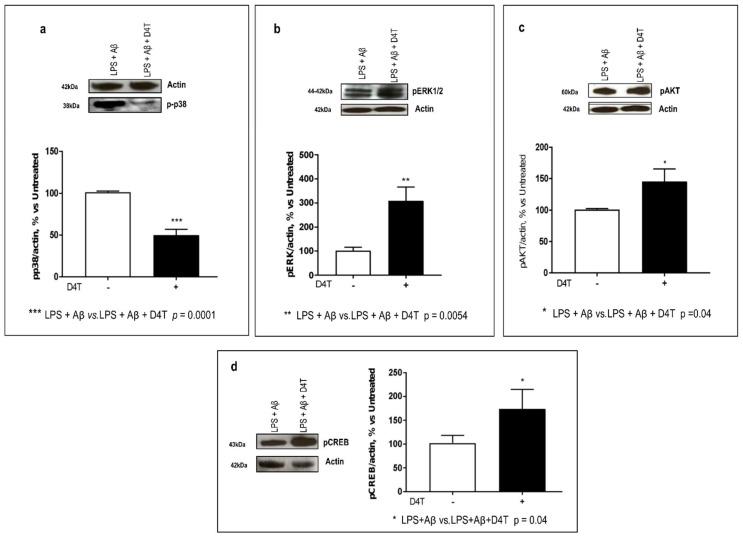
We explored the effect of D4T on Aβ autophagy in PBMC from AD patients that were primed with LPS and stimulated with Aβ oligomers in the absence/presence of D4T. We analyzed the NLRP3 activity by measuring NLRP3-ASC complex formation by AMNIS FlowSight and pro-inflammatory cytokine (IL-1β, IL-18 and Caspase-1) production by ELISA. The phosphorylation status of p38, ERK, AKT, p70, and the protein expression of CREB, LAMP2A, beclin-1, Caspase-3 and Bcl2 were analyzed by Western blot.
RESULTS
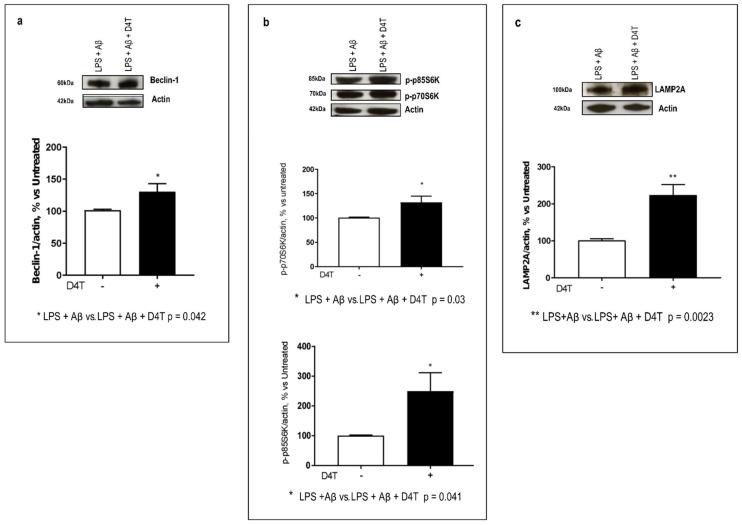
Data showed that D4T: (1) downregulates NLRP3 inflammasome activation and the production of down-stream pro-inflammatory cytokines in PBMC; (2) stimulates the phosphorylation of AKT, ERK and p70 as well as LAMP2A, beclin-1 and Bcl2 expression and reduces Caspase-3 expression, suggesting an effect of this compound on autophagy; (3) increases phospho-CREB, which is a downstream target of p-ERK and p-AKT, inducing anti-inflammatory cytokine production and resulting in a possible decrease of Aβ-mediated cytotoxicity; and (4) reduces the phosphorylation of p38, a protein involved in the production of pro-inflammatory cytokines and tau hyperphosphorylation.
CONCLUSIONS
D4T reduces the activation of the NLRP3 inflammasome, and it might stimulate autophagy as well as the molecular mechanism that modulates Aβ cytotoxicity, and D4T might reduce inflammation in the cells of AD patients. It could be very interesting to check the possible beneficial effects of D4T in the clinical scenario.
背景
β淀粉样蛋白(Aβ)沉积通过诱导小胶质细胞激活和神经炎症,在阿尔茨海默病(AD)发病机制中起关键作用。小胶质细胞介导的 Aβ 斑块清除作用拮抗这一过程。NLRP3 炎性小体的激活与神经炎症以及 Aβ 斑块清除受损有关。另一方面,司他夫定(D4T)下调 NLRP3 炎性小体,并在 THP-1 衍生巨噬细胞中刺激自噬介导的 Aβ 清除。
方法
我们探讨了 D4T 对 LPS 预刺激并在 Aβ 低聚物刺激下的 AD 患者外周血单个核细胞(PBMC)中 Aβ 自噬的影响。我们通过 AMNIS FlowSight 测量 NLRP3-ASC 复合物的形成以及 ELISA 测量促炎细胞因子(IL-1β、IL-18 和 Caspase-1)的产生来分析 NLRP3 活性。通过 Western blot 分析 p38、ERK、AKT、p70 的磷酸化状态以及 CREB、LAMP2A、beclin-1、Caspase-3 和 Bcl2 的蛋白表达。
结果
数据显示,D4T:(1)下调 PBMC 中 NLRP3 炎性小体的激活和下游促炎细胞因子的产生;(2)刺激 AKT、ERK 和 p70 的磷酸化以及 LAMP2A、beclin-1 和 Bcl2 的表达,降低 Caspase-3 的表达,表明该化合物对自噬有作用;(3)增加磷酸化 CREB,这是 p-ERK 和 p-AKT 的下游靶标,诱导抗炎细胞因子的产生,从而可能降低 Aβ 介导的细胞毒性;(4)降低参与促炎细胞因子产生和 tau 过度磷酸化的蛋白 p38 的磷酸化。
结论
D4T 降低 NLRP3 炎性小体的激活,可能刺激自噬以及调节 Aβ 细胞毒性的分子机制,D4T 可能减少 AD 患者细胞中的炎症。检查 D4T 在临床环境中可能产生的有益作用将非常有趣。
 Zotero 插件