
阿尔茨海默病中海马结构中 NLRP1 炎性小体的激活:与神经病理学改变的相关性和无偏估计的神经元丢失。
NLRP1 Inflammasome Activation in the Hippocampal Formation in Alzheimer's Disease: Correlation with Neuropathological Changes and Unbiasedly Estimated Neuronal Loss.
机构信息
Department of Neuroscience, Croatian Institute for Brain Research, University of Zagreb School of Medicine, Šalata 12, 10000 Zagreb, Croatia.
BRAIN Centre, Institute of Psychiatry, Psychology, and Neuroscience, King's College London, London WC2R 2LS, UK.
出版信息
Cells. 2022 Jul 17;11(14):2223. doi: 10.3390/cells11142223.
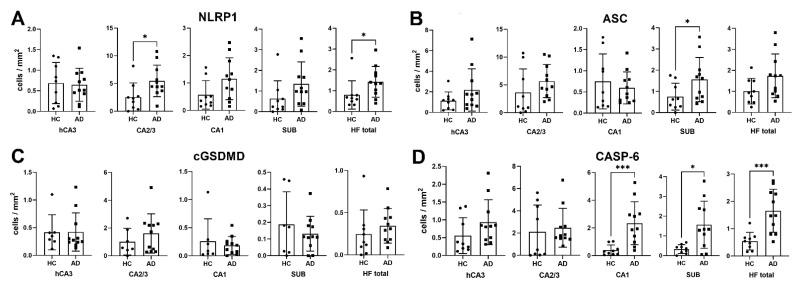
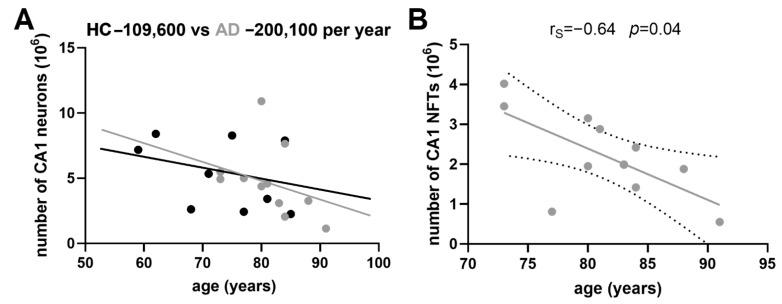
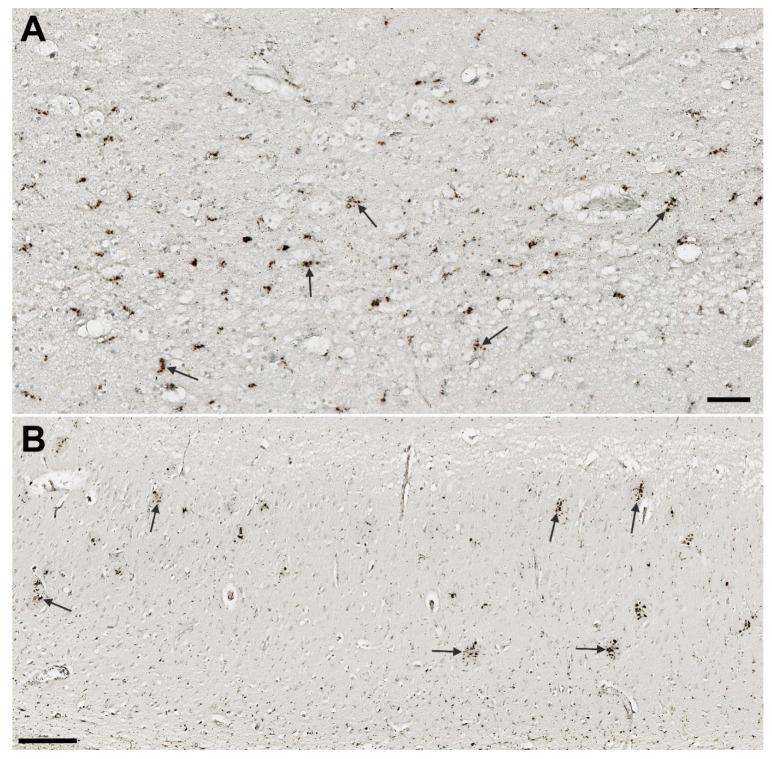
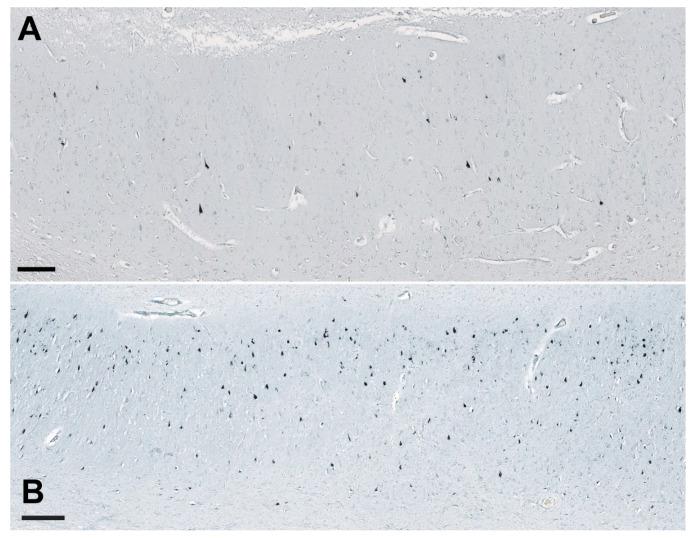
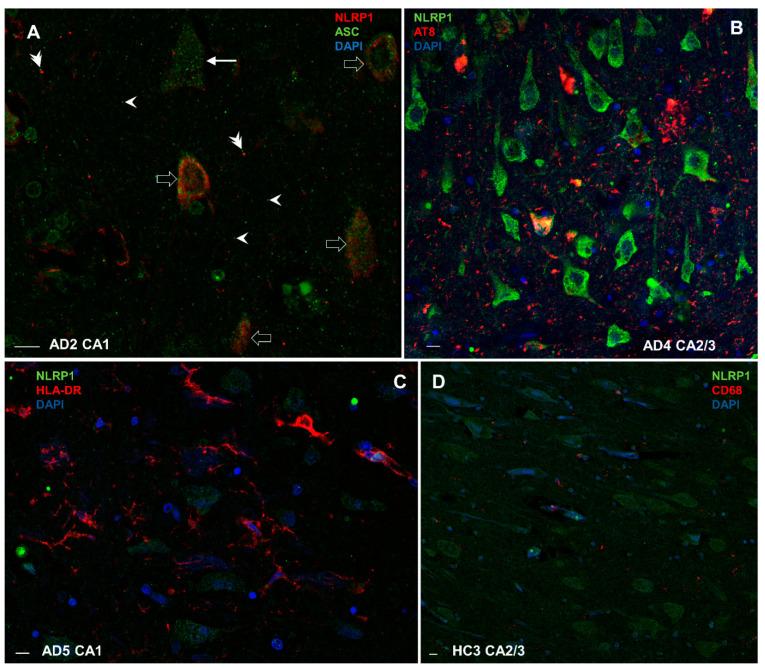
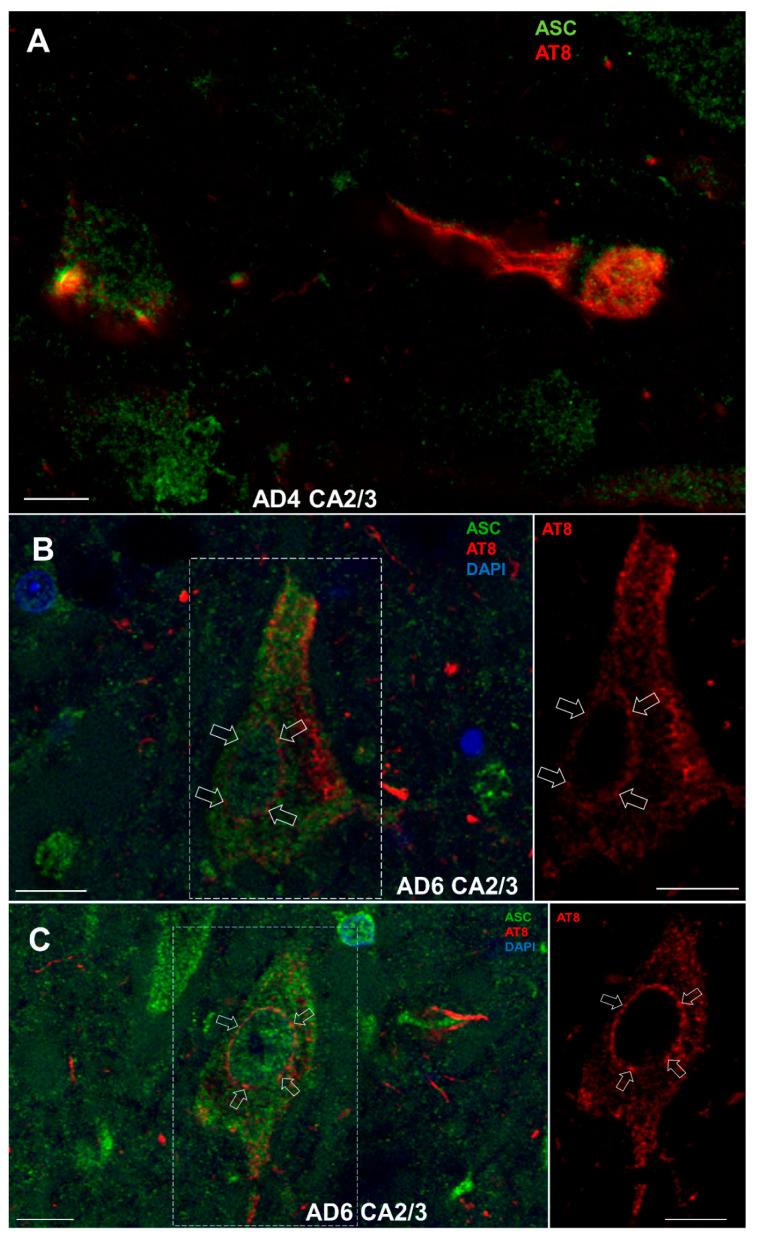
Neuroinflammation is one of the core pathological features of Alzheimer's disease (AD) as both amyloid β (Aβ) and tau monomers and oligomers can trigger the long-term pro-inflammatory phenotype of microglial cells with consequent overactivation of the inflammasomes. To investigate the NLRP1 inflammasome activation in AD, we analyzed the expression of NLRP1, ASC, cleaved gasdermin (cGSDMD), and active caspase-6 (CASP-6) proteins in each hippocampal subdivision (hilar part of CA3, CA2/3, CA1, subiculum) of postmortem tissue of 9 cognitively healthy controls (HC) and 11 AD patients whose disease duration varied from 3 to 7 years after the clinical diagnosis. The total number of neurons, along with the total number of neurofibrillary tangles (NFTs), were estimated in Nissl- and adjacent modified Bielschowsky-stained sections, respectively, using the optical disector method. The same 9 HC and 11 AD cases were additionally semiquantitatively analyzed for expression of IBA1, HLA-DR, and CD68 microglial markers. Our results show that the expression of NLRP1, ASC, and CASP-6 is present in a significantly greater number of hippocampal formation neurons in AD brains compared to controls, suggesting that the NLRP1 inflammasome is more active in the AD brain. None of the investigated inflammasome and microglial markers were found to correlate with the age of the subjects or the duration of AD. However, besides positive correlations with microglial IBA1 expression in the subiculum and with microglial CD68 expression in the CA1 field and subiculum in the AD group, the overall NLRP1 expression in the hippocampal formation was positively correlated with the number of NFTs, thus providing a causal link between neuroinflammation and neurofibrillary degeneration. The accumulation of AT8-immunoreactive phosphorylated tau proteins that we observed at nuclear pores of large pyramidal neurons of the Ammon's horn further supports their role in the extent of neuronal dysfunction and degeneration in AD. This is important because unlike fibrillar amyloid-β deposits that are not related to dementia severity, total NFTs and neuron numbers in the hippocampal formation, especially in the CA1 field, are the best correlates of cognitive deterioration in both human brain aging and AD. Our findings also support the notion that the CA2 field vulnerability is strongly linked to specific susceptibilities to different tauopathies, including primary age-related tauopathy. Altogether, these findings contrast with reports of nonsignificant microglial activation in aged nonhuman primates and indicate that susceptibility to inflammasome activation may render the human brain comparatively more vulnerable to neurodegenerative changes and AD. In conclusion, our results confirm a key role of NLRP1 inflammasome in AD pathogenesis and suggest NLRP1 as a potential diagnostic marker and therapeutic target to slow or prevent AD progression.
神经炎症是阿尔茨海默病 (AD) 的核心病理学特征之一,因为淀粉样 β (Aβ) 和 tau 单体和低聚物都可以触发小胶质细胞的长期促炎表型,从而导致炎症小体的过度激活。为了研究 AD 中的 NLRP1 炎症小体激活,我们分析了 9 名认知健康对照 (HC) 和 11 名 AD 患者死后组织中海马各亚区 (CA3 海马脚、CA2/3、CA1、下托) 中 NLRP1、ASC、裂解的 gasdermin (cGSDMD) 和活性半胱天冬酶-6 (CASP-6) 蛋白的表达。神经元总数以及神经原纤维缠结 (NFT) 的总数分别使用光学剖分法在尼氏染色和相邻改良 Bielschowsky 染色切片上进行估计。使用免疫组织化学方法对半定量分析相同的 9 名 HC 和 11 名 AD 病例中 IBA1、HLA-DR 和 CD68 小胶质细胞标志物的表达。我们的结果表明,与对照组相比,AD 大脑中海马结构神经元中 NLRP1、ASC 和 CASP-6 的表达明显增加,这表明 NLRP1 炎症小体在 AD 大脑中更为活跃。在所有研究的炎症小体和小胶质细胞标志物中,均未发现与研究对象的年龄或 AD 持续时间相关。然而,除了与 AD 组下托的小胶质细胞 IBA1 表达和 CA1 场和下托的小胶质细胞 CD68 表达呈正相关外,海马结构中 NLRP1 的整体表达与 NFT 数量呈正相关,从而为神经炎症与神经纤维变性之间提供了因果关系。我们在 Ammon 角大锥体神经元核孔中观察到的 AT8 免疫反应性磷酸化 tau 蛋白的积累进一步支持了它们在 AD 中神经元功能和退化程度中的作用。这很重要,因为与不与痴呆严重程度相关的纤维状淀粉样-β 沉积物不同,海马结构中的总 NFT 和神经元数量,尤其是 CA1 场,是人类大脑衰老和 AD 中认知恶化的最佳相关性。我们的发现还支持 CA2 场易感性与包括原发性年龄相关性 tau 病在内的不同 tau 病的特定易感性密切相关的观点。总的来说,这些发现与非人类灵长类动物中炎症小体激活无显著性的报告形成对比,表明炎症小体激活的易感性可能使人类大脑更容易受到神经退行性变化和 AD 的影响。总之,我们的研究结果证实了 NLRP1 炎症小体在 AD 发病机制中的关键作用,并表明 NLRP1 可能是减缓或预防 AD 进展的潜在诊断标志物和治疗靶点。





 Zotero 插件