
缝隙连接蛋白 1 通道在人类免疫缺陷病毒和神经人类免疫缺陷病毒发病机制中的作用。
The Role of Pannexin-1 Channels in HIV and NeuroHIV Pathogenesis.
机构信息
Department of Neuroscience, Cell Biology, and Anatomy, University of Texas Medical Branch (UTMB), Galveston, TX 77555, USA.
出版信息
Cells. 2022 Jul 20;11(14):2245. doi: 10.3390/cells11142245.
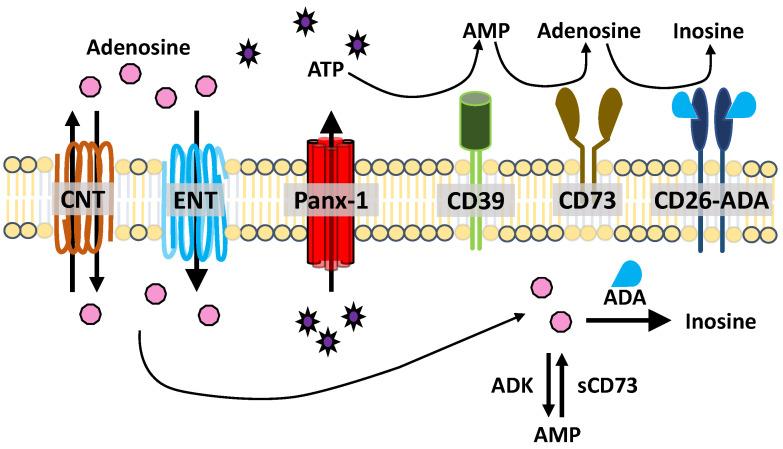
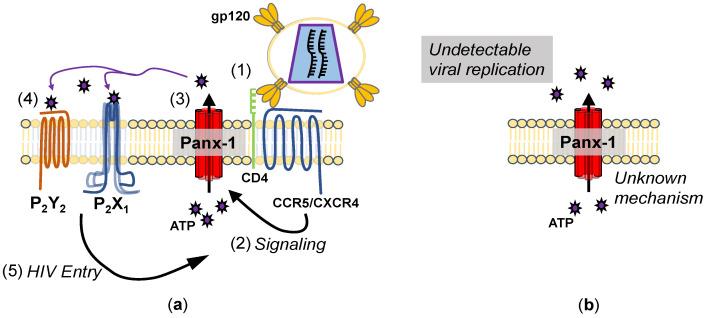
The human immunodeficiency virus-1 (HIV) enters the brain shortly after infection, leading to long-term neurological complications in half of the HIV-infected population, even in the current anti-retroviral therapy (ART) era. Despite decades of research, no biomarkers can objectively measure and, more importantly, predict the onset of HIV-associated neurocognitive disorders. Several biomarkers have been proposed; however, most of them only reflect late events of neuronal damage. Our laboratory recently identified that ATP and PGE, inflammatory molecules released through Pannexin-1 channels, are elevated in the serum of HIV-infected individuals compared to uninfected individuals and other inflammatory diseases. More importantly, high circulating ATP levels, but not PGE, can predict a decline in cognition, suggesting that HIV-infected individuals have impaired ATP metabolism and associated signaling. We identified that Pannexin-1 channel opening contributes to the high serological ATP levels, and ATP in the circulation could be used as a biomarker of HIV-associated cognitive impairment. In addition, we believe that ATP is a major contributor to chronic inflammation in the HIV-infected population, even in the anti-retroviral era. Here, we discuss the mechanisms associated with Pannexin-1 channel opening within the circulation, as well as within the resident viral reservoirs, ATP dysregulation, and cognitive disease observed in the HIV-infected population.
人类免疫缺陷病毒-1(HIV)在感染后不久就会进入大脑,导致一半的 HIV 感染者出现长期的神经并发症,即使在当前的抗逆转录病毒治疗(ART)时代也是如此。尽管经过了几十年的研究,但仍没有生物标志物可以客观地衡量,更重要的是,无法预测 HIV 相关神经认知障碍的发生。已经提出了几种生物标志物;然而,其中大多数标志物仅反映神经元损伤的晚期事件。我们的实验室最近发现,与未感染个体和其他炎症性疾病相比,HIV 感染者的血清中,ATP 和 PGE(通过 Pannexin-1 通道释放的炎症分子)升高。更重要的是,高循环 ATP 水平,而不是 PGE,可以预测认知能力下降,表明 HIV 感染者的 ATP 代谢和相关信号转导受损。我们发现 Pannexin-1 通道的开放导致血清中 ATP 水平升高,并且循环中的 ATP 可以作为 HIV 相关认知障碍的生物标志物。此外,我们认为即使在抗逆转录病毒时代,ATP 也是 HIV 感染者慢性炎症的主要原因。在这里,我们讨论了与循环中以及驻留病毒储库中 Pannexin-1 通道开放、ATP 失调以及 HIV 感染者中观察到的认知疾病相关的机制。
 Zotero 插件