
长新冠患者中诊断出的肌痛性脑脊髓炎/慢性疲劳综合征(ME/CFS)的临床特征。
Clinical Characteristics of Myalgic Encephalomyelitis/Chronic Fatigue Syndrome (ME/CFS) Diagnosed in Patients with Long COVID.
机构信息
Department of General Medicine, Okayama University Graduate School of Medicine, Dentistry and Pharmaceutical Sciences, Okayama 700-8558, Japan.
Clinical & Educational Center for Kampo Medicine, Okayama University Hospital, Okayama 700-8558, Japan.
出版信息
Medicina (Kaunas). 2022 Jun 25;58(7):850. doi: 10.3390/medicina58070850.
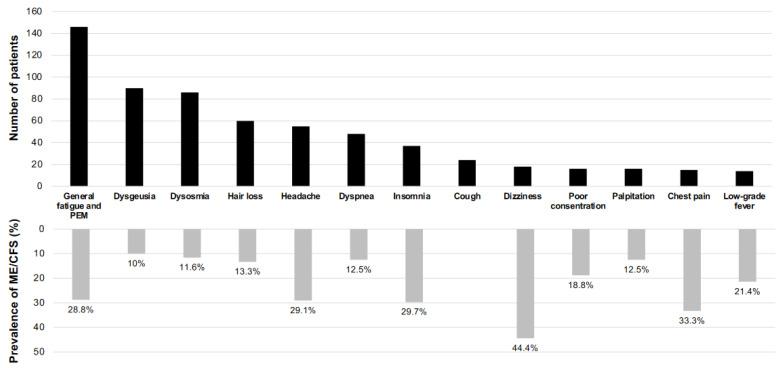
COVID-19 can be serious not only in the acute phase but also after the acute phase and some patients develop ME/CFS. There have been few studies on patients with long COVID in whom ME/CFS was diagnosed by physicians based on standardized criteria after examinations and exclusion diagnosis and not based on only subjective symptoms. The purpose of this study was to elucidate the detailed characteristics of ME/CFS in patients with long COVID. : A retrospective descriptive study was performed for patients who visited a COVID-19 aftercare clinic established in Okayama University Hospital during the period was from February 2021 to April 2022. : Clinical data were obtained from medical records for 281 patients, and 279 patients who met the definition of long COVID were included. The overall prevalence rate of ME/CFS diagnosed by three sets of ME/CFS criteria (Fukuda, Canadian and IOM criteria) was 16.8% (48.9% in male and 51.1% in females). The most frequent symptoms in ME/CFS patients were general fatigue and post-exertional malaise (89.4% of the patients), headache (34.0%), insomnia (23.4%), dysosmia (21.3%) and dysgeusia (19.1%). Dizziness, chest pain, insomnia and headache were characteristic symptoms related to ME/CFS. The male to female ratio in ME/CFS patients was equal in the present study, although ME/CFS was generally more common in women in previous studies. Given that patients with ME/CFS had more severe conditions in the acute phase of COVID-19, the severity of the acute infectious state might be involved in the pathophysiology of ME/CFS. : The prevalence rate of ME/CFS and the characteristic sequelae in the long COVID condition were revealed in this study.
新冠病毒不仅在急性期可能很严重,而且在急性期后,一些患者会发展为 ME/CFS。针对新冠长期后遗症患者,即基于医生通过检查和排除诊断而非仅基于主观症状,按照标准化标准诊断为 ME/CFS 的患者,目前研究较少。本研究旨在阐明新冠长期后遗症患者 ME/CFS 的详细特征。
本研究为回顾性描述性研究,纳入 2021 年 2 月至 2022 年 4 月期间在冈山大学医院新冠康复诊所就诊的患者。研究从病历中获取了 281 名患者的临床数据,其中 279 名符合新冠长期后遗症的定义。三套 ME/CFS 标准(福冈、加拿大和 IOM 标准)诊断的 ME/CFS 总患病率为 16.8%(男性患病率为 48.9%,女性患病率为 51.1%)。ME/CFS 患者最常见的症状是全身乏力和劳累后不适(89.4%的患者)、头痛(34.0%)、失眠(23.4%)、嗅觉障碍(21.3%)和味觉障碍(19.1%)。头晕、胸痛、失眠和头痛是与 ME/CFS 相关的特征性症状。在本研究中,ME/CFS 患者的男女比例相等,尽管之前的研究中 ME/CFS 在女性中更为常见。鉴于 ME/CFS 患者在新冠急性期的病情更严重,急性感染状态的严重程度可能与 ME/CFS 的病理生理学有关。
本研究揭示了新冠长期后遗症患者中 ME/CFS 的患病率和特征性后遗症。

 Zotero 插件